





Louis Revival Pier Table
A louis revival pier table brings undeniable French theatricality to a room, offering grand marble surfaces and gilded carving designed to catch the light.
Louis Revival Pier Table
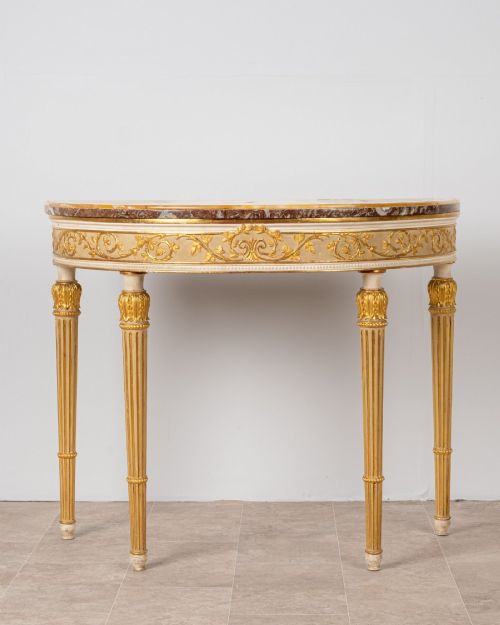
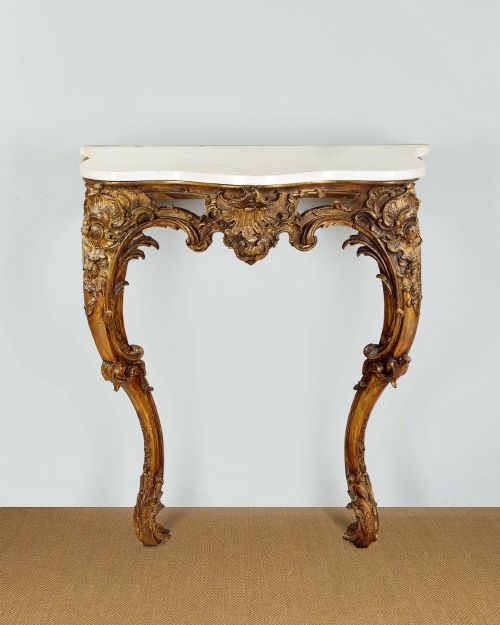
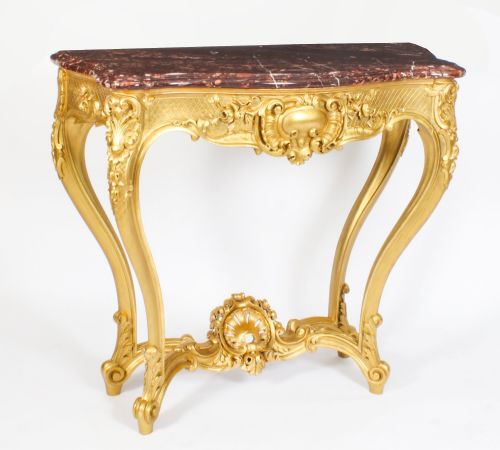
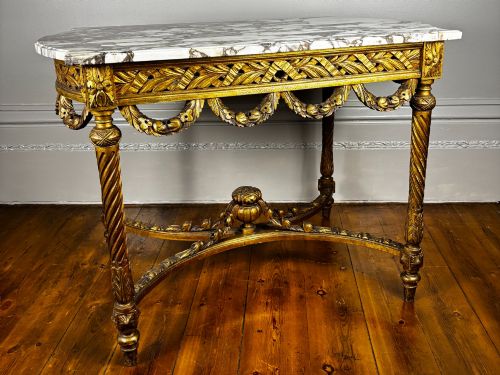
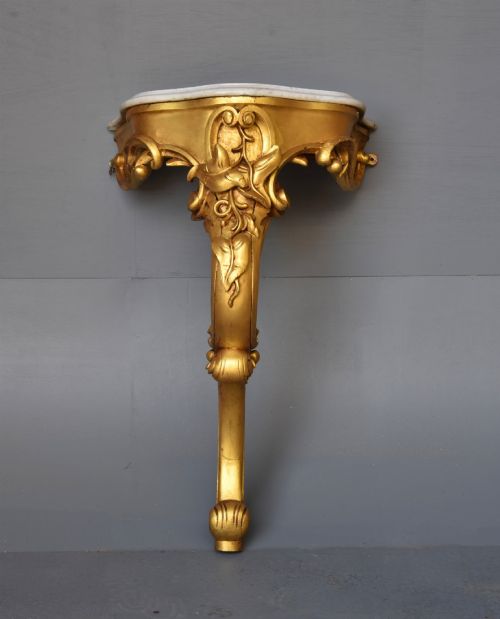
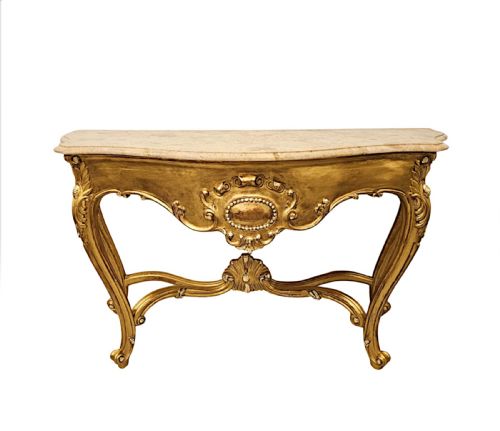
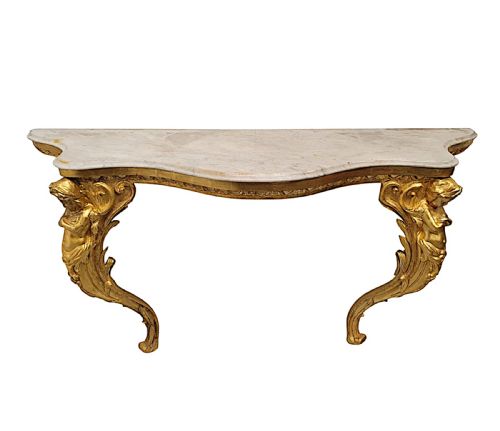
A louis revival pier table takes the extravagant forms of seventeenth and eighteenth-century French royal courts and reinterprets them for nineteenth-century interiors. These console tables are designed to sit flush against the wall beneath a pier glass mirror, anchoring a room with formal presence.
Most examples found on this page date from the nineteenth century, spanning various decades up to the early twentieth century. Alongside traditional console tables, the selection includes related side cabinets and occasional tables sharing the same decorative vocabulary.
The dominant aesthetic draws heavily on Rococo Revival and Louis XVI styles, showcasing ornate curves or restrained classical symmetry. Walnut, mahogany, and satinwood appear frequently as structural woods, often supporting heavy marble tops.
How they were made
The construction of a louis revival pier table relies heavily on timber frames finished with carved gesso and applied giltwood. Skilled artisans shaped softwood or hardwood before building up intricate decorative reliefs that could be gilded to gleam in candlelight.
Marble tops form an essential component of these pieces, cut and polished to fit precisely over the wooden base frames. Ormolu mounts, brass details, and occasional porcelain plaques complete the elaborate surface decoration.
Louis Revival Pier Table Retail Price Guide 2026
Typical asking prices for louis revival pier table among the pieces listed under this phrase on Sellingantiques today, from the lower quarter to the upper quarter. They describe what is for sale here now, not the wider market.
Styles represented across the inventory span Rococo Revival, French Rococo, Louis XV Revival, Louis XVI Style, and Regency Revival.
What varies in quality
Quality in a louis revival pier table rests on the depth and crispness of the carving rather than mere surface shine. Hand-carved giltwood with sharp undercut details demands significantly more labour than shallow moulding.
The choice of materials also dictates the tier of the piece, from standard giltwood frames to dense walnut foundations and thick, finely figured marble slabs. Heavier proportions and harmonious scaling separate ambitious cabinet work from simpler workshop output.
The Louis Revival Pier Table Glossary
- Pier table
- A console table specifically designed to stand against the wall between two windows, typically positioned beneath a tall mirror.
- Giltwood
- Timber that has been coated with a thin layer of gold leaf or gold paint, creating a bright decorative finish.
- Gesso
- A plaster-like mixture applied to wood surfaces as a smooth base for carving and gilding.
- Ormolu
- Gilded bronze used for decorative mounts and furniture embellishments, developed extensively in French design.
- Console table
- A table supported against a wall by ornate brackets or legs rather than four independent vertical supports.
Louis Revival Pier Table: Frequently Asked Questions
Where should a pier table go?
These tables find their natural home against a flat wall, traditionally positioned between two windows or in a grand hallway where floor space is shallow.
Because they are designed to be viewed primarily from the front and sides, they work well without blocking natural pathways in a room.
How do I style a marble top?
The heavy stone surface provides a cool, durable stage for decorative objects like bronze figures, candlesticks, or ceramic bowls.
Keep items balanced to let the carved apron and gilded frame of the table remain visible beneath the stone slab.
Are these tables sturdy?
Most console tables are built with structural brackets or meant to be secured directly to the wall for absolute stability.
Heavier marble tops rely on their own substantial weight to stay firmly in place upon the wooden base frames.
What defines the revival style?
The nineteenth-century revival movement deliberately copied and adapted the ornate aesthetics of earlier French royal periods like Louis XV and Louis XVI.
Maker craftsmanship during this era reinterpreted historical motifs with contemporary woodworking techniques and materials.