
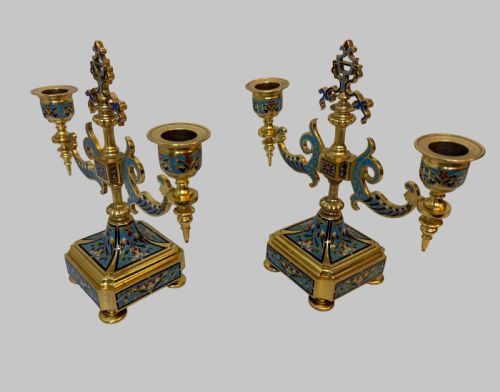


Ornate French Candlesticks
These ornate French candlesticks bring heavy gilt bronze, brass and marble into a room, offering functional light through cast arms and decorative presence.
Ornate French Candlesticks
When you search for ornate French candlesticks, you encounter heavy metal lighting fixtures designed to hold candles or wired for electricity. The selection here leans heavily on nineteenth-century pieces spanning the Victorian, Regency, and Empire periods.
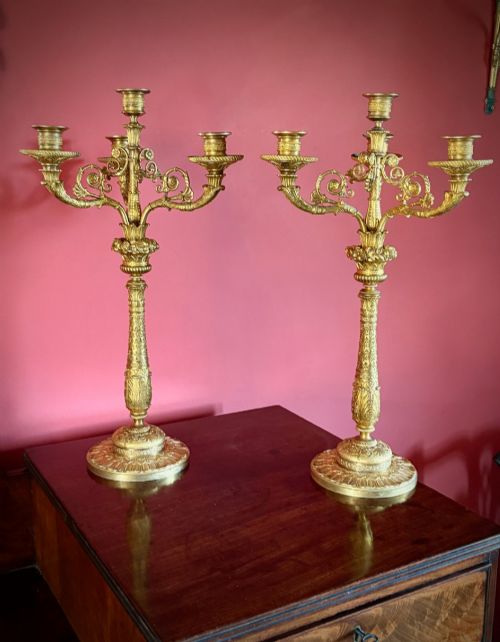
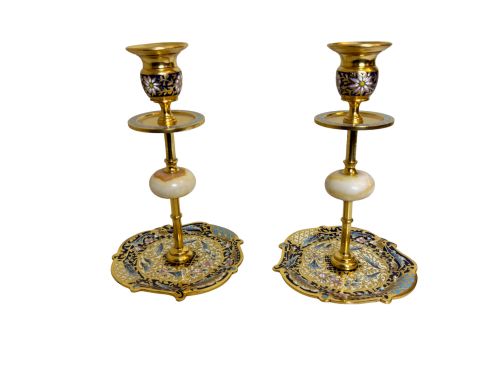
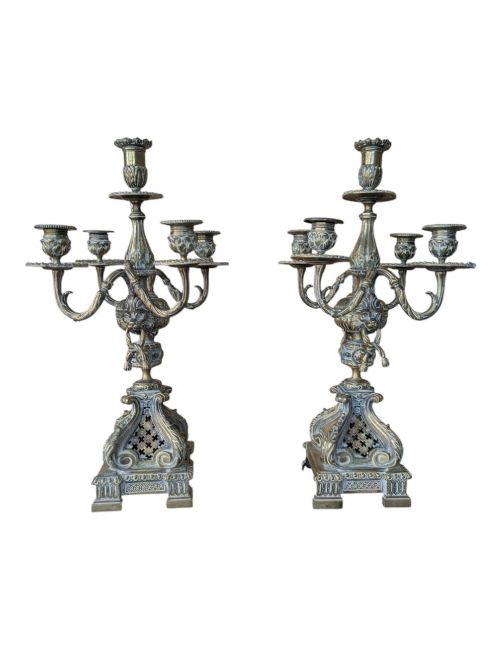
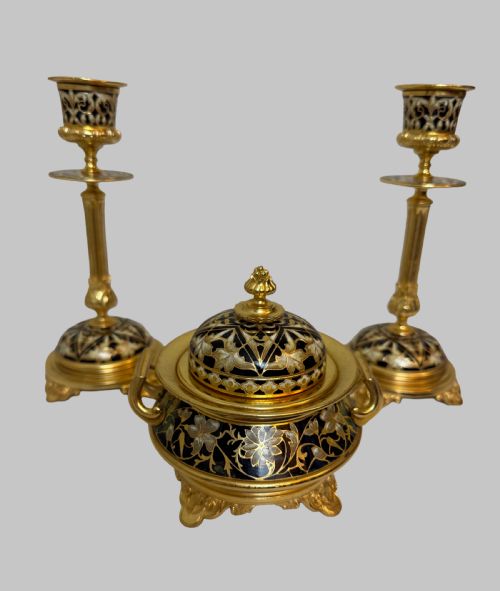
Most examples appear as pairs, frequently taking the form of multi-branch candelabra alongside single candlesticks, wall sconces, and desk accessories. Makers utilised materials such as cast brass, gilt bronze, and ormolu, often combining them with marble plinths or champlevé enamel sections.
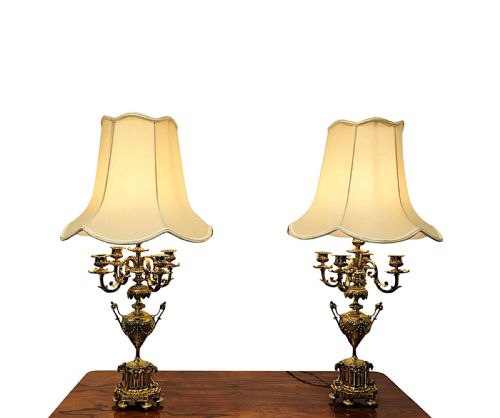
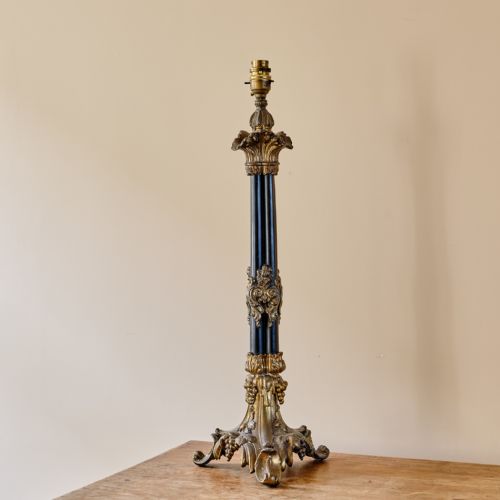
The decorative vocabulary draws directly from French design movements, showing Rococo Revival curves, Neoclassical symmetry, and occasional Gothic or Chateaux influences. Many of these sturdy metal and giltwood objects have undergone conversion to table lamps over time.
How they were made
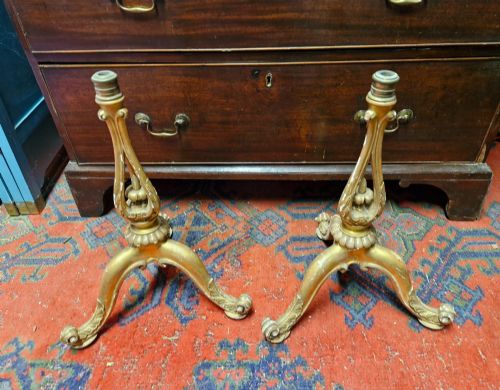
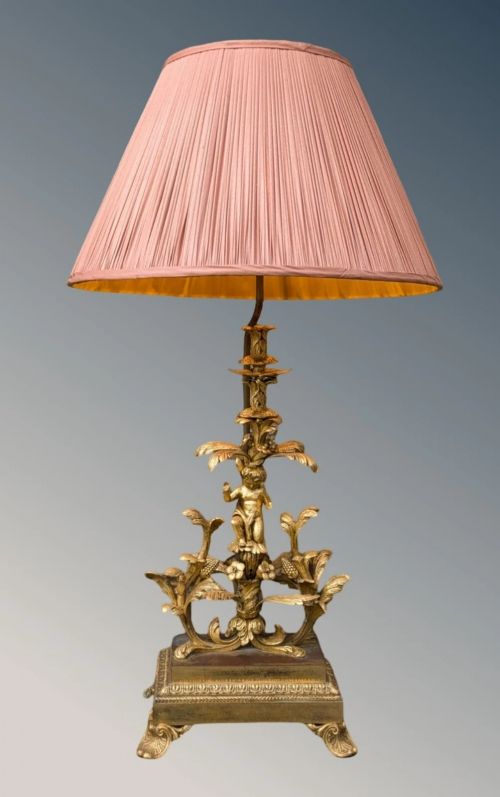
Foundry workers shaped the metal components of these pieces using traditional casting techniques in bronze, brass, and gilt metal. Molten metal poured into moulds created the intricate floral scrolls, dancing cherubs, and structural tripod bases seen on this page.
Gilding methods played a central role in achieving the characteristic metallic sheen, with ormolu applications and gold leaf layered over carved wood or bronze. Stonemasons and enamel workers completed the assemblies by incorporating sections of sienna marble, onyx, and champlevé detailing.
Listings span the nineteenth and early twentieth centuries, featuring brass, gilt bronze, and marble forms in Regency, Victorian, and Rococo Revival styles.
What varies in quality
The crispness of the cast ornamentation dictates the refinement of a piece, separating sharp, hand-chased foliage from soft, featureless metalwork. Superior examples retain deeply undercut details in the bronze or ormolu that catch the light distinctly.
Materials and weight signal structural integrity, with dense marble plinths and heavy cast brass bodies outperforming lighter, hollow constructions. The depth and integrity of the original gilding or surface finish determine how well the piece has aged through the centuries.
The Ornate French Candlesticks Glossary
- Ormolu
- A technique of applying finely ground high-carat gold to a bronze object using a mercury amalgam. It gives the metal a warm, durable golden surface.
- Candelabra
- A branched candlestick holder designed to support multiple candles or lightbulbs simultaneously. These often feature removable arms or central decorative finials.
- Champlevé
- An enamelling technique where troughs are dug into a metal surface and filled with vitreous paste before firing. This creates colourful patterned details alongside the bronze framework.
- Giltwood
- Timber that has been coated with a thin layer of gold leaf. This material appears on chateaux candlesticks and carved lamp bases from the nineteenth and early twentieth centuries.
- Empire Style
- An early nineteenth-century design movement inspired by ancient Roman, Greek, and Egyptian motifs. Pieces from this period display strict symmetry and classical military or floral elements.
Ornate French Candlesticks: Frequently Asked Questions
Were all these candlesticks made in France?
The designs and foundry marks frequently point to French workshops, particularly within the nineteenth-century Rococo and Empire traditions. Some listings indicate styles that are continental or possibly French in origin.
Craftsmen across Europe adopted these distinct decorative motifs during the Victorian and Regency eras. Examination of the casting quality and materials often helps clarify the regional workshop style.
How do I care for gilt bronze and ormolu?
These metallic surfaces require gentle dusting with a dry microfibre cloth to prevent the accumulation of grit. Avoid using chemical metal polishes or abrasive cleaners, which strip away the thin gold layer.
Keeping the pieces away from direct moisture protects the underlying bronze and any integrated marble or onyx bases. Professional conservation is recommended if the gilt surface shows signs of flaking.
Can converted lamp bases be changed back?
Many items feature historical electrical wiring that passes through the central candle nozzle or body. Reverting a converted lamp back to a standard candleholder depends on how the original components were modified.
Some conversions preserve the internal threading and drip pans, making the alteration straightforward. Others require professional intervention from a restorer to safely remove modern electrical fittings.