
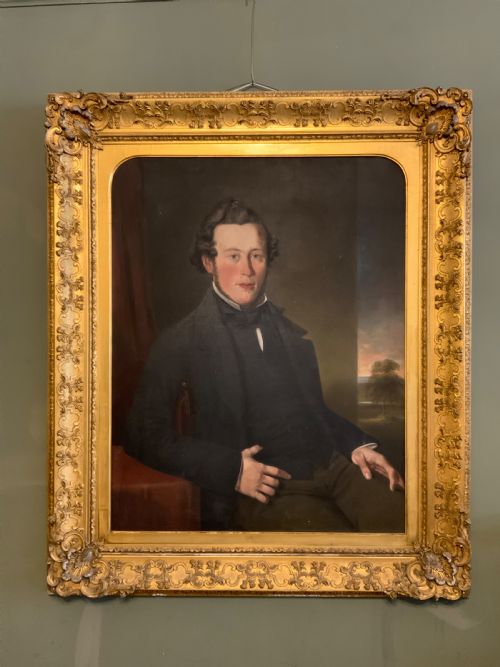
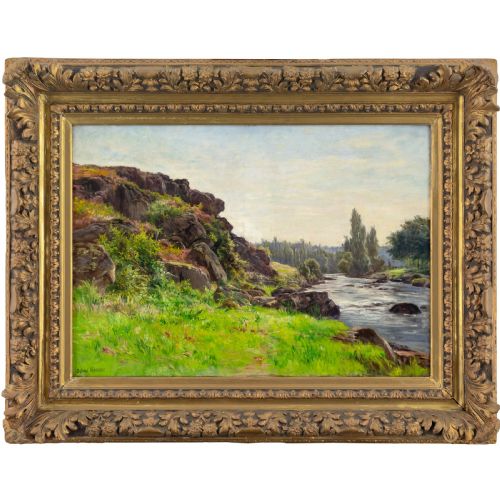
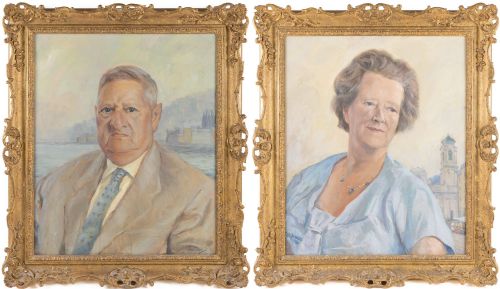
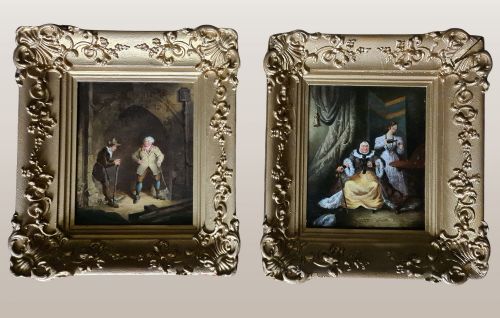

Ornate Framed Canvas Painting
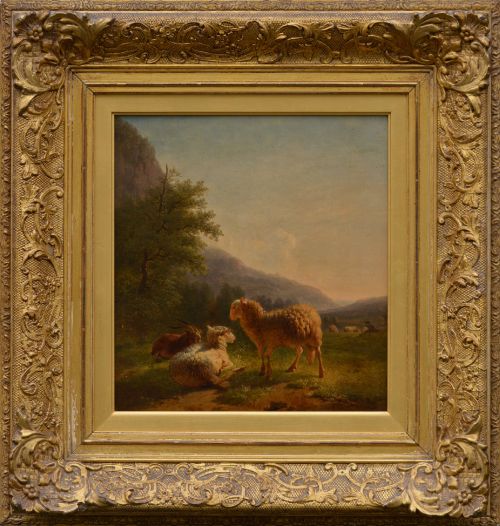
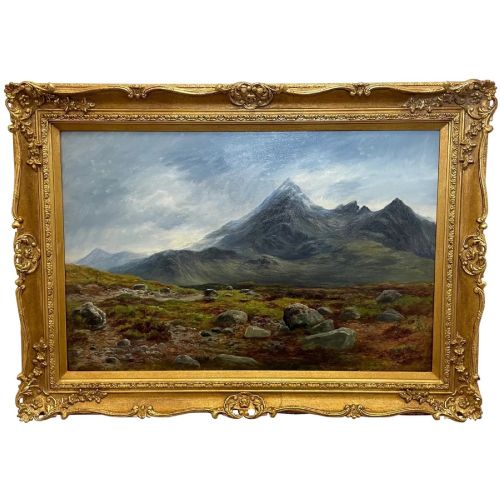
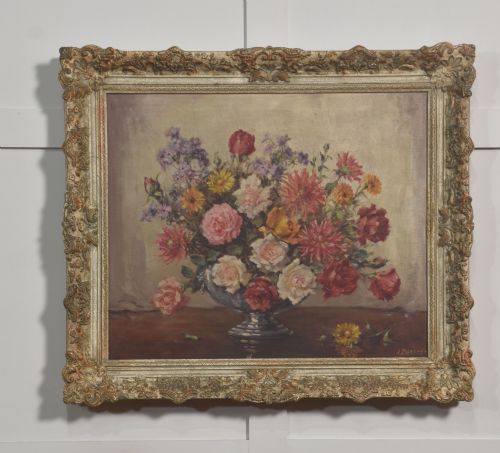
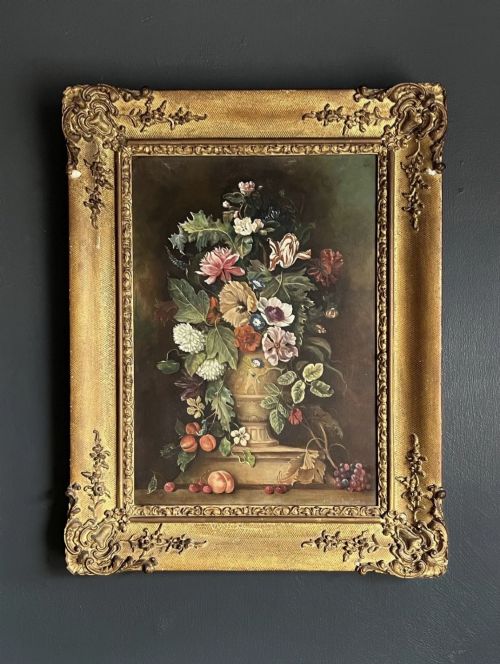
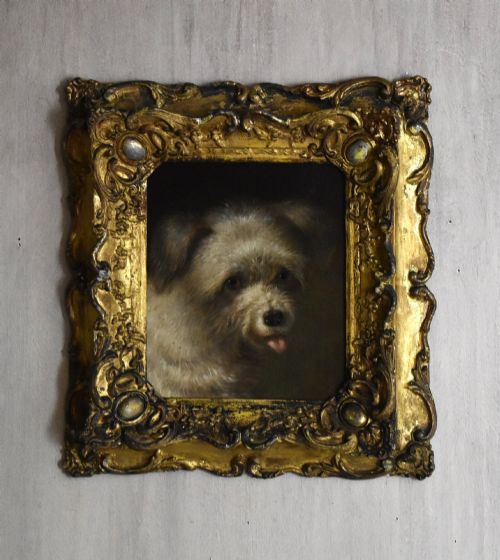
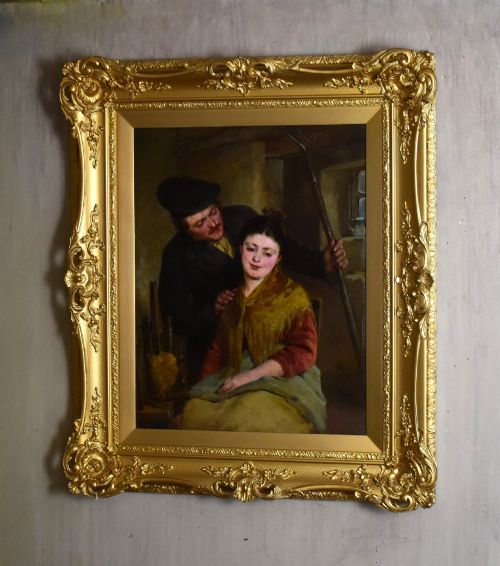
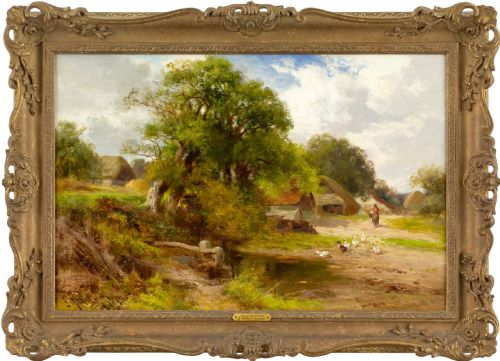
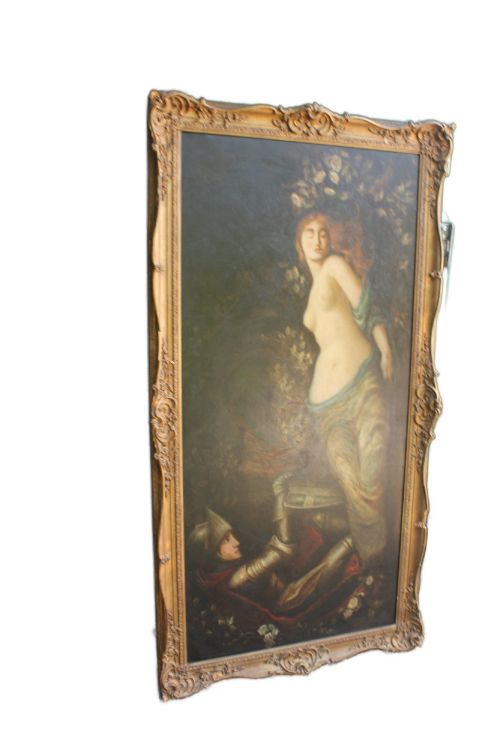
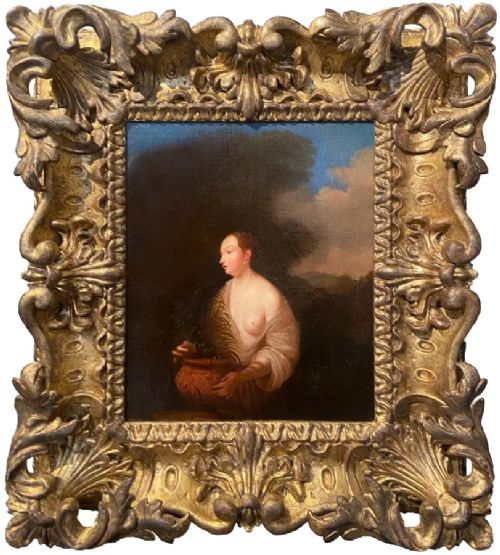
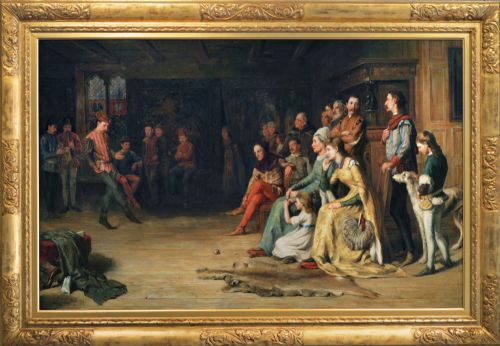
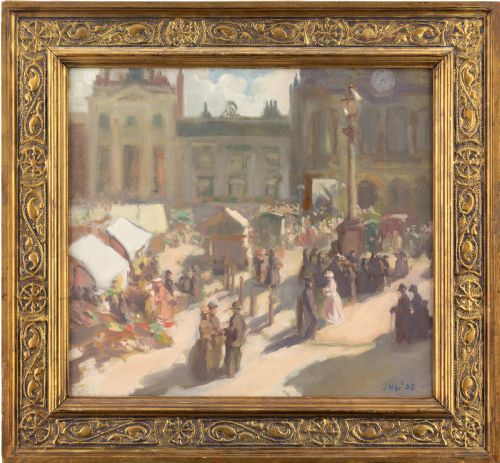
When you search for ornate framed canvas painting, you are looking at oil paintings held in gilt gesso, wood, and gold leaf frames spanning several centuries.
Ornate Framed Canvas Painting
An ornate framed canvas painting combines oil on canvas with a decorative surround, ranging from Regency portraits and Victorian landscapes to Dutch School compositions. You will find pieces from the seventeenth century through to the mid twentieth century, encompassing Pre-Raphaelite works, French Impressionism, and Dutch Golden Age styles.
The artwork and the frame often form a unified historic object, where portraits, genre scenes, and still-lifes sit inside swept gilt frames, gesso mouldings, or large Montparnasse surrounds. These items represent various European schools, including Scottish landscapes, Italian portraits, and Parisian cityscapes.
How they were made
Painters applied oil paint onto stretched canvas grounds, working in traditions from seventeenth-century portraiture to twentieth-century impressionism. The resulting images capture landscapes, figures, and still-lifes using layered pigments and glazes.
Makers constructed frames from wood, applying layers of gesso to carve or mould intricate decorative details before finishing them with gold leaf or gilt. These surrounds were designed to complement the visual weight and period style of the canvas within.
Several canvases capture sheep, goats, and cattle occupying the scenic highlands and coastal paths of Britain.
What varies in quality
The handling of the oil medium, draughtsmanship, and compositional coherence distinguish works by named nineteenth and twentieth century artists from anonymous studio productions. Depth of pigment, atmospheric perspective, and the expressive capture of light define the upper tier of canvas paintings.
Framing craftsmanship ranges from hand-carved, gilded wooden surrounds with deep relief work to simpler moulded gesso variations. The harmony between the decorative frame and the painting dictates the visual success of the piece.
Eugène Verboeckhoven·William Beattie-Brown·Martin Theodore Ward·Howard Helmick·John Horace Hooper·James Hamilton·John Hodgson Lobley·Pieter Borseler·Edgar Hunt·Abraham Cooper·William Watson Jnr·David Teniers The Younger·Paul Désiré Trouillebert·Renato Moretti·Jacob Akkersdijk·Delapoer Downing·Vernon DeBeauvoir Ward·William Henry Williamson·Thomas Kent Pelham·T. Bergman·Harold Clayton
The Ornate Framed Canvas Painting Glossary
- Gesso
- A plaster-like mixture applied to wood frames to create a smooth surface for carving and gilding. This material allows for intricate relief ornamentation.
- Giltwood
- Wood that has been coated with thin sheets of gold leaf or metallic powder. It provides a reflective surface that catches interior light.
- Oil on Canvas
- Pigments bound in a drying oil medium applied to a woven fabric support. This combination offers flexibility and longevity for the artist.
- Dutch School
- A grouping of artists working in the Netherlands influenced by seventeenth-century realism and landscape traditions. These works often focus on domestic interiors, frozen landscapes, and floral still-lifes.
- Swept Frame
- A style of decorative frame featuring flowing, scroll-like mouldings often associated with nineteenth and twentieth-century paintings. The curved profiles direct the eye inward toward the canvas.
Ornate Framed Canvas Painting: Frequently Asked Questions
How do I hang a heavy framed canvas?
Heavy frames require sturdy picture hooks fixed securely into wall studs or masonry using appropriate fixings to support the combined weight of the wood and canvas.
Ensure the hanging wire or D-rings on the reverse are robust enough to bear the load safely over time.
Can I change the frame on an antique painting?
Altering the frame is generally discouraged because historic paintings and their surrounds are often matched by period, style, and scale. The original frame frequently forms part of the object's documented history.
Separating them can diminish the integrity and contextual presentation of the artwork.
How should I clean a gilt frame?
Dust giltwood surfaces gently with a soft, dry brush or a clean feather duster to remove surface particles without disturbing the delicate gold leaf or gesso.
Avoid using water, liquid cleaners, or solvents, as moisture can strip the metallic finish and damage the underlying composition.
What lighting suits an oil painting?
Display oil paintings away from direct, harsh sunlight to prevent the pigments from fading and the canvas from drying out over prolonged periods.
Low-heat picture lights or ambient room illumination highlight the textured brushwork and depth of the oil paint safely.