


Ornate Console Table
An ornate console table brings architectural presence to a hall or reception room through carved decoration and stone tops.
Ornate Console Table
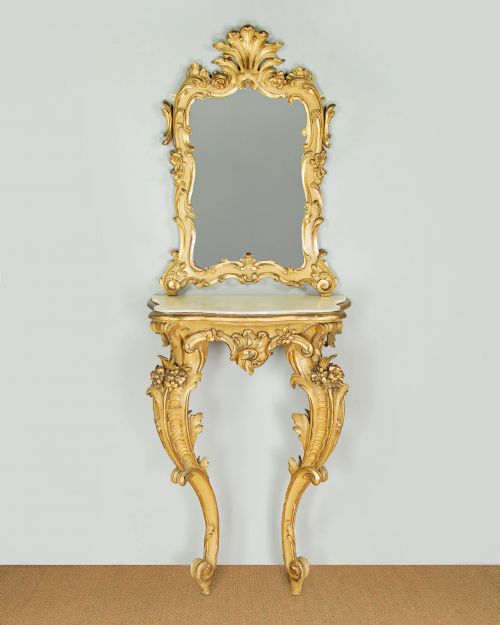
An ornate console table is a wall-fixed or freestanding surface designed to stand against a wall, frequently paired with a matching wall mirror. When buyers search this phrase, they encounter pieces originating largely from the eighteenth, nineteenth, and early twentieth centuries.
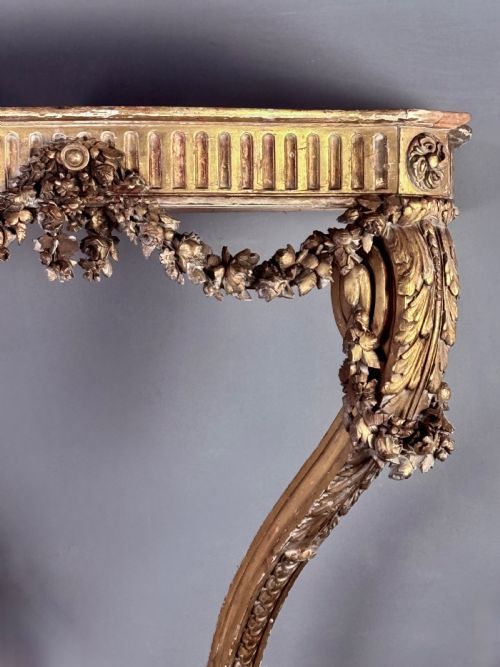
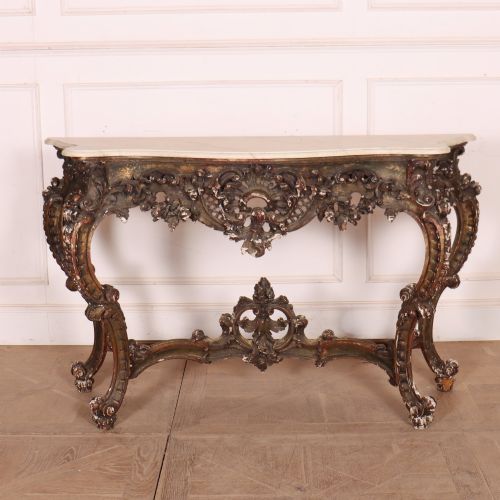
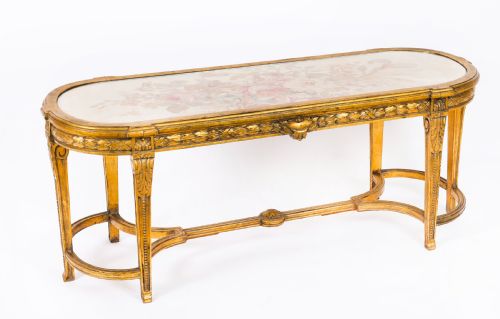
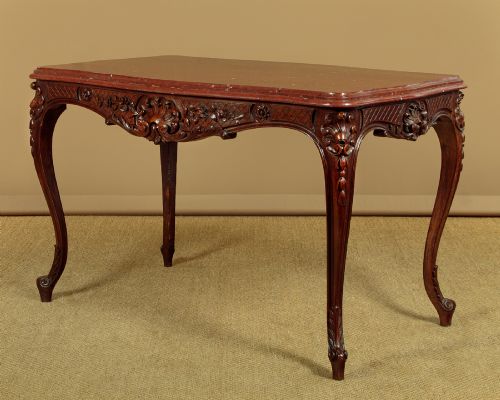
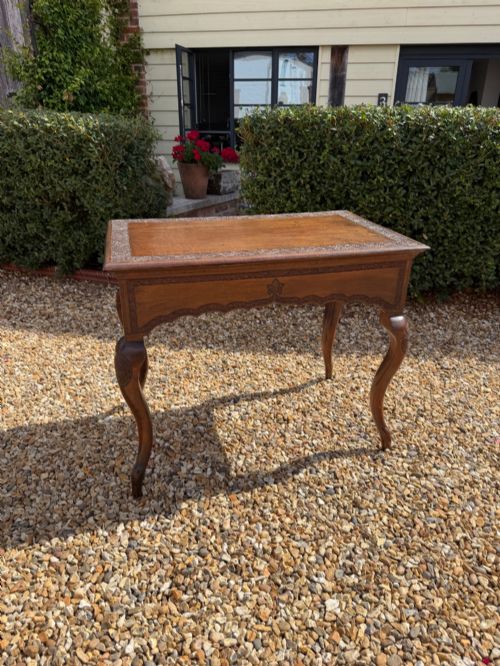
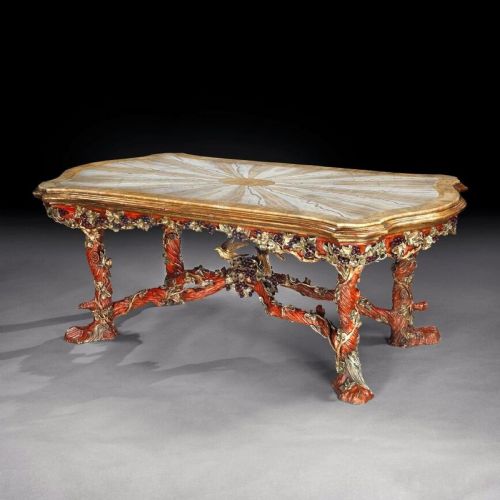
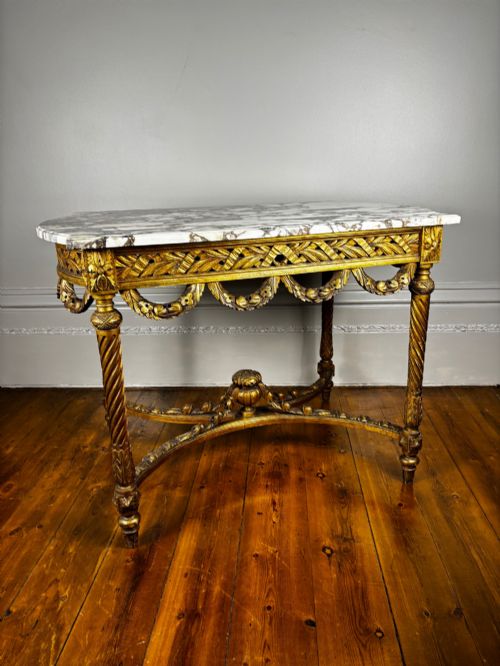
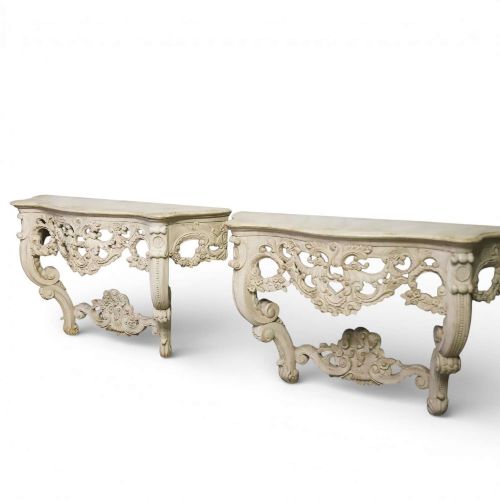
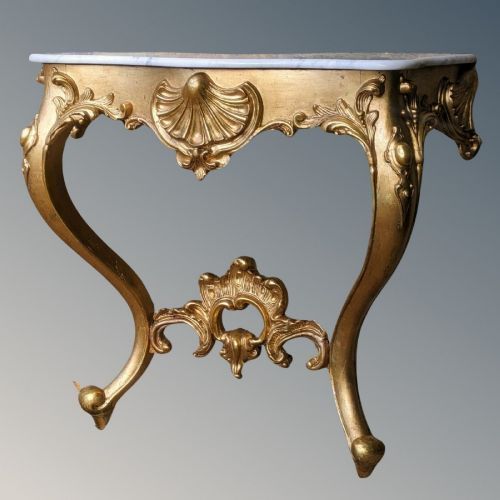
The selection on this page leans heavily towards French and Italian revival designs, alongside English and Anglo-Indian variants. Forms range from grand giltwood pier tables with serpentine marble tops to smaller occasional tables and low coffee tables.
Makers and workshops across Europe and beyond produced these tables using local timbers and imported stones. The overarching character remains decorative, defined by scrolled supports and pierced aprons.
How they were made
Carpenters shaped structural frames from walnut, mahogany, and rosewood, applying gesso layers to wood surfaces before gilding with gold leaf or painting. Carvers worked directly into the timber to create deep relief scrolls and foliage.
Heavy stone slabs, including white Carrara, rouge, sienna, and onyx, formed the functional tops, resting on the carved bases. Marble edges were often moulded by hand to match the serpentine or rectilinear contours of the wooden frame.
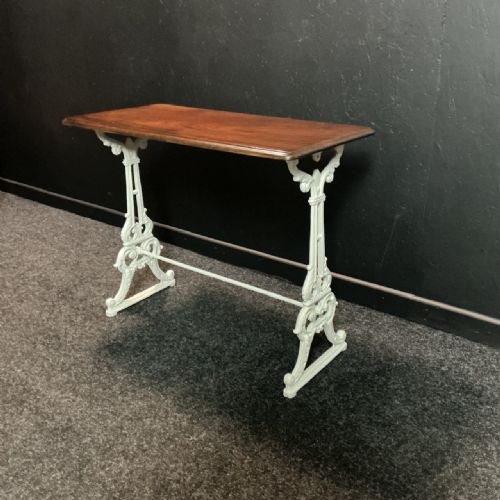
Listings feature walnut, mahogany, rosewood, and cast iron alongside traditional giltwood and gesso frames.
What varies in quality
The depth and crispness of the wood carving separate standard production from exceptional work. Hand-carved relief work exhibits sharp undercut details and fluid movement in scrollwork, whereas lesser examples rely on shallower stamping or moulded composition ornament.
The choice and thickness of the stone top dictate the dignity of the piece. Solid slabs of figured marble or onyx with precise edge profiling indicate higher workshop standards than thin or replaced slate substitutes.
Felix-Alfred Ternisien·Amleto Bertoni
The Ornate Console Table Glossary
- Giltwood
- Timber coated with gold leaf over a prepared gesso ground. This finish reflects light and protects the underlying wood.
- Console table
- A table designed to stand against a wall, historically fixed with brackets or supported by front legs. The rear rests flush or close to the wall surface.
- Rococo Revival
- A nineteenth-century design movement imitating the asymmetrical curves, C-scrolls, and naturalistic shell motifs of the eighteenth-century French style. It dominates many nineteenth-century giltwood pieces.
- Serpentine front
- A furniture front curving inward centrally and outward at the sides, or vice versa. This contour requires precise carpentry and custom-cut stone tops.
Ornate Console Table: Frequently Asked Questions
How were console tables used historically?
Console tables served primarily as display surfaces in grand reception rooms and hallways. They held decorative objects, candelabra, and porcelain.
Because many were designed to stand against a wall beneath a mirror, they created a unified decorative scheme upon entering a room.
Do console tables need to be fixed to the wall?
Many period console tables were built to rely partly on wall fixings for absolute stability, particularly taller or narrower forms. Wall brackets or iron straps secured the upper rear frame safely.
Free-standing versions with four substantial legs function independently, though wall proximity remains standard for the form.
How do I care for a marble top?
Marble surfaces require regular dusting with a soft cloth and immediate wiping of liquid spills. Acidic substances like citrus or wine etch polished stone quickly.
Professional sealing helps protect the porous surface from staining while maintaining the soft natural sheen of the stone.
How do I distinguish eighteenth-century pieces from later revivals?
Eighteenth-century originals display hand- split timbers, older tool marks, and construction methods appropriate to their specific decade. Revival pieces from the nineteenth and twentieth centuries often use machine-sawn framing and contemporary fixings.
Patina on the gesso and wear patterns on the gilding also provide clues to the true age of the wooden frame.