



Ornate Carved Writing Desk
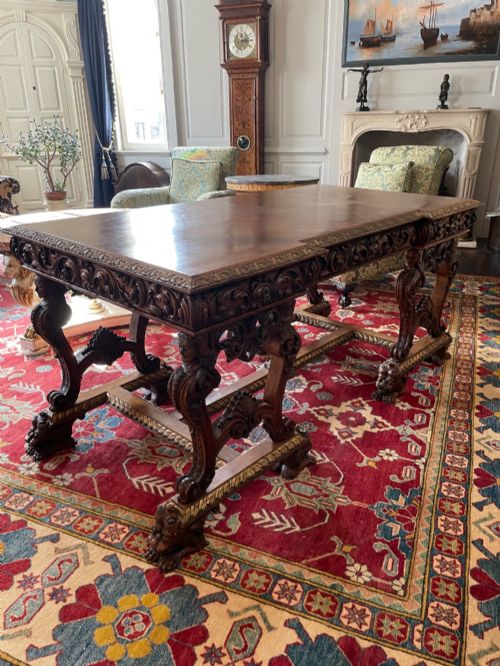
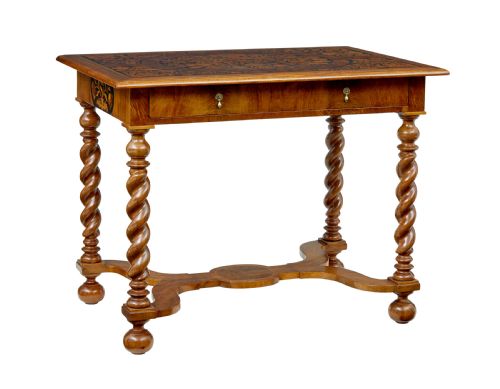
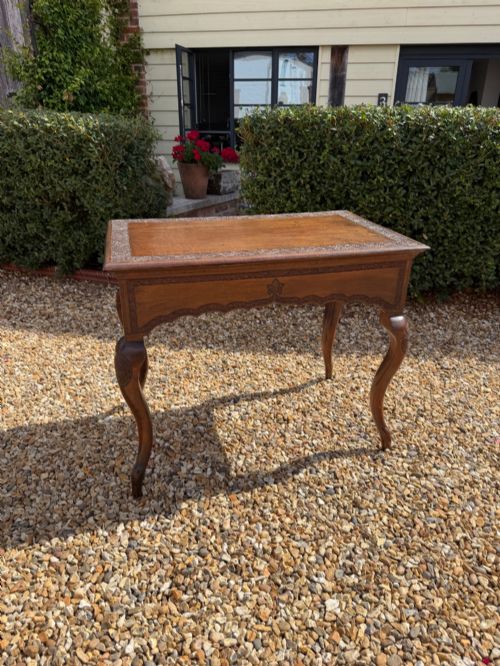
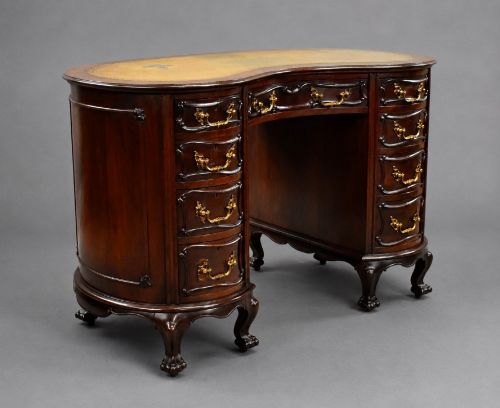
These ornate carved writing desk pieces bring extraordinary craftsmanship and rich timber into a room, offering both a practical workspace and a striking focal point.
Ornate Carved Writing Desk
An ornate carved writing desk represents a grand tradition of bespoke furniture production, spanning multiple centuries and diverse international workshops. When you search for an ornate carved writing desk, you encounter substantial writing surfaces, compact Davenport forms, and elaborate pedestal designs.
The examples gathered here draw from Victorian, Edwardian, and earlier periods, alongside distinctive regional traditions. You will most frequently meet pieces rooted in Victorian revival styles or detailed Anglo-Indian craftsmanship utilising rich hardwoods.
Beyond standard flat writing surfaces, the category encompasses related forms like partners desks and Davenport desks with sloping tops. Each variant displays deep relief carving and distinctive structural silhouettes shaped by its specific period of origin.
Materials and construction methods
The construction of these pieces relies heavily on dense, durable timbers such as mahogany, walnut, padauk, and teak. Cabinetmakers selected these dense woods to withstand the rigorous demands of deep hand-carving without compromising structural integrity.
Metal accents in brass frequently complement the timber framework, appearing as handles, mounts, and protective corner brackets. Secondary materials such as leather inserts often provide a smooth writing surface atop the heavily carved wooden carcase.
Joinery techniques combined traditional framing with painstaking manual chisel work to achieve intricate floral, scroll, and figural reliefs. Artisans worked the wood entirely by hand, ensuring that every panel and moulding received individual sculptural attention.
Ornate Carved Writing Desk Retail Price Guide 2026
Typical asking prices for ornate carved writing desk among the pieces listed under this phrase on Sellingantiques today, from the lower quarter to the upper quarter. They describe what is for sale here now, not the wider market.
Materials documented across the inventory include walnut, mahogany, padauk, teak, hardwood, leather, and brass.
Distinctions in quality and execution
The depth and crispness of the manual carving separate standard production from exceptional artistry. Superior examples display undercut foliage and sharply defined figures that retain their sculptural energy across every visible surface.
Timber selection and grain matching further define the hierarchy of these pieces. Higher-grade items utilise finely figured walnut, padauk, or mahogany with cohesive colouration and minimal patching in the primary construction areas.
The integration of secondary elements, such as fitted interior compartments and original brass hardware, influences the overall coherence of the piece. Master workshops ensured that internal drawers and secondary woods matched the ambition of the exterior ornamentation.
Angiolo Barbetti Firenze
The Ornate Carved Writing Desk Glossary
- Davenport desk
- A compact Victorian form featuring a sloping top above a bank of side drawers. It typically incorporates a small upper compartment for stationery storage.
- Partners desk
- A large double-sided writing table designed for two people to work opposite one another. These pieces feature drawers and cupboards accessible from both long sides.
- Padauk
- A dense tropical hardwood prized for its deep reddish-brown colour and durability. It provides an ideal canvas for intricate relief carving.
- Breakfront
- A piece of furniture where the central section projects forward from the flanking components. This architectural arrangement creates dynamic shadow and depth across the facade.
- Inverted breakfront
- A facade configuration where the central section recedes rather than projects. This layout introduces subtle geometric rhythm to large sideboards and desks.
Ornate Carved Writing Desk: Frequently Asked Questions
What is a Davenport writing desk?
A Davenport is a compact writing desk featuring a sloping, hinged writing surface that often lifts to reveal a set of interior pigeonholes. They typically incorporate a bank of drawers opening to one side rather than the front.
These pieces were originally designed for domestic writing and correspondence in smaller Victorian drawing rooms. Their clever space-saving layout made them popular among individuals who needed a dedicated writing station without occupying a large floor area.
How do I care for an antique carved wooden desk?
Maintain these surfaces by dusting regularly with a soft, dry cloth to prevent particles from settling into the deep recesses of the carving. Avoid chemical sprays and keep the timber away from direct heat sources and strong sunlight to prevent drying and splitting.
Periodically nourishing the wood with appropriate wax helps preserve the natural lustre of dense timbers like mahogany and walnut. Proper humidity control in the room prevents the timber and historical glue joints from shifting over time.
Where were Anglo-Indian desks made?
Anglo-Indian furniture was produced in workshops across the Indian subcontinent during the colonial period, frequently destined for export to British households. These pieces combined traditional British furniture forms with local woodworking and carving traditions.
Master carvers utilised indigenous hardwoods like padauk and teak to execute elaborate floral and scrolling motifs. This cross-cultural exchange resulted in distinctive desks that merged European utility with exceptional Asian craftsmanship.
How do I identify a Victorian partners desk?
A partners desk is characterised by its large double-sided design, allowing two people to sit and work opposite each other. Drawer and cupboard configurations are mirrored or duplicated on both long sides of the pedestal base.
These substantial pieces usually feature inset leather writing surfaces framed by ornate carved borders in mahogany or walnut. They served as administrative hubs in large country houses, libraries, and institutional offices.