
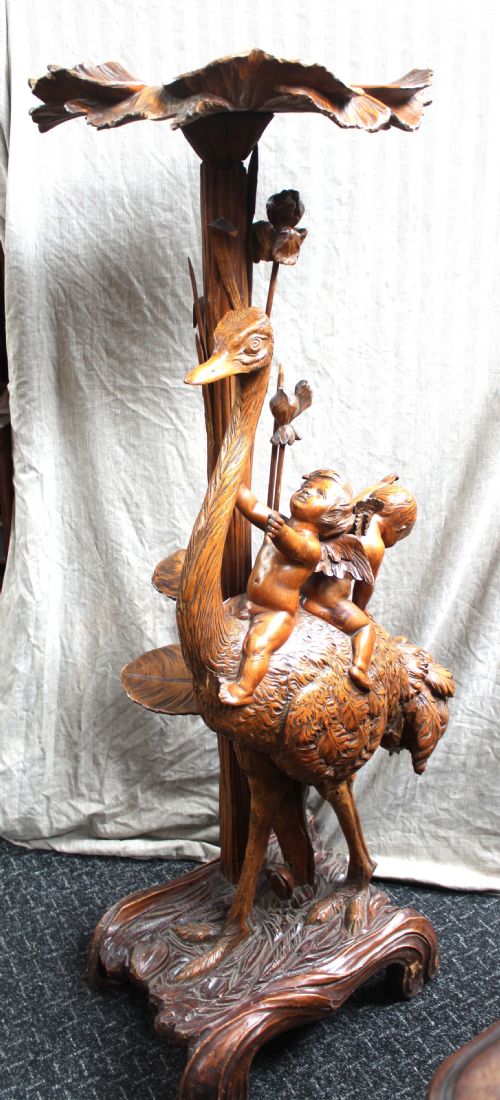


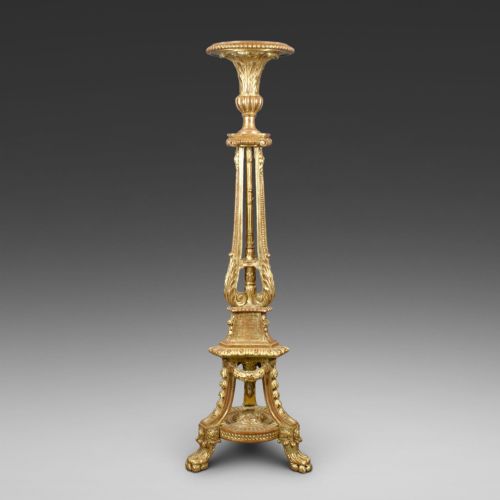


Ornate Carved Plant Display
These ornate carved plant display pieces elevate greenery and sculpture, offering striking focal points for period interiors.
Ornate Carved Plant Display
When you search for an ornate carved plant display, you encounter elevated furniture forms designed to hold jardinières, vases, and sculptures. These include pedestals, torcheres, plant stands, and architectural columns spanning the Victorian, Edwardian, and nineteenth-century periods.
The versions you meet most frequently on this page range from Italian giltwood columns and Venetian bronze torcheres to Chinese hardwood planter tables and Indian stands. They draw upon diverse styles such as Renaissance Revival, French Rococo, Neoclassical, and Chinese Export.
Makers and workshops across Europe and Asia produced these supports in timber, stone, and bronze to lift displays to eye level. Each piece reflects the decorative priorities of its specific origin, whether European gilded wood or Asian carved hardwood.
How they were made
Carpenters and carvers shaped hardwoods, walnut, and teak using traditional hand tools to achieve deep relief work and structural stability. Giltwood examples received layers of gesso before the application of gold leaf, creating a luminous surface finish.
Foundries cast bronze into intricate torcheres, while masons shaped red stone and marble into architectural columns. These varied techniques ensured that each support could bear the weight of heavy vases or botanical displays.
One unexpected piece carries a Rolls Royce connection, proving that even plant stands can travel in high-speed style.
What varies in quality
The depth and crispness of the carving separate standard workshop output from finer examples. Superior pieces display undercut foliage, balanced proportions, and meticulously applied gilding that retains its original brilliance.
Materials dictate the underlying character, with dense hardwoods and heavy cast bronze providing greater substance than lighter softwood constructions. The integration of marble tops or inset stone columns further elevates the standing of an individual piece.
The Ornate Carved Plant Display Glossary
- Torchere
- A tall ornamental stand originally designed to carry a light or candle. In later periods, these slender supports frequently served to display vases or botanical arrangements.
- Jardinière
- An ornamental pot or stand for holding plants or flowers. These items often feature detailed woodwork or stone carving.
- Giltwood
- Timber that has been coated with gold leaf or a gold-coloured substance. This finish was common in Italian and French revival furniture.
- Gesso
- A plaster-like mixture applied to wood as a base for painting or gilding. It allows carvers to achieve sharp detail before applying gold leaf.
- Pedestal
- An upright architectural support or stand used to elevate a sculpture or plant. They range from simple columns to ornate revival designs.
Ornate Carved Plant Display: Frequently Asked Questions
What is a torchere pedestal?
A torchere pedestal is a tall, slender support designed to elevate lamps, vases, or plants. These pieces originated as candle holders before evolving into decorative furniture.
Examples on this page showcase materials like giltwood, bronze, and carved walnut from the nineteenth century.
How do I style a plant stand?
Plant stands and pedestals work best as focal points in corners, hallways, or beside seating areas. They lift greenery to eye level to break up horizontal lines in a room.
Ensure the weight of your planter matches the sturdy construction of the hardwood or marble support.
What is Chinese export furniture?
Chinese export furniture refers to pieces made in China specifically for Western markets during the nineteenth and early twentieth centuries. These items combine traditional Asian hardwoods with decorative forms suited to European homes.
They frequently feature dense carving depicting flora, fauna, or geometric patterns.
How do I identify a Victorian pedestal?
Victorian pedestals often draw upon historical revival styles such as Renaissance Revival, Neoclassical, or French Rococo. Look for substantial timber construction, deep carving, and applied gilding.
Makers of this era utilised walnut, teak, and giltwood to create ornate architectural forms.