




Ornate Bronze Mantel Urns
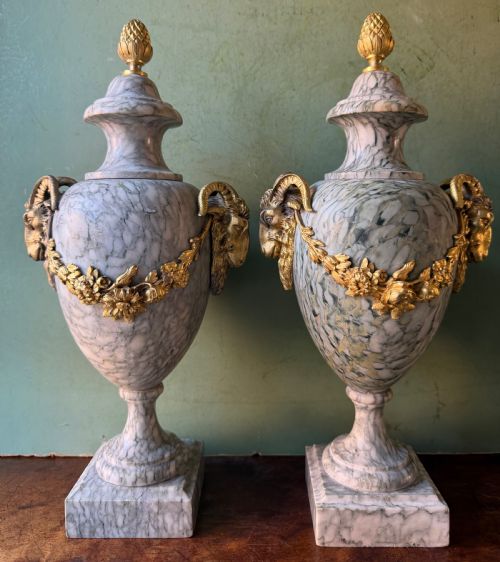
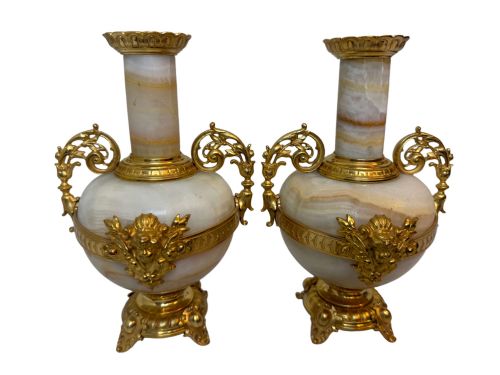
Ornate bronze mantel urns bring heavy classical presence to a room, cast in heavy gilt metal and paired with marble or porcelain.
Ornate Bronze Mantel Urns
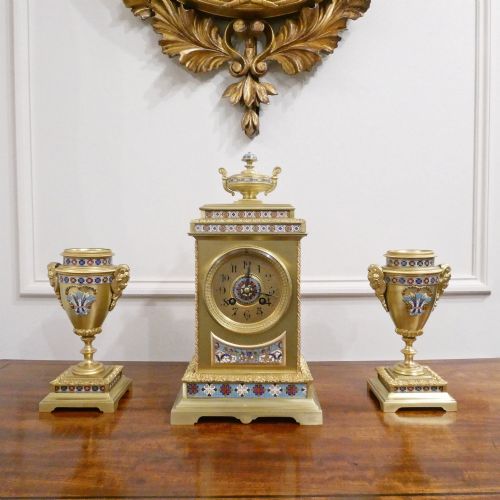
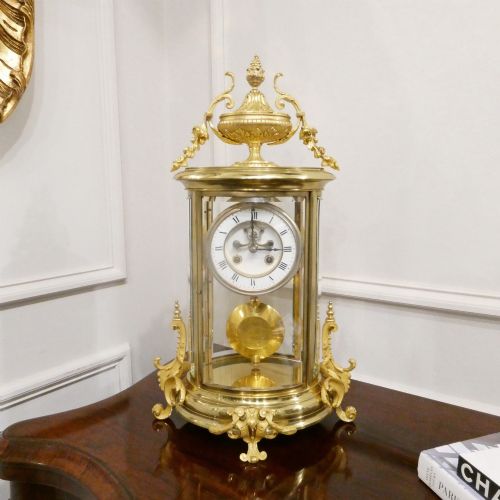
Ornate bronze mantel urns are decorative vessels and garniture pieces designed for display on mantelpieces, frequently accompanied by matching clocks or candelabras. When you search for ornate bronze mantel urns, you encounter nineteenth-century French and Victorian works shaped by revivalist tastes.
The most common examples on this page date from the later nineteenth century, particularly the eighteen-eighties and eighteen-nineties, drawing heavily on Louis XVI and Rococo aesthetics. These objects take the form of paired vases, ewers, and multi-piece clock sets intended to anchor a room's decorative scheme.
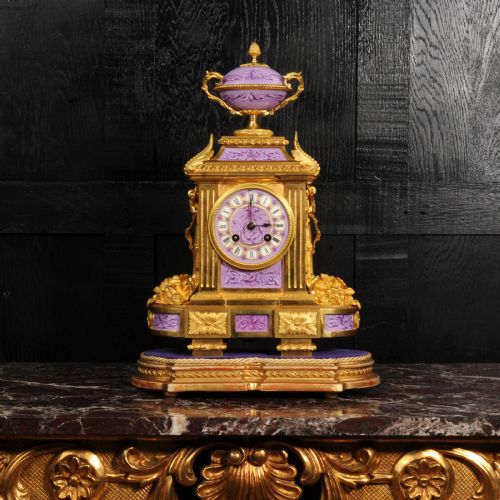
Makers paired the metal body with contrasting elements such as Campan vert marble, white onyx, and Sèvres-style porcelain to create striking visual balance. They function primarily as symmetrical focal points rather than utilitarian vessels.
Materials and construction methods
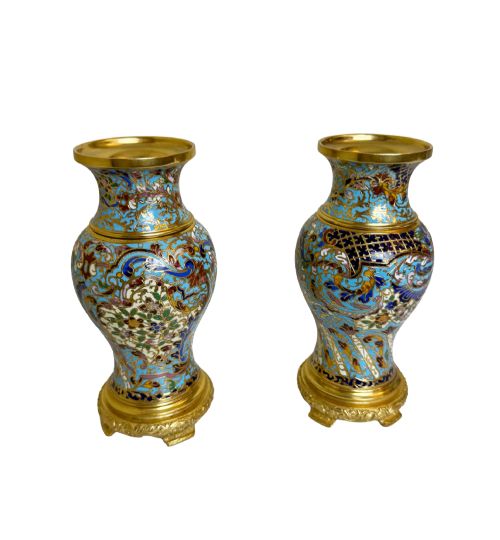
The foundation of these pieces relies on bronze or brass cast through traditional foundry methods, then finished with mercury gilding or ormolu to achieve a bright, reflective surface. Champlevé enamel and hand-painted porcelain panels frequently inset into the metal framework.
Natural stone components, including veined marble and onyx, are turned and polished to form heavy bases and bodies that stabilize the cast metal mounts. Craftsmen joined these diverse materials using threaded pins and hidden fixings to ensure structural integrity.
Ornate Bronze Mantel Urns Retail Price Guide 2026
Typical asking prices for ornate bronze mantel urns among the pieces listed under this phrase on Sellingantiques today, from the lower quarter to the upper quarter. They describe what is for sale here now, not the wider market.
Materials appearing across the inventory include gilt bronze, ormolu, marble, onyx, porcelain, and glass.
Distinctions in craftsmanship
Quality rests in the crispness of the chased detail upon the bronze surface, where sharper hand-finishing distinguishes superior castings from softer, mass-produced alternatives. The depth of the gilding and the weight of the underlying metal also indicate the level of care invested in the workshop.
The selection of secondary materials plays a major part in the overall standard, with highly-figured marble and finely hand-painted porcelain elevating a piece far above simpler brass and plain ceramic versions.
Achille Brocot·Samuel Marti
The Ornate Bronze Mantel Urns Glossary
- Ormolu
- A technique of applying finely ground high-carat gold to an amalgamated copper bronze object, followed by firing to drive off the mercury. This creates a durable golden finish characteristic of fine French decorative arts.
- Garniture
- A set of three or more matching decorative objects, typically comprising a central clock flanked by twin vases or candelabras. These sets were designed to sit harmoniously along the length of a fireplace mantel.
- Champlevé
- An enamelling technique where troughs or cells are hollowed out of the metal surface and filled with vitreous enamel powder before firing. The resulting coloured glass designs sit flush with the surrounding metal borders.
- Campan vert
- A distinctive variety of dark green and grey veined marble quarried in the Pyrenees and favored during the neoclassical revival periods. Its complex natural patterning adds considerable visual weight to mounted bronze objects.
- Ewer
- A large jug with a wide spout and ornate handle, historically used for water but reproduced in the nineteenth century purely as an ornamental display piece. In metalwork sets, they often serve as companion pieces to vases.
Ornate Bronze Mantel Urns: Frequently Asked Questions
What is a clock garniture?
A clock garniture is a matched set consisting of a central timepiece accompanied by two side pieces, such as vases or candelabras. These sets were manufactured to create a balanced display across a fireplace.
Each component shares identical decorative motifs, materials, and gilding styles to tie the arrangement together.
How do I identify Louis XVI revival style?
Louis XVI revival pieces display neoclassical restraint through symmetrical designs, straight lines, and classical motifs like urns, swags, and ribbons. They stand apart from the earlier curving asymmetry of Rococo work.
Materials like ormolu mounts combined with white marble or porcelain are typical indicators of this aesthetic.
Were these pieces meant to hold water?
Most decorative urns and ewers from this period served purely as ornamental objects rather than functional vessels. Their internal construction and delicate porcelain or enamel panels meant they were designed strictly for visual display.
Using them for actual flowers or liquids can damage the interior linings and historical materials.
How do I care for gilt bronze?
Gilt bronze surfaces require only gentle dusting with a soft, dry brush to prevent the accumulation of dirt in recessed chasing. Avoid all chemical cleaners and abrasive cloths, which strip away the thin layer of gold.
Keeping the pieces away from direct sunlight and damp environments preserves both the metal finish and the mounted stone or porcelain.