




Ornate Brass Pedestal
These ornate brass pedestal pieces bring heavy cast detail and warm metal to a room, offering both decorative structure and practical utility.
Ornate Brass Pedestal
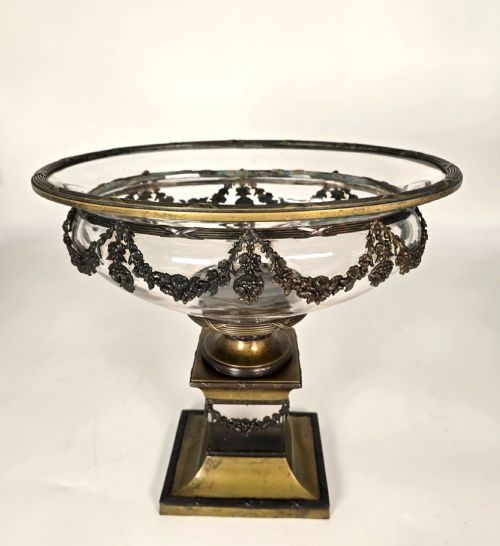
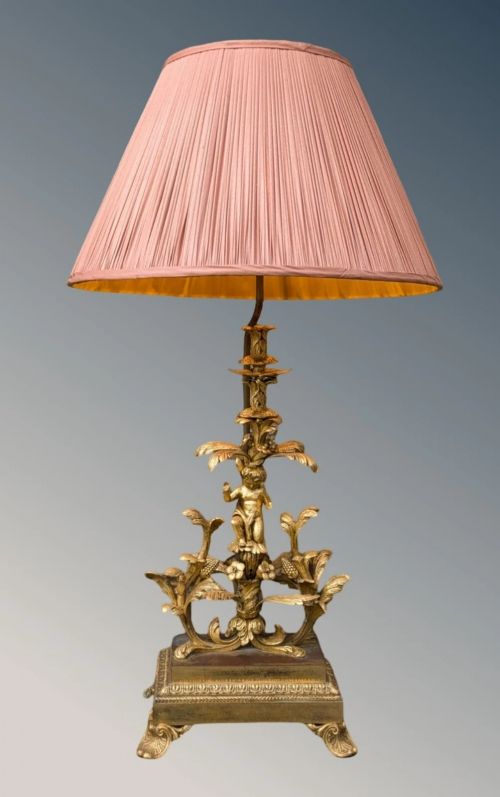
An ornate brass pedestal provides a sturdy elevated surface or display point, frequently appearing as a column lamp, plant stand, or table from the nineteenth century and Victorian periods. Buyers seeking this phrase encounter heavy cast forms and sculptural bases that combine brass with contrasting materials like marble, onyx, and mahogany.
The objects span varied functional forms, ranging from floor lamps and table lights to plant stands and decorative bowls. Victorian and early twentieth-century examples dominate the selection, showing revivals of Rococo, Neoclassical, and French styles.
Makers and workshops utilised robust construction methods, pairing cast brass with ebonised wood or glass mounts to create substantial household furnishings. Each piece relies on decorative openwork, columns, or mounts to achieve its ornate appearance.
What varies in quality
The crispness of the casting defines the upper tier of quality, where floral openwork and figural details retain sharp relief rather than softened edges from worn moulds. Finer examples employ heavy gauge brass and genuine marbles or onyx stones rather than lighter sheet metal or composite substitutes.
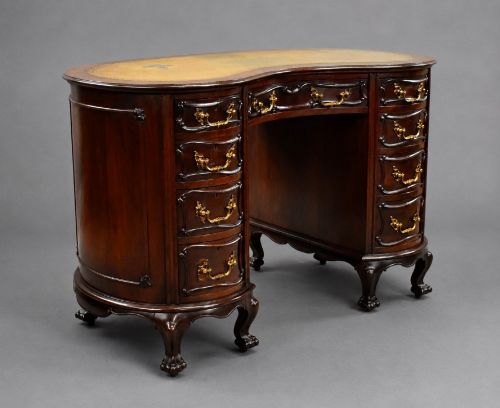
Construction rigidity separates superior stands from lesser pieces, particularly in tall floor lamps and multi-tiered plant stands where joints and central threaded rods must prevent wobble. The integration of secondary materials, such as polished mahogany or fire-gilt bronze mounts, indicates higher workshop standards.
Some nineteenth-century makers hid coal inside decorative brass buckets while others elevated kitchen tables with pine tops.
Benham & Froud
The Ornate Brass Pedestal Glossary
- Ormolu
- Gilt bronze or brass mounts applied to furniture and decorative objects. The technique involves a mercury amalgam or modern electroplating to impart a rich golden surface finish.
- Chasing
- The manual tooling of cast brass or bronze with hammers and punches to refine surface details and textures. This process sharpens the motifs after the initial casting stage.
- Openwork
- Metalwork pierced through to create patterns and empty spaces within the design. It appears frequently in floral bases and gallery rims.
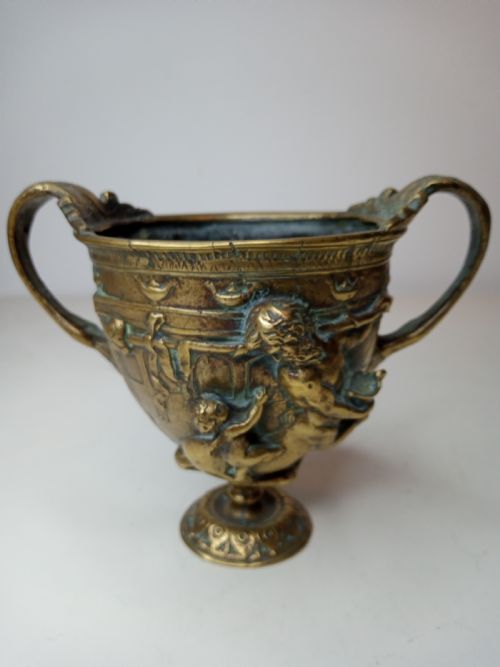
- Kantharos
- An ancient Greek cup form featuring a deep bowl and high-swung handles, sometimes revived in nineteenth-century decorative metalwork. It provides a classical silhouette for display pieces.
- Column
- A vertical architectural support element adapted in these pieces to form the central shaft of lamps and plant stands. They often feature fluted or reeded shafts resting on stepped bases.
Ornate Brass Pedestal: Frequently Asked Questions
What materials make up these pedestals?
These pieces combine cast brass with supportive materials including marble tops, onyx tiers, mahogany, and ebonised wood. Gilt bronze and glass mounts also appear frequently across the structures.
The secondary materials provide weight and textural contrast to the polished and chased brass frameworks.
How do I date a brass pedestal?
Dating relies on stylistic clues like Victorian Rococo Revival curves or 1930s geometric influences, alongside construction methods like hand-cut threads and cast assembly marks. Material combinations such as mahogany and ormolu typically point to nineteenth-century manufacture.
Examining the wear patterns on the brass and the base construction helps separate Victorian era work from later twentieth-century reproductions.
How should I care for brass pedestals?
Maintenance involves dusting with a soft, dry cloth to prevent grime accumulation on chased and openwork surfaces. Avoid harsh metal polishes that strip original patination or gilding.
Keeping the brass away from excessive moisture protects any integrated marble, onyx, and wooden components from staining or warping.