
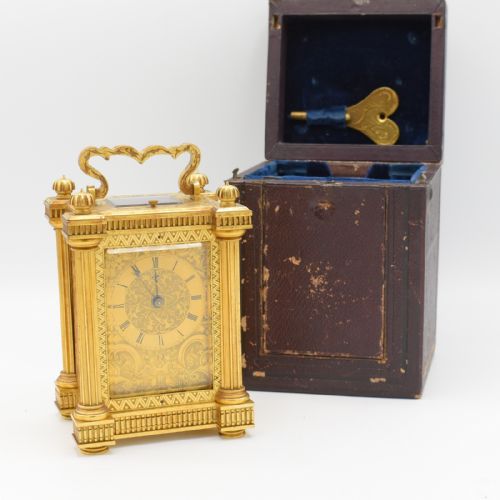
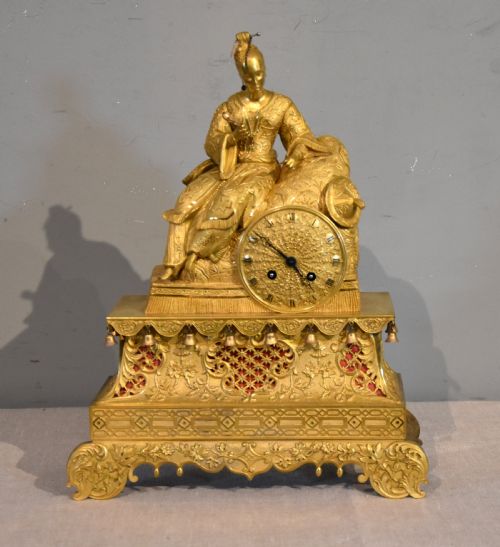
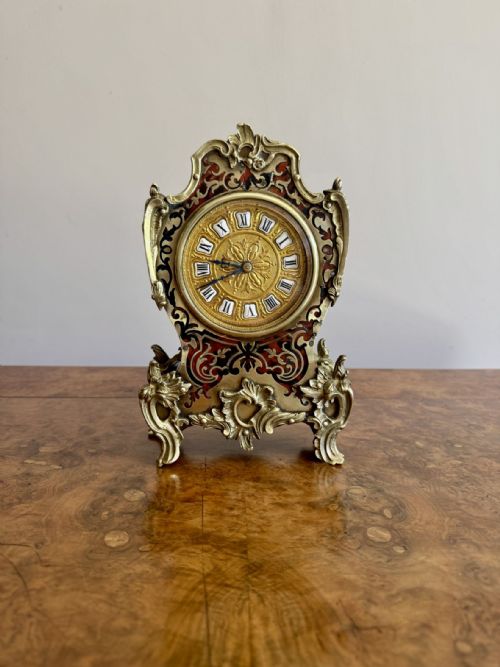

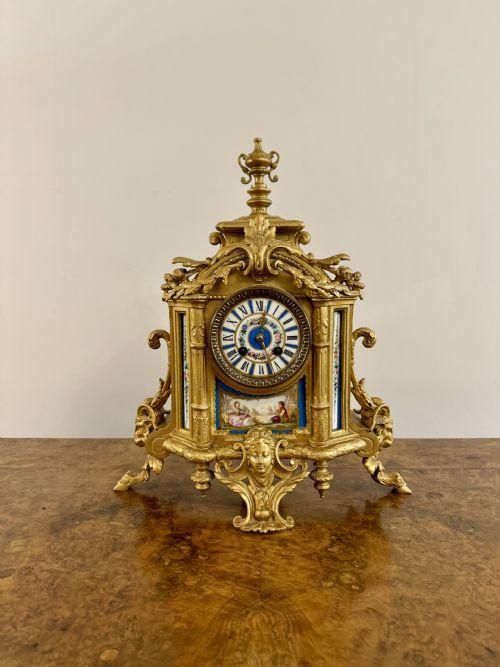


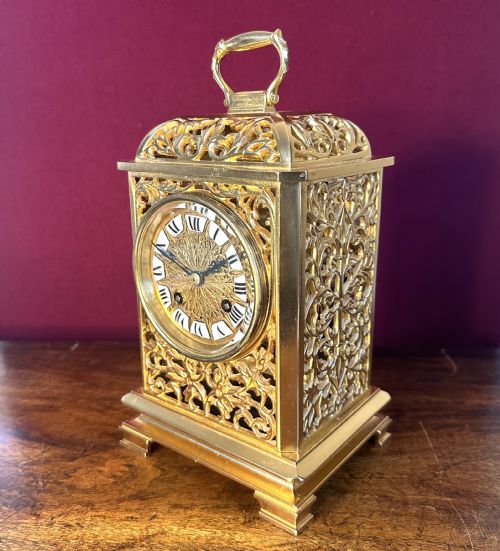


Ornate Brass Mantle Clock
An ornate brass mantle clock brings nineteenth-century weight and domestic theatre to a room, measuring time beneath heavy cast metal and glass.
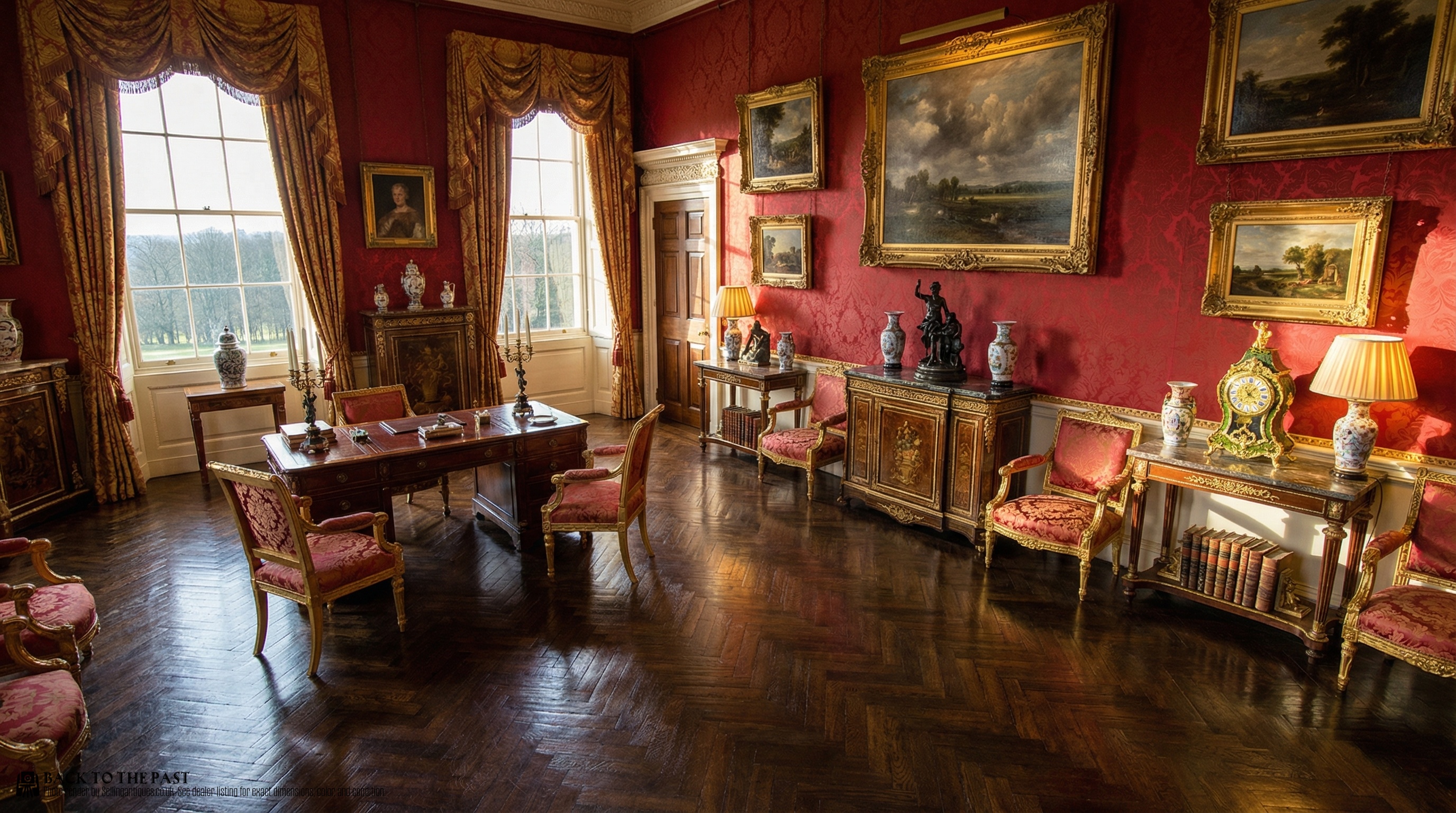
Ornate Brass Mantle Clock
When you search for an ornate brass mantle clock, you encounter heavy Victorian and nineteenth-century French designs built for prominent display in a room. These objects combine metalwork with timekeeping, often taking the form of mantel clocks, carriage clocks, and crystal regulators from periods spanning the middle of the nineteenth century to the early twentieth century.
The versions you meet most frequently on this page originate from French workshops and Victorian English makers, appearing in styles that channel Louis XVI, Second Empire, and Rococo revivals. They sit on heavy brass feet, incorporating enamel dials and glazed panels that reveal the internal mechanisms ticking away inside.
Many examples integrate porcelain panels or gilt bronze mounts alongside the primary brass structure, creating substantial decorative centrepieces for a shelf or mantelpiece. The forms range from compact carriage clocks designed for travel to large architectural mantel clocks requiring a sturdy surface.
What varies in quality
The distinction between ordinary and superior pieces rests on the crispness of the brass casting and the depth of the hand-chasing applied to the surface ornament. Finer examples display sharp, well-defined acanthus leaves and figural details without the softening or pitting common in mass-produced later castings.
The complexity and finish of the internal movement also separate grades, with platform escapements, repeater functions, and signed dial plates indicating higher workshop standards. Cabinets that incorporate undamaged bevelled glass, intact enamel dials without hairline fractures, and matching components retain greater integrity.
The integration of decorative elements like hand-painted Sevres-style porcelain panels or champlevé enamel work dictates the upper tier of the range. When these delicate insertions survive without chips or restoration, the overall object commands more attention.
Listings feature brass, gilt metal, and ormolu clock forms spanning the Victorian era and the late nineteenth century.
Howell & James London·Brunelot·Dehné of Paris·Tiffany·Auguste Moreau
The Ornate Brass Mantle Clock Glossary
- Ormolu
- Gilded bronze produced by applying a mixture of mercury and gold to a bronze base and heating it. This technique creates a durable, rich golden finish characteristic of French decorative arts.
- Champlevé
- An enamelling technique where troughs or cells are hollowed out of the metal surface and filled with vitreous enamel powder before firing. It creates colourful geometric or floral patterns across the brass body.
- Crystal regulator
- A mantel clock featuring glass panels on all four sides held within a brass frame, allowing light to pass through and display the escapement and pendulum clearly.
- Carriage clock
- A portable spring-driven timepiece developed for travellers, housed in a brass case with a carrying handle and glass panels. They often include alarm functions or repeater strikes.
- Boulle
- A form of marquetry utilising tortoiseshell and brass inlay set into a dark wooden substrate. It takes its name from the master cabinetmaker Andre-Charles Boulle.
Ornate Brass Mantle Clock: Frequently Asked Questions
Why does my carriage clock not strike?
Many carriage clocks feature a silent lever or separate trains for time and strike. Check that the strike train is fully wound and the lever is set to the active position.
If the clock runs but remains silent, the internal trip mechanism may need adjustment by a professional horologist.
Where should I place a heavy brass clock?
Select a stable, level surface such as a mantelpiece or sturdy sideboard capable of supporting substantial weight. A solid foundation prevents vibrations from interfering with the pendulum or balance wheel.
Keep the clock away from direct sunlight, damp walls, and heat sources to protect the enamel dials and gilt finishes.
How do I tell Victorian from French styles?
Victorian clocks often favour heavier architectural forms in marble or ebonised wood with conservative brass mounts. French pieces tend towards more exuberant Rococo or Louis XVI revival styling with elaborate ormolu cast work.
Signatures on the movement backplate or dial often confirm French workshop origins, whereas English pieces typically bear retailer stamps.