



Ornate Brass Jardinieres
These ornate brass jardinieres bring heavy cast metal, repousse ornament and historic French styling straight into your rooms.
Ornate Brass Jardinieres
Ornate brass jardinieres are heavy plant vessels and planters designed to hold indoor foliage, featuring prominent metalwork from the eighteenth to the early twentieth century. You are most likely to meet nineteenth-century French and Gothic revival examples on this page, often cast in brass, ormolu, or gilt bronze.
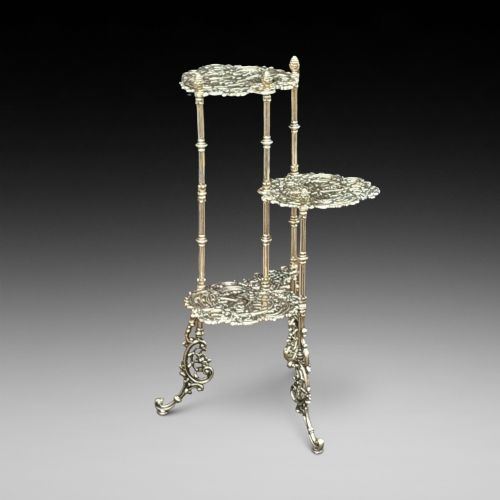
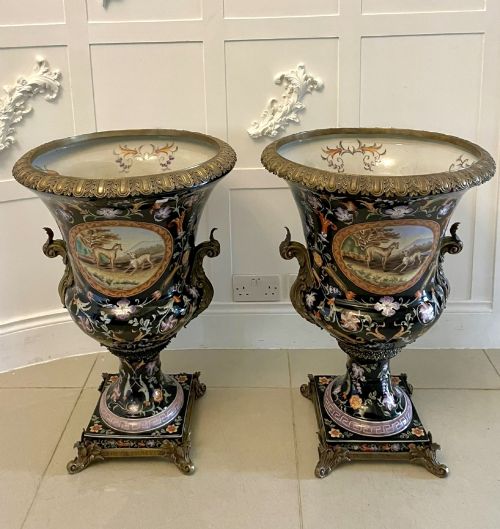
The forms range from traditional footed urns and cachepots to matched pairs on stands, plant stands, and two-tier pedestal supports. Many incorporate contrasting materials such as porcelain, enamel, tortoiseshell, and ebonised wood alongside the primary metal structure.
Stylistic influences vary widely across the inventory, drawing on Napoleon III, French Empire, French Baroque, Aesthetic movement, and Japanese styles. Pieces often display specific decorative flourishes like lion's mask handles, animal heads, and intricate repousse work.
How they were made
Makers utilised casting techniques to produce heavy structural elements like brass stands, handles, and urn bodies, frequently incorporating animal heads and lion's masks. Repousse methods allowed artisans to hammer detailed relief patterns into the metal surface from the reverse.
Many examples combine brass mounting with porcelain, enamel, ormolu, gilt bronze, tortoiseshell, and ebonised or inlaid mahogany wood. These mixed media pieces required specialist cabinetmaking and metalworking skills to join disparate materials securely.
Ornate Brass Jardinieres Retail Price Guide 2026
Typical asking prices for ornate brass jardinieres among the pieces listed under this phrase on Sellingantiques today, from the lower quarter to the upper quarter. They describe what is for sale here now, not the wider market.
The inventory records pieces spanning the eighteenth, nineteenth, and early twentieth centuries.
What varies in quality
Quality rests heavily on the crispness of the cast or repousse ornament and the depth of relief in details like lion masks and animal heads. Superior pieces display sharper hand-chasing on the metal and finer integration of secondary materials such as porcelain plaques or tortoiseshell.
The structural integrity of the base, whether a two-tier plant stand, a pedestal, or cast brass legs, distinguishes more substantial pieces from lighter alternatives. Harmony between the brass mountings and the ceramic or wooden bodies determines the overall success of the design.
The Ornate Brass Jardinieres Glossary
- Jardiniere
- A decorative pot or stand designed to hold plants or flowers indoors. They typically sit on tables or floor pedestals.
- Repousse
- A metalworking technique where the artisan hammers the metal from the reverse side to form a raised design in relief. This creates tactile surface patterns on the planter body.
- Ormolu
- Gilded bronze applied to furniture and decorative objects, widely used on French pieces. It provides a bright, durable metallic finish.
- Boulle
- A style of marquetry using tortoiseshell and brass inlay, associated with French furniture and stands. It produces a rich patterned surface.
- Cachepot
- An ornamental container used to conceal an ordinary flowerpot. They prevent water damage to furniture surfaces.
Ornate Brass Jardinieres: Frequently Asked Questions
How were these jardinieres used historically?
Historically, homeowners placed them on tables, sideboards, or dedicated stands to display indoor greenery and flowering plants during grand entertaining.
They brought botanical elements into formal nineteenth-century interiors while showcasing the metalworking skills of the period.
How do I style a plant stand?
Plant stands and pedestal jardinieres suit entryways, drawing rooms, or bright corners where their height and metal finishes catch the light.
Pair them with trailing foliage or sculptural plants to balance the heavy cast brass and ornate decorative details.
How can I tell periods apart?
Periods reveal themselves through stylistic clues like Gothic revival motifs, Napoleon III boullework, or Aesthetic movement influences.
Examining the manufacturing techniques, such as cast brass versus repousse work, helps narrow down the century of production.