


Ornate Brass Fire Screen
An ornate brass fire screen adds architectural weight to a hearth, combining heavy cast frames with delicate mesh or folding fan panels.
Ornate Brass Fire Screen
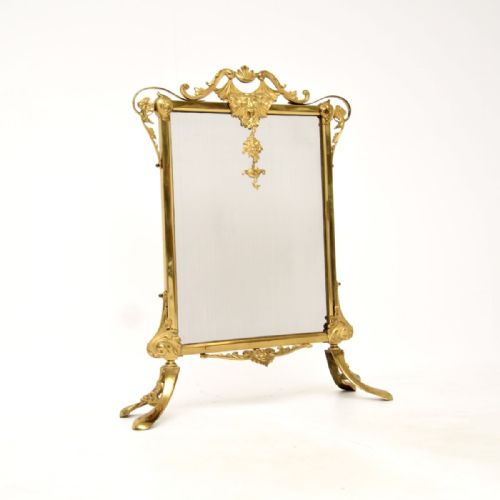
An ornate brass fire screen is a protective hearth accessory designed to block stray embers while doubling as a decorative focal point in a reception room. When you search for an ornate brass fire screen, you encounter heavy metal frames built to stand unsupported before a fireplace opening.
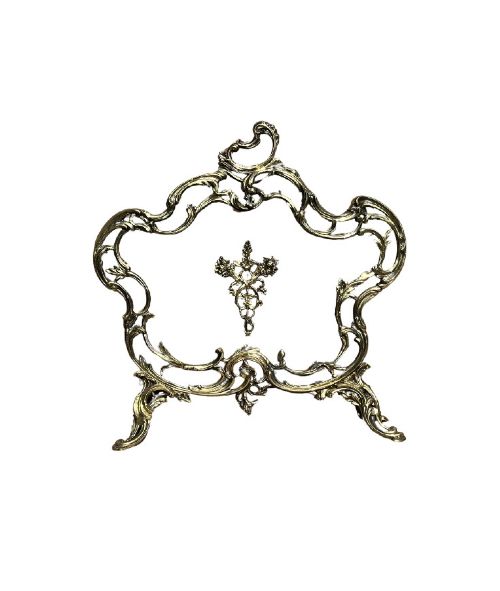
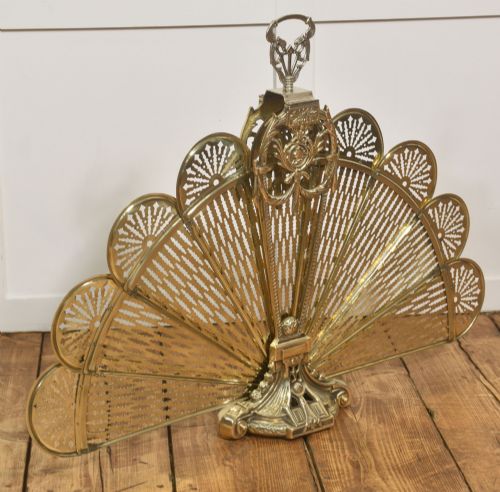
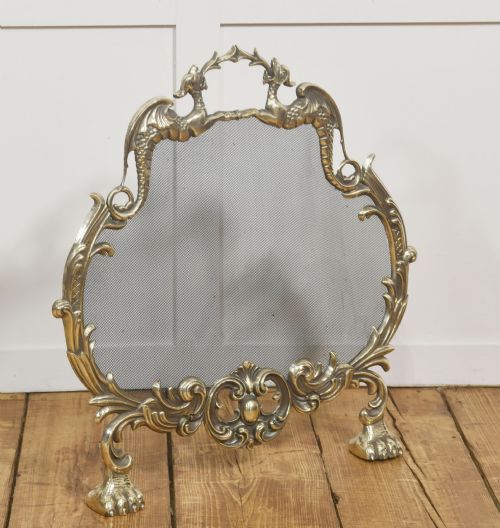
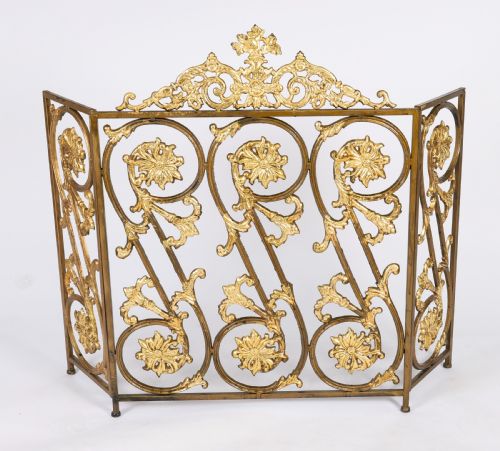
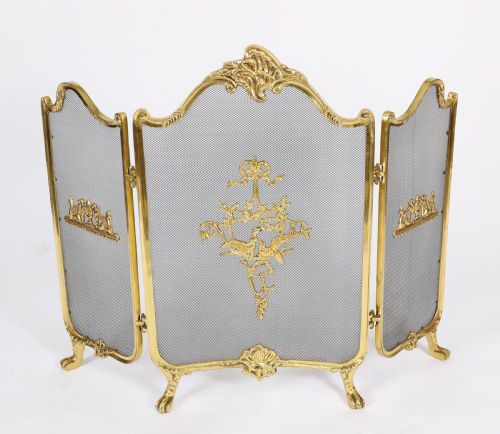
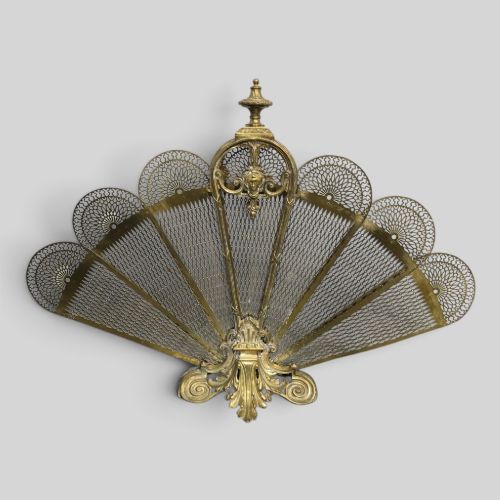
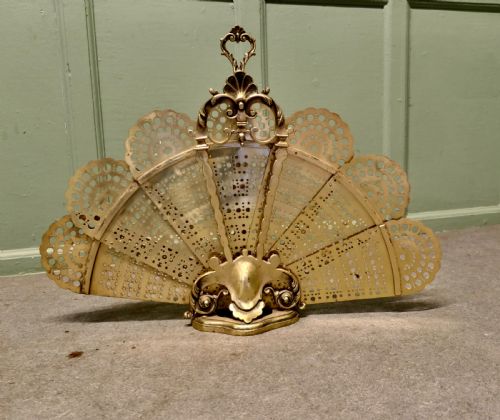
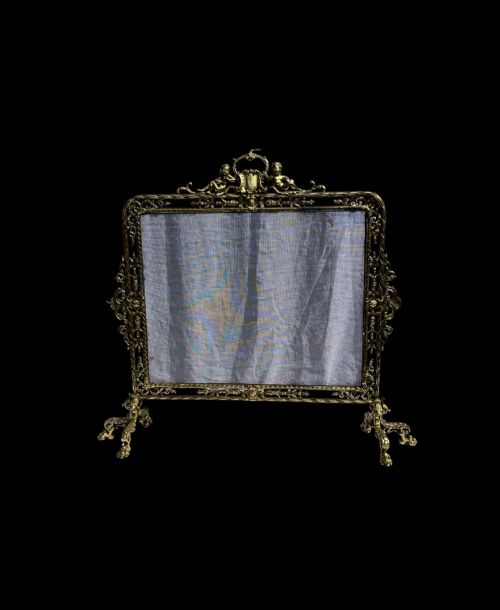
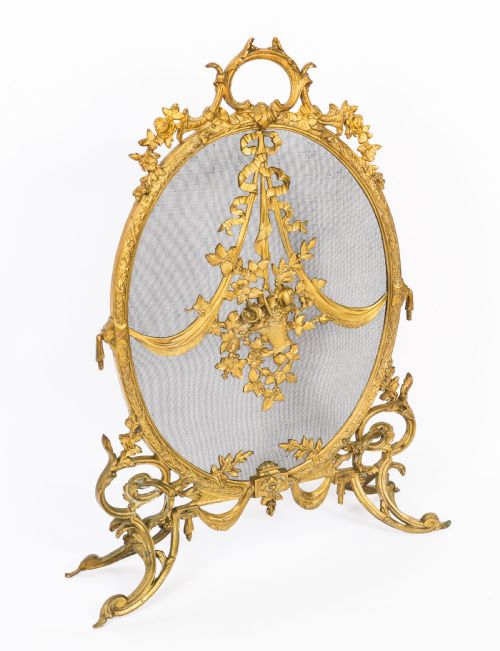
The pieces seen here span the nineteenth century into the early twentieth century, with a strong representation of Victorian examples and French revival styles. You are most likely to meet French Rococo revival designs alongside folding peacock fan fire screens and solid frames fitted with wire mesh.
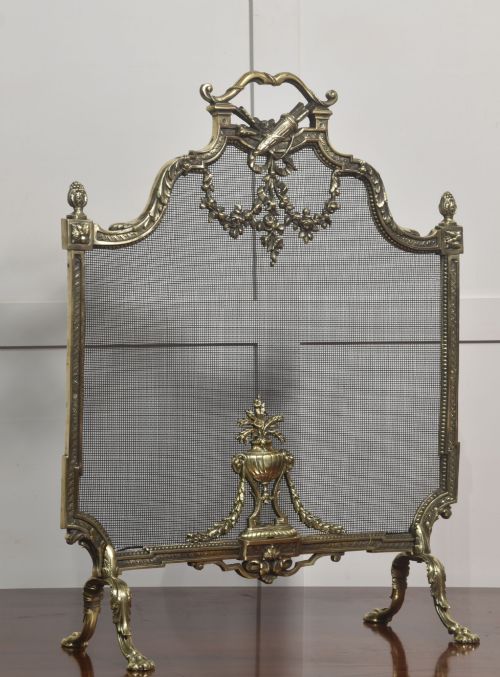
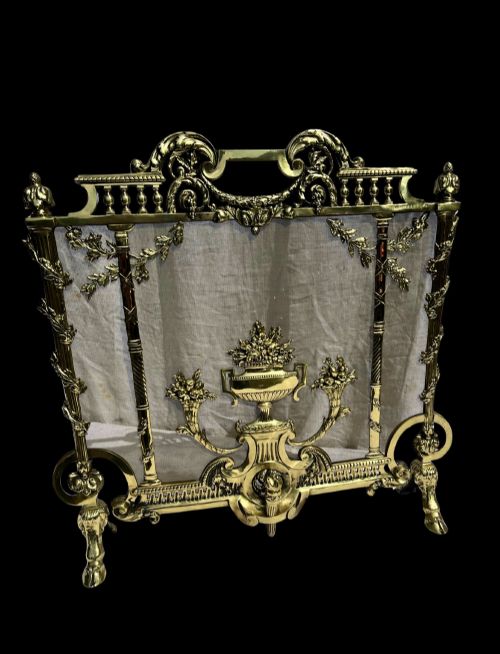
Makers and designers drew heavily on historical French motifs, producing screens with flaming torches, classical trophies, and dolphin motifs cast in brass, gilt bronze, and gilt metal. These objects served both a practical purpose in containing coal fires and an aesthetic one during summer months when the hearth was unlit.
Materials and construction methods
Construction relies primarily on cast brass, gilt bronze, and gilt metal, forming substantial structural frames and decorative feet. Artisans shaped these metals through casting, piercing, and chasing to create elaborate scrollwork and asymmetrical Rococo flourishes.
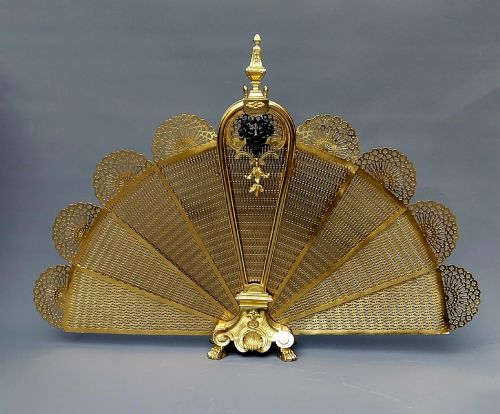
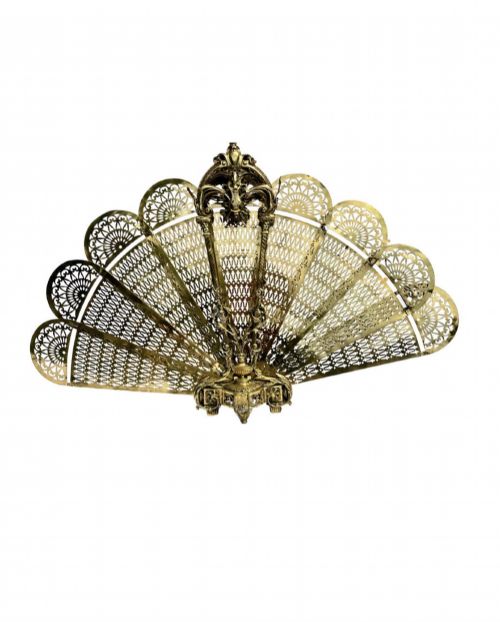
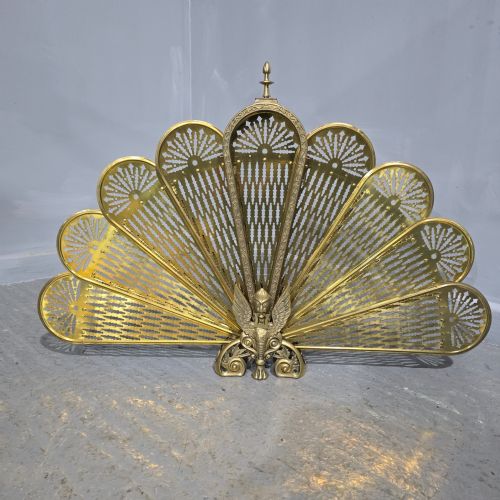
Wire mesh, steel mesh, and textile panels were integrated into the central aperture to shield the room from sparks without blocking radiant heat. Folding mechanisms on peacock fan screens allowed the radiating brass blades to expand and contract around a central pivot.
Ornate Brass Fire Screen Retail Price Guide 2026
Typical asking prices for ornate brass fire screen among the pieces listed under this phrase on Sellingantiques today, from the lower quarter to the upper quarter. They describe what is for sale here now, not the wider market.
Materials documented in the inventory include brass, gilt bronze, gilt brass, gilt metal, wire mesh, steel mesh, and standard mesh.
Assessing quality in period metalwork
Quality rests in the crispness of the casting and the depth of the chased detail across the brass and gilt bronze surfaces. Heavy gauge metal provides stability to the frame, ensuring the screen stands firmly without wobbling on an uneven hearth.
The articulation of hinges on folding panels and the fineness of the wire mesh distinguish standard production from exceptional examples. Superior pieces display hand-finished chasing that sharpens the contours of scrolls, floral garlands, and figural motifs.
Bouhon Frères
The Ornate Brass Fire Screen Glossary
- Gilt bronze
- An alloy of copper and zinc coated with a layer of gold, providing a rich, warm metallic finish that resists tarnishing. It is frequently found on nineteenth-century French pieces.
- Rococo revival
- A nineteenth-century design movement characterised by asymmetrical C-scrolls, shell motifs, and naturalistic plant forms derived from eighteenth-century French decoration.
- Wire mesh
- A woven metal grid fitted into the central frame of a fire screen to contain sparks while maintaining visibility of the fire. It appears in both iron and brass variants.
- Peacock fan screen
- A specific hearth guard featuring folding brass blades that fan out to resemble a peacock tail. They became popular during the late Victorian and Edwardian periods.
- Louis XIV revival
- A classical design style drawing on the formal symmetry, heavy proportions, and ornate ornamentation of the seventeenth-century French court.
Ornate Brass Fire Screen: Frequently Asked Questions
How do I use a fire screen safely?
Place the screen at a safe distance from an active fire to catch flying sparks and protect the surrounding floor covering. Ensure the heavy cast feet or folding supports are fully extended so the screen remains stable.
During warmer months when the hearth is unlit, position the screen directly in front of the empty fireplace to provide an ornamental focal point in the room.
What is a peacock fire screen?
A peacock fire screen consists of multiple overlapping metal blades that pivot around a central base to open into a semi-circular fan shape. This design allows the screen to fold compactly when not in use.
These folding guards became popular in the late nineteenth and early twentieth centuries, offering a decorative method of covering an unused summer hearth.
How do I clean antique brass?
Dust the brass and mesh gently with a soft, dry cloth to remove surface particles without scratching the metal. Avoid harsh commercial chemical cleaners that can strip historical patination and gilt surfaces.
If the metal requires deeper cleaning, use a mild, non-abrasive soap solution applied sparingly, then dry the surface thoroughly to prevent water spotting.
How do I date a brass fire screen?
Examine the casting quality, fastening methods, and stylistic cues to determine the period of manufacture. Nineteenth-century pieces often display hand-chased detailing and heavier cast brass or bronze frames.
Reference the specific revival style, such as Rococo or Louis XIV, alongside material indicators like wire mesh and gilt finishes to narrow down the decade of production.