


Ornate Brass Candlestick Pair
An ornate brass candlestick pair brings nineteenth-century weight and polish to a table, offering matched domestic illumination from the Victorian and Regency periods.
Ornate Brass Candlestick Pair
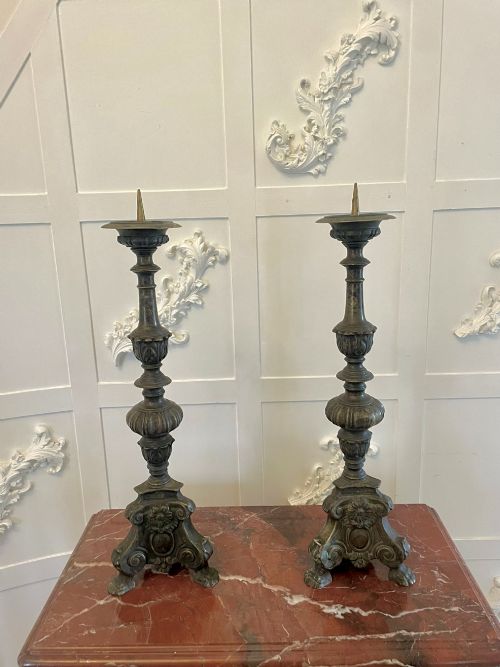
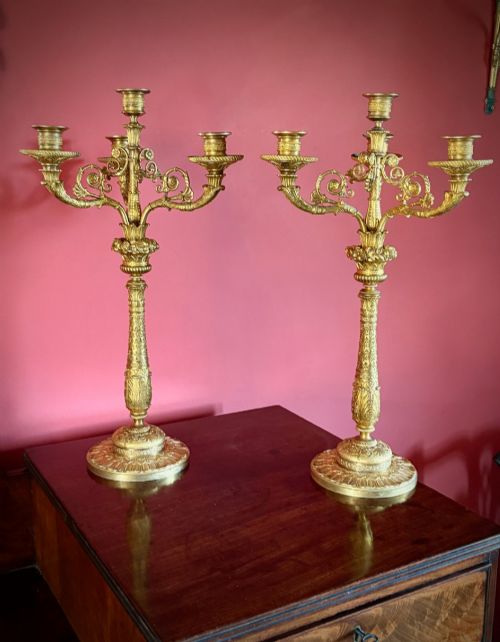
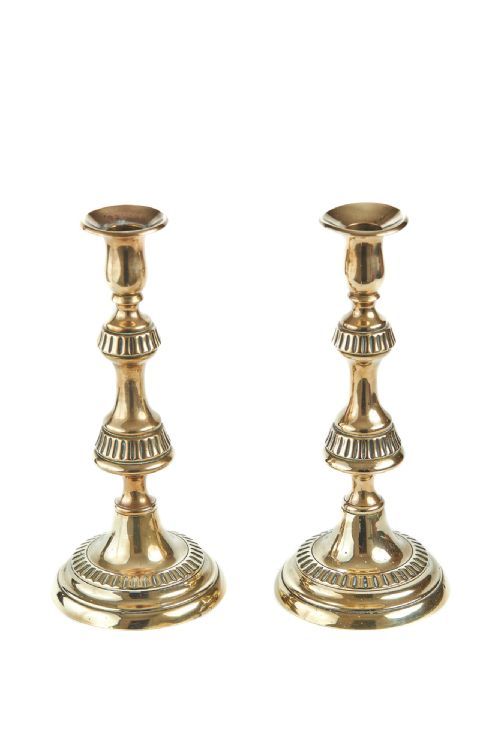
When you search for an ornate brass candlestick pair, you encounter heavy cast metal objects designed to hold candles or support later electrical wiring. The selection on this page spans the nineteenth century, taking in Regency, Victorian, and French Empire styles alongside Gothic and Rococo revivals.
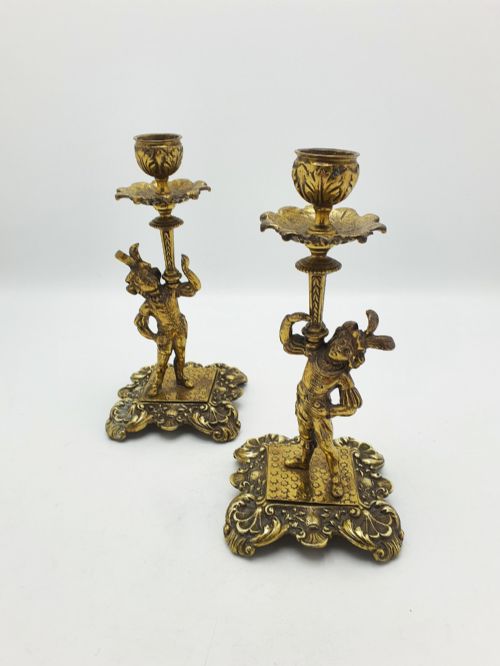
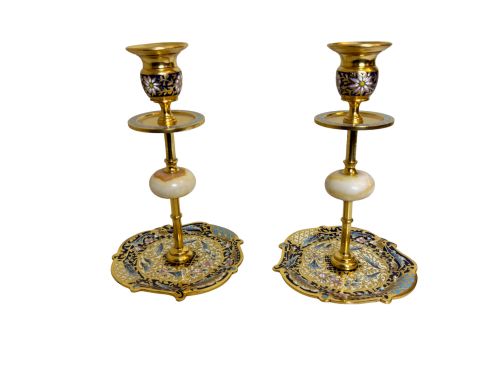
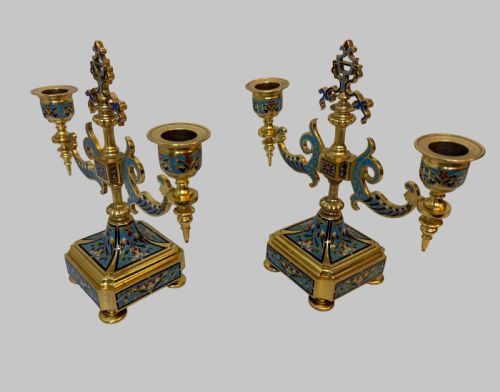
You will find standard single-light candlesticks alongside multi-branched candelabra and figural pieces featuring cherubs or heraldic motifs. Many examples incorporate secondary materials such as marble, onyx, or enamel to achieve a decorative surface.
Most items originate from British and continental workshops, reflecting nineteenth-century domestic interiors where matched pairs served as decorative mantel or dining table centrepieces.
Materials and technique
The construction relies heavily on cast brass, ormolu, and gilt bronze, shaped through traditional foundry methods to achieve intricate surface relief. Artisans also utilised repoussé techniques and champlevé enamel work to introduce colour and texture into the metal body.
Combinations of brass with marble bases or inset onyx appear frequently among the listings, adding structural weight and contrasting tones. Some specimens incorporate fabric elements or tortoiseshell boulle-work, demonstrating varied decorative assembly across the nineteenth-century periods.
Listings feature materials spanning brass, gilt bronze, ormolu, marble, onyx, and champlevé enamel across nineteenth-century forms.
Variations in quality
The standard of a pair rests upon the crispness of the casting and the depth of the chased detail across the metal surface. Superior examples display sharply defined figural work and clean joins, whereas simpler productions show softer contours and minimal hand-finishing.
The integrity of the gilding or patination also separates standard items from exceptional ones, with well-preserved ormolu retaining a distinct warm lustre. Furthermore, the inclusion of decorative stones like marble or champlevé enamel elevates the visual complexity of the piece.
The Ornate Brass Candlestick Pair Glossary
- Ormolu
- A gilded bronze technique utilising a mercury amalgam, popular in French and English decorative metalwork. This process creates a rich, durable golden surface finish on decorative objects.
- Champlevé
- An enamelwork technique where troughs are carved into the metal surface and filled with vitreous paste before firing. The resulting coloured patterns contrast sharply with the surrounding brass or bronze body.
- Pricket
- A sharp metal spike on a candlestick designed to skewer and hold a large candle in place. These fittings appear frequently on ecclesiastical and large Victorian altar-style pieces.
- Repoussé
- A metalworking method where the artisan hammers the design from the reverse side to create raised relief patterns on the front. This technique allows for lightweight yet heavily decorated surfaces.
- Boulle-work
- An elaborate marquetry process involving tortoiseshell and brass inlay, applied here to wooden or metal bases. It originates from seventeenth-century French furniture traditions but surfaces on Victorian decorative items.
Ornate Brass Candlestick Pair: Frequently Asked Questions
What periods do these pieces come from?
The listings span the nineteenth and early twentieth centuries, encompassing the Regency, Victorian, and Edwardian eras. You will find items dated across the decades from eighteen hundred to nineteen hundred and thirty.
Stylistic influences range from French Empire and Rococo Revival to Gothic and Aesthetic movements. These dates reflect the manufacturing periods recorded by individual dealers on the marketplace.
How were these candlesticks originally used?
Pairs of candlesticks and multi-branched candelabra provided functional illumination on dining tables, sideboards, and mantelpieces before widespread electric lighting. They were positioned to reflect candlelight off polished surfaces in wealthy nineteenth-century homes.
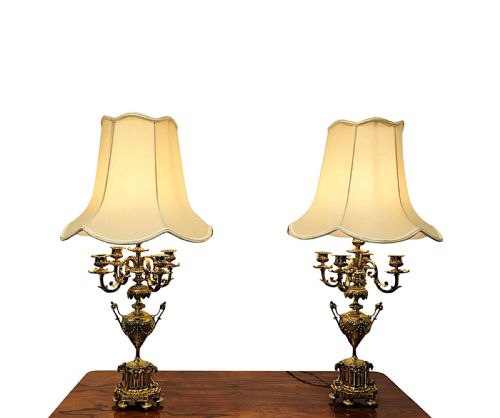
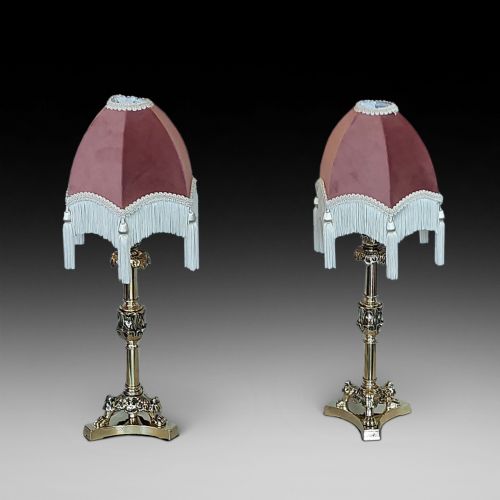
Over time, many examples have been adapted with electrical fittings to serve as table lamps while retaining their original metal bases. This conversion allows them to function in modern interiors without losing their period appearance.
Are these items strictly British in origin?
While many pieces reflect British tastes of the Victorian and Regency periods, a significant portion originates from continental Europe, particularly France and Italy. Styles such as French Empire and Venetian cast brass appear frequently among the listings.
Dealers often note potential continental origins where stylistic markers align with French or Italian workshops of the nineteenth century. This European influence contributed heavily to the decorative vocabulary of British domestic interiors.
How do I care for antique brass and ormolu?
Antique brass and ormolu require gentle dusting with a soft, dry cloth to prevent the accumulation of grit in recessed chasing. Avoid abrasive chemical cleaners and aggressive polishes, which can strip away original historic patination and surface gilding.
If wiring has been added for modern use, consult a qualified electrician to check the internal components regularly. Maintaining the structural and surface integrity preserves the decorative character of the metal.