


Ornate Brass Bedside Lamp
These ornate brass bedside lamps bring warmth and heavy character to a room, turning utilitarian reading corners into polished domestic settings.
Ornate Brass Bedside Lamp
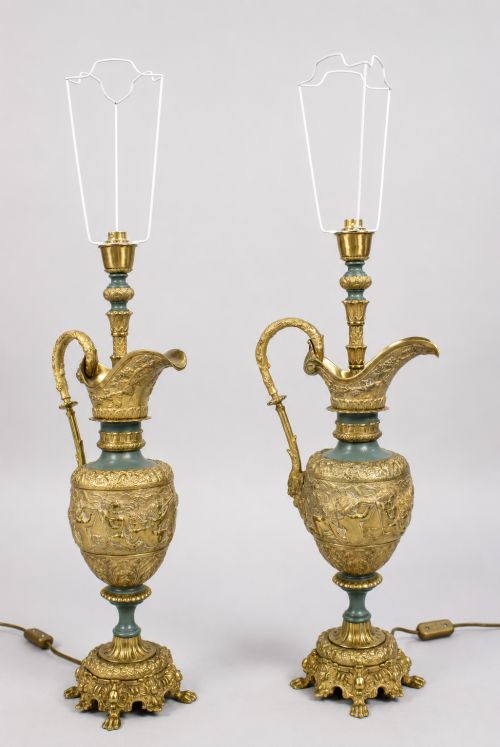
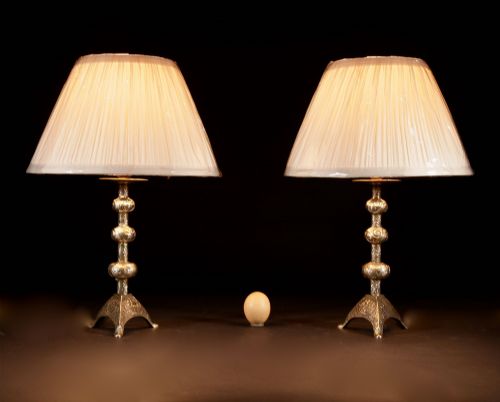
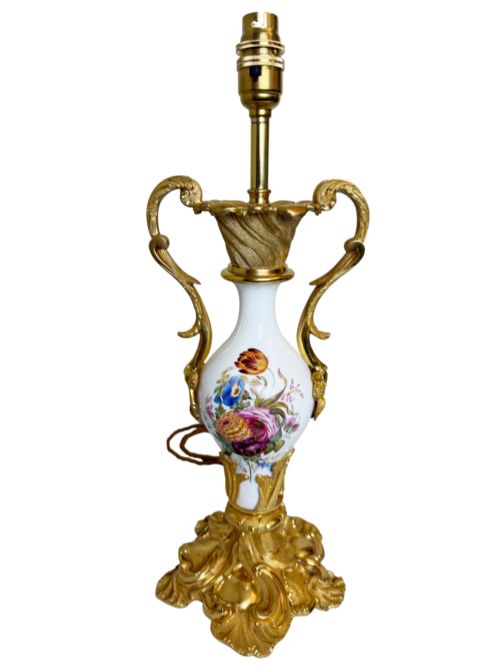
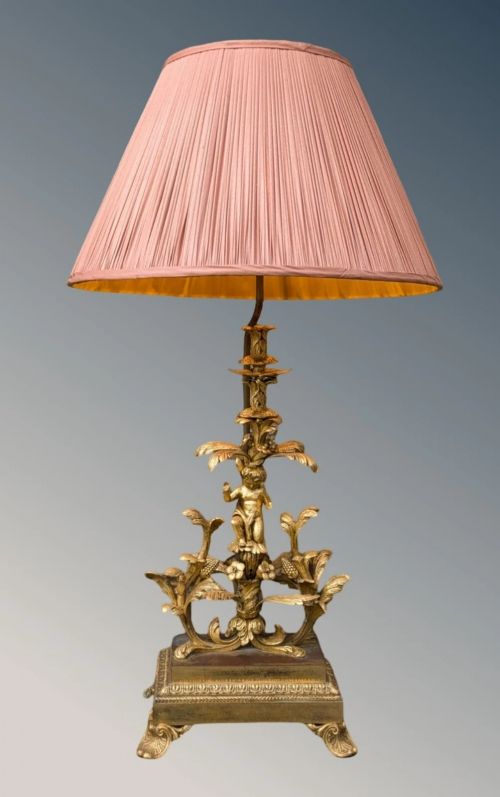
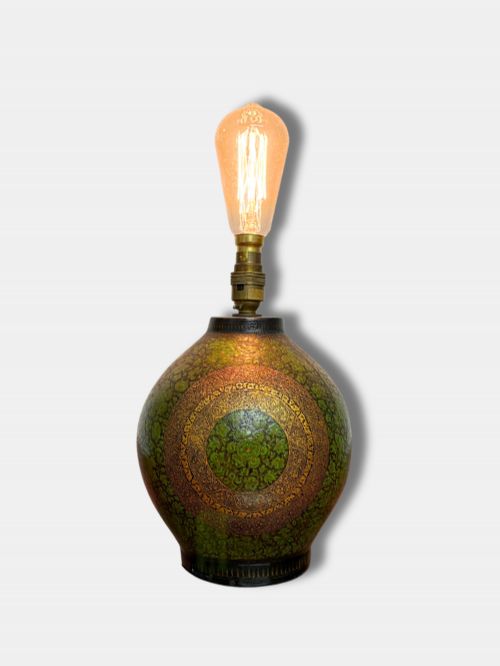
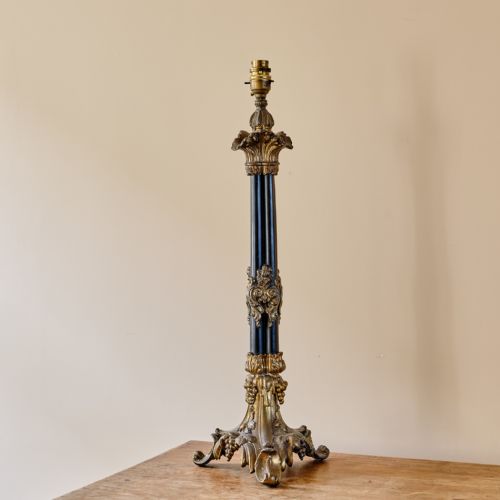
When searching for an ornate brass bedside lamp, you encounter table lamps, converted candlesticks, and oil lamps spanning the nineteenth and early twentieth centuries. The selection ranges from Victorian neoclassical brass columns to French rococo revival gilt bronze pieces and Kashmiri designs.
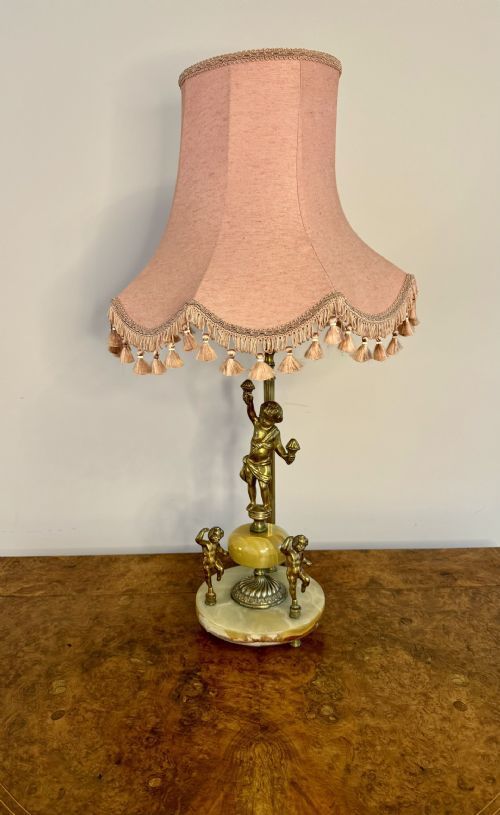
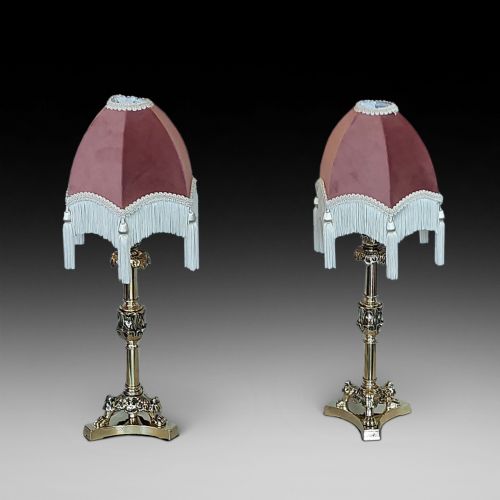
Most examples hail from the nineteenth century or the Edwardian era, often featuring cast metal bases, fabric or silk shades, and intricate floral or architectural detailing. You find single statement pieces as well as matched pairs incorporating glass, onyx, and marble elements.
What separates the finest examples
Quality rests upon the crispness of the metal casting and the depth of the chasing work on the brass or bronze surface. Heavy cast components with sharp architectural or floral definition stand apart from lighter, softer stampings.
Material integration also dictates value, where natural bases of genuine marble or onyx and intact opaline glass or silk elements elevate the piece. The integrity of the original gilt finish and clean conversion work complete the distinction.
Several heavy table lamps began life as dining table candlesticks before a clever electrician gave them a glowing second career by the bed.
The Ornate Brass Bedside Lamp Glossary
- Gilt bronze
- Bronze that has been coated with a thin layer of gold or gold-coloured alloy. This technique provides a rich, metallic lustre that resists tarnishing over decades.
- Neoclassical revival
- A stylistic movement drawing inspiration from classical Greek and Roman architecture. Pieces display orderly columns, urn motifs, and symmetrical ornamentation.
- Onyx
- A banded variety of chalcedony quartz frequently utilised for lamp bases. Its natural stone variations introduce weight and distinctive coloured banding beneath the metal mountings.
- Spelter
- A zinc alloy commonly employed as a substitute for bronze in decorative metalwork. It accepts gilding and paint well, offering intricate detail at a different weight than solid brass.
- Opaline glass
- A type of semi-translucent glass that diffuses light softly. It appears frequently in period shades and bodies, valued for its milky appearance.
Ornate Brass Bedside Lamp: Frequently Asked Questions
Are these lamps safe for modern bedside use?
Most antique lighting has undergone conversion to electricity at some stage in its history. Buyers should check the internal wiring and consult a qualified electrician to ensure current safety standards.
Older fixtures often require modern fittings or rewiring to accommodate contemporary bulbs safely without damaging historical components.
How do I date a brass lamp?
Dating relies on stylistic clues, manufacturing techniques, and material combinations seen across different periods. Victorian pieces often display heavy neoclassical or rococo revival motifs, while early twentieth-century examples lean towards simpler column forms.
Examining the construction of the base, screws, and mounting hardware helps place the piece within the nineteenth or early twentieth century.
Can I replace the lampshades?
Replacing shades is common practice to match modern interior colour schemes. Original silk and fabric shades rarely survive centuries of use intact.
Selecting proportions that complement the heavy brass or bronze base ensures the lamp retains its visual balance.
What is the difference between brass and gilt bronze?
Brass is a copper and zinc alloy with a natural golden hue that develops a darker patina over time. Gilt bronze involves a bronze base metal treated with a gold finish.
Bronze generally permits sharper cast details and heavier weight compared to standard brass formulations.