
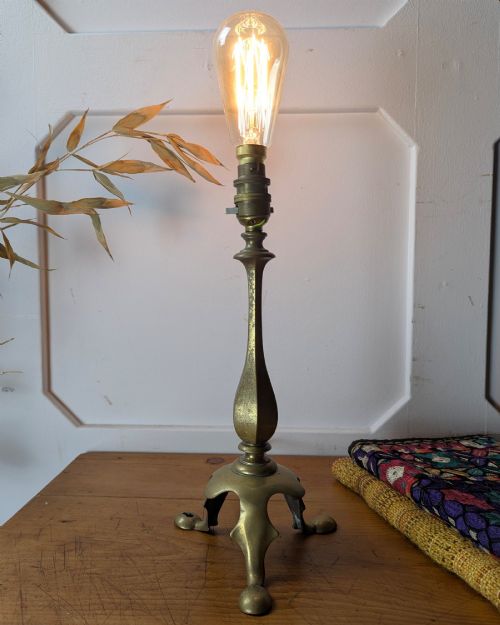


Cast Brass Candlestick Lamp
These cast brass candlestick lamp designs bring heavy metal presence and period weight to a room, turning old lighting hardware into reliable modern illumination.
Cast Brass Candlestick Lamp
A cast brass candlestick lamp repurposes heavier metal lighting stock from the nineteenth and early twentieth centuries into wired table lights. Buyers hunting a cast brass candlestick lamp encounter forms ranging from simple baluster profiles to elaborate Louis XV style ormolu and Gothic revival bases.
The inventory on this page draws heavily from Victorian and Edwardian periods, alongside French workshop items from around nineteen hundred to nineteen thirty. Most examples take the shape of single table lamps, lamp bases, or paired candelabra units mounted for electricity.
How they were made
Foundries produced these pieces using metal casting techniques in brass, bronze, and gilt bronze, occasionally combining the metal body with marble or glass elements. Molten alloy poured into moulds created the robust structural forms seen in hexagonal balusters and twin-arm candelabra configurations.
Makers finished the cast surfaces through chasing and polishing, sometimes applying gilding or ormolu finishes to catch the light. Later conversions involved boring the solid metal stems to run electrical wiring without compromising the original silhouette.
Listings span the nineteenth century through nineteen thirty, featuring brass, bronze, gilt bronze, and marble materials configured as table lights.
What varies in quality
Quality rests in the crispness of the cast detail and the weight of the metal componentry rather than superficial shine alone. Pieces originating from French ateliers or carrying specific stylistic rigour such as Gothic revival or Regency show sharper relief and deeper chasing.
The integrity of the original metal structure dictates the overall standard, distinguishing mass-produced commercial items from heavily cast church fixtures and matched pairs. Solid construction without undue thinning of the brass walls marks the upper tier of surviving examples.
The Cast Brass Candlestick Lamp Glossary
- Ormolu
- Gilded bronze produced by applying a mercury and gold amalgam to a bronze base, creating a rich golden surface often seen on French table lamps. This decorative treatment requires careful handling during cleaning to preserve the metallic layer.
- Baluster
- An architectural column shape with a swelled base that tapers towards the top, frequently utilised for the stems of nineteenth-century table lights. It provides visual stability to taller metal bases.
- Gilt bronze
- Bronze metal treated with a gold leaf or gold wash finish to imitate solid gold hardware. The technique enhances the decorative appeal of Victorian and Edwardian lighting fixtures.
- Candelabra
- A branched lighting fixture designed to hold multiple light sources, which makers later converted into electrified twin-arm table lamps. These paired items offer symmetrical illumination for large surfaces.
Cast Brass Candlestick Lamp: Frequently Asked Questions
Are these converted from old candlesticks?
Many examples began life as traditional altar candlesticks or lighting hardware before being safely adapted for modern electrical use. Workshops drilled the structural stems to house internal wiring while keeping the exterior metal body intact.
This method preserves the antique character and heavy weight of the original piece while making it functional for contemporary domestic spaces.
How do I date a brass lamp?
Dating relies on stylistic clues, casting methods, and material combinations associated with periods like the Victorian era, Edwardian years, or the nineteen-twenties. Gothic revival and Neoclassical motifs point towards nineteenth-century production.
Examining the base construction, patination, and any historical wear patterns helps confirm whether a piece dates from the nineteenth century or later.
How should I clean cast brass?
Dust the metal surface gently with a soft dry cloth to prevent the accumulation of grime in the chased recesses of the casting. Avoid harsh chemical polishes that strip away the natural antique patina accumulated over decades.
Preserving the darkened high points and historical surface wear maintains the visual depth that collectors value in older metalwork.
Do these lamps require special bulbs?
Most standard modern lamp fittings and appropriately rated LED bulbs work well with these converted antique bases. Check the internal lampholder for wattage restrictions to ensure safe daily operation.
Using low-heat bulbs protects both the historic metal body and any associated fabric shades from thermal damage.