


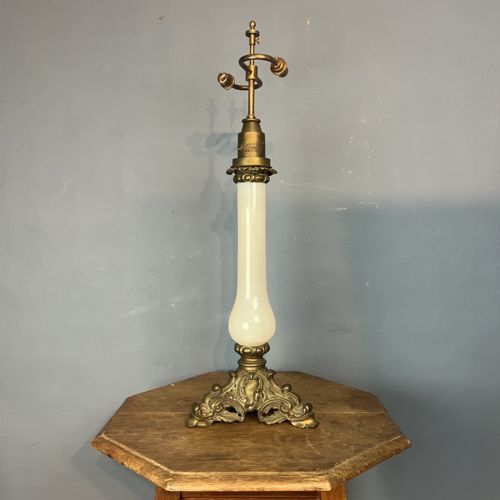
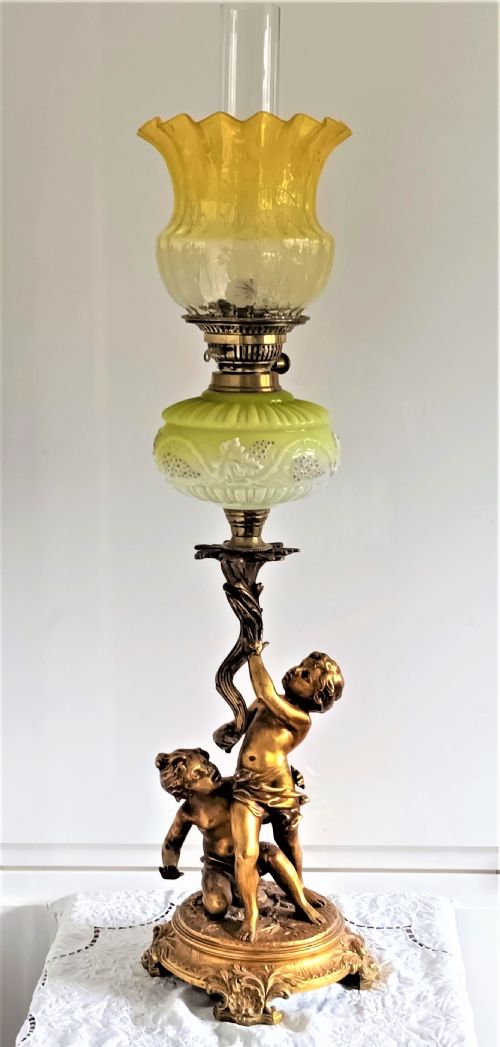
Ornate Table Lamp
When you search for an ornate antique table lamp, you are looking at domestic lighting fashioned from bronze, brass, glass, and marble during the nineteenth and early twentieth centuries.
Ornate Table Lamp
An ornate antique table lamp brings heavy metalwork, carved wood, and decorated ceramic into domestic spaces, drawing from Victorian, Edwardian, and continental design traditions.
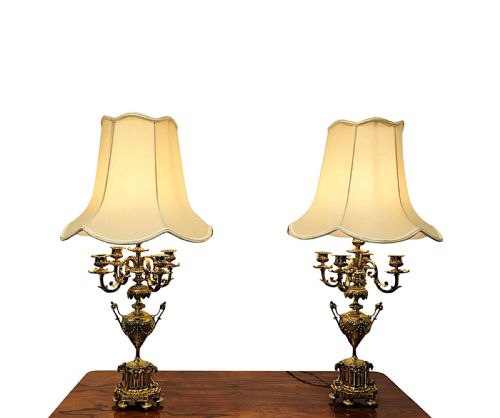
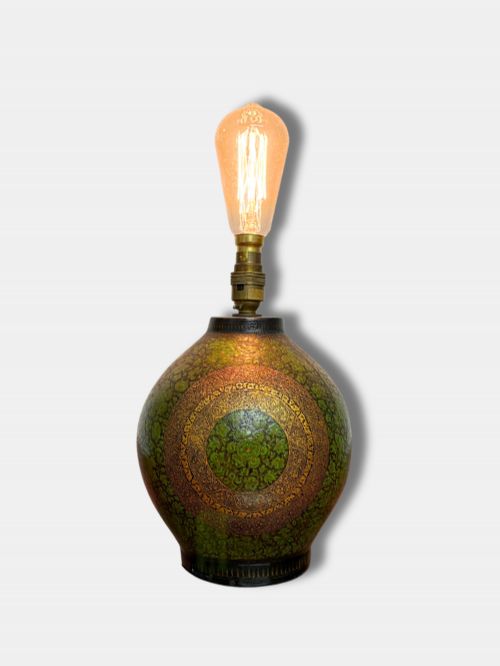
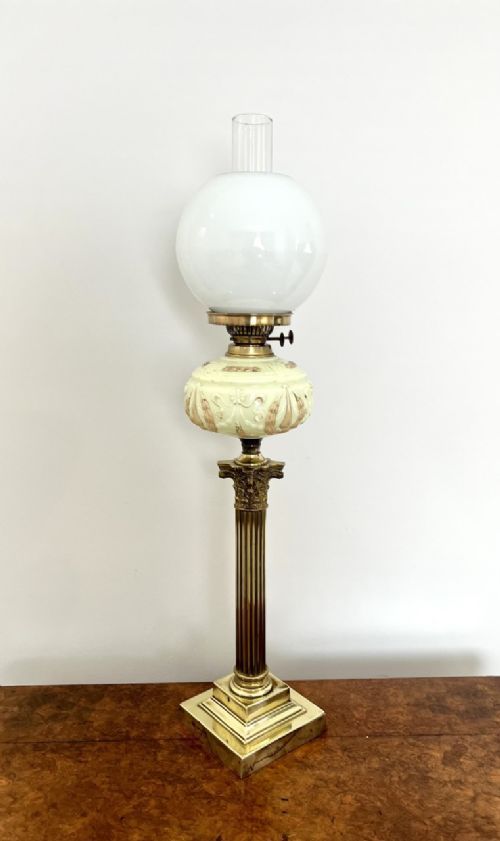
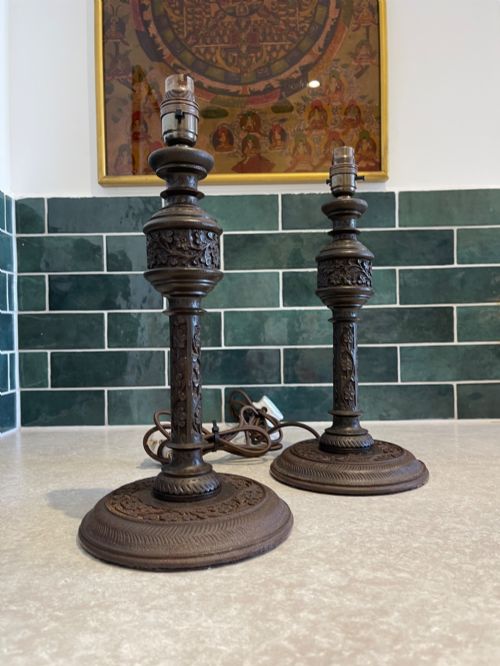
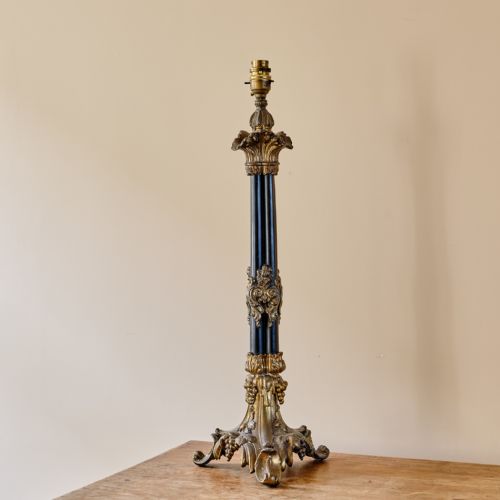
The pieces on this page include converted oil lamps, altered candlesticks, candelabra, and purpose-built bases spanning the nineteenth century through the early twentieth century.
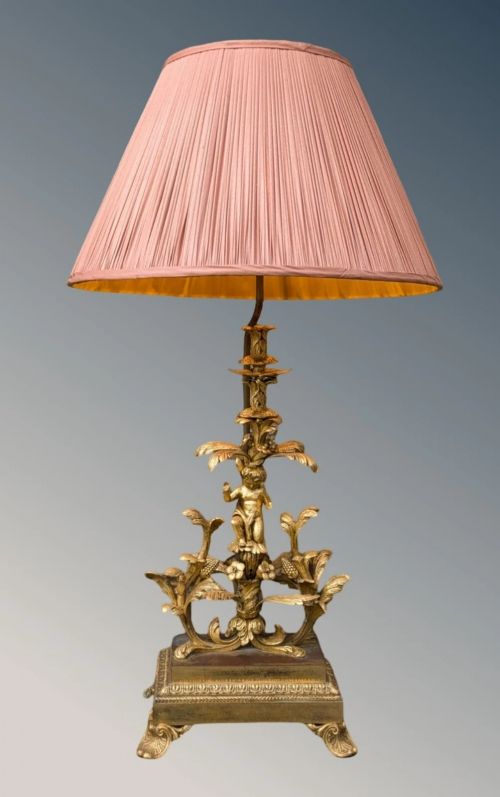
Makers and manufacturers utilised brass, gilt bronze, opaline glass, and onyx, often adopting French Neoclassical, Rococo Revival, or Arts and Crafts styles for interior illumination.
How they were made
Metals such as brass, gilt bronze, and cast iron form the structural core of these pieces, shaped through casting, chasing, and gilding.
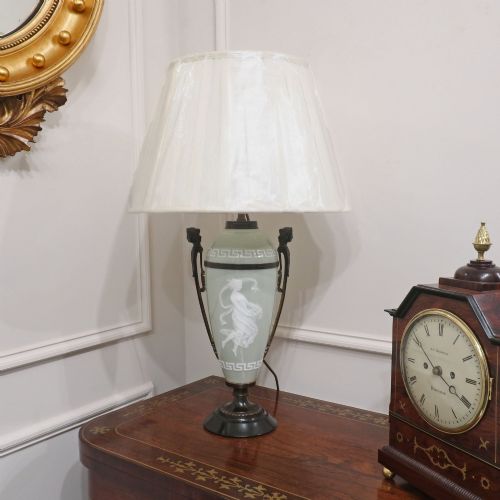
Many examples incorporate decorative inserts of marble, onyx, opaline glass, and pate sur pate porcelain, secured within metal mounts.
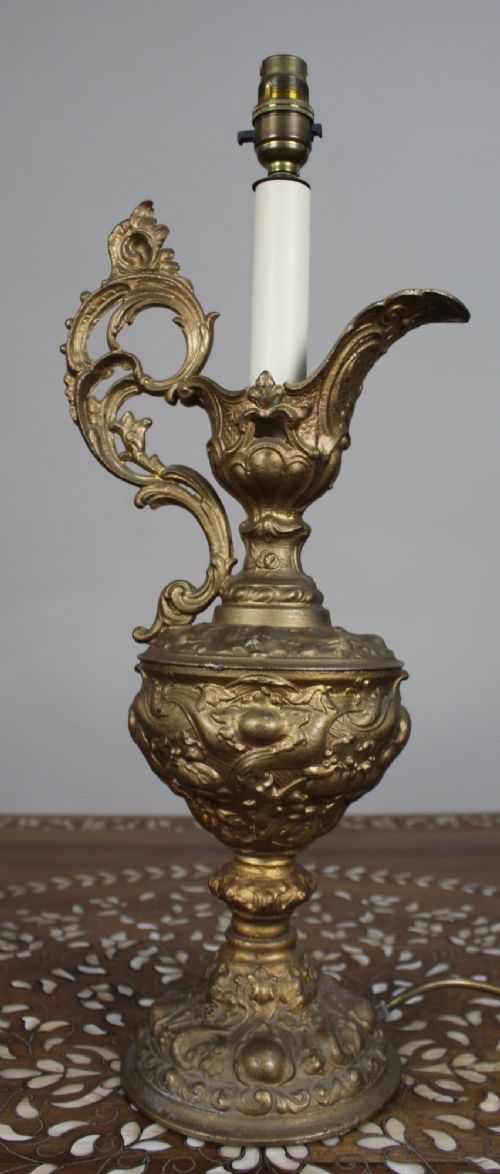
Earlier lighting units designed for oil or candles were frequently adapted later for electric fittings, retaining their original burners, fonts, and columns.
The listings on this page span the Victorian and Edwardian eras, featuring materials from gilt bronze to hand-painted glass.
What varies in quality
The crispness of the metal casting and the depth of the chasing separate standard production pieces from finer studio or factory work.
The integration of secondary materials, such as solid marble bases and hand-painted porcelain panels, dictates the overall architectural presence of the lamp.
Mc Gary·Wild and Wessel
The Ornate Table Lamp Glossary
- Ewer
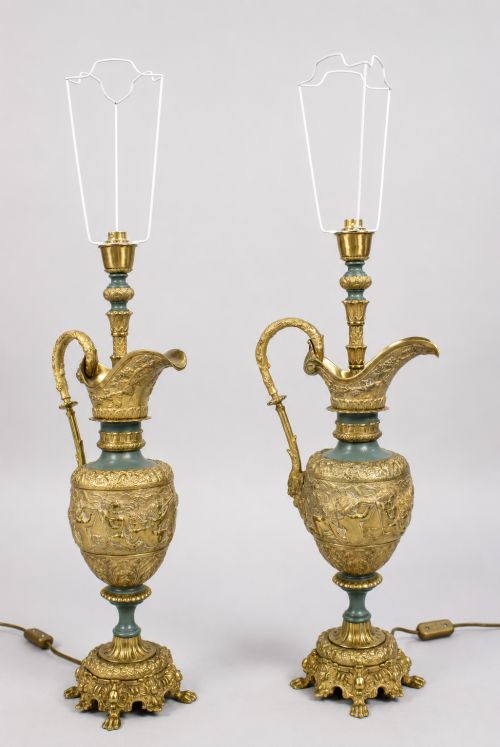
- A large jug with a wide spout and handle, which makers frequently transformed into the main body of a decorative table lamp.
- Ormolu
- Finely ground high-carat gold applied to bronze or other metals, producing a rich golden surface found on French lighting.
- Opaline
- A delicate, opaque glass varying in colour from white to soft pastel shades, used for the bodies and fonts of nineteenth-century lamps.
- Pate sur pate
- A ceramic decorating technique where white porcelain slip is applied in successive layers to a coloured background to create a low relief design.
Ornate Table Lamp: Frequently Asked Questions
What is an ornate antique table lamp?
These items are decorative domestic light fittings produced during the nineteenth and early twentieth centuries, drawing on styles from French Neoclassical to Arts and Crafts.
They combine heavy cast metals with glass, marble, and hand-painted ceramic elements to create focal points for tables and sideboards.
Were these always electric lamps?
Many surviving examples began life as oil lamps, argand lamps, or candlesticks before being converted to accept electrical wiring at a later date.
Original oil reservoirs, burners, and wick mechanisms are often retained within the converted structure.
How do I date an antique lamp?
Dating relies on examining the manufacturing techniques of the metal base, the style of any decorative mounts, and patent marks or maker stamps.
Victorian and Edwardian pieces show distinct shifts from heavy cast brass columns to delicate gilt bronze or onyx designs.
What materials are common?
Brass, gilt bronze, and cast metal dominate the structural elements, often paired with bases made from white marble or onyx.
Shades and bodies frequently incorporate opaline glass, hand-painted porcelain, or fabric components.