




Ornate Bureau
An ornate antique bureau brings decorative writing furniture to a room, offering compartments and drop-front writing surfaces.
Ornate Bureau
An ornate antique bureau encompasses sophisticated writing furniture designed for domestic study and correspondence. These pieces span the nineteenth century and the early twentieth century, drawing heavily on French revivals and Victorian craftsmanship.
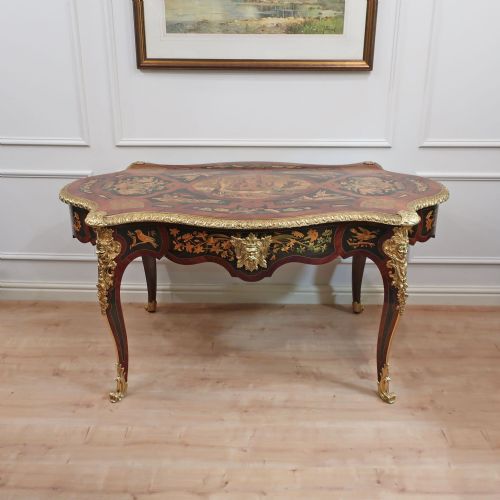
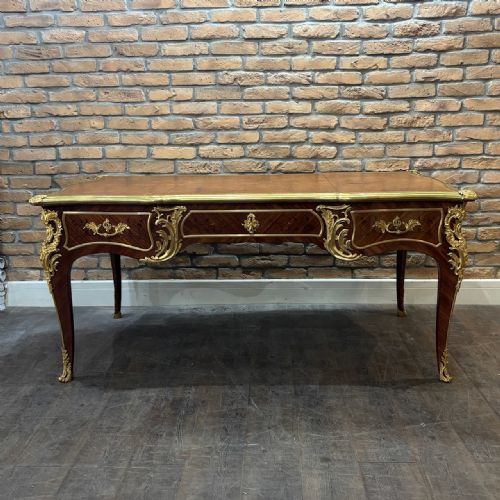
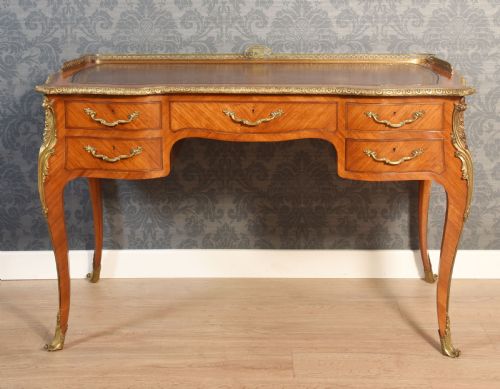
Buyers encounter freestanding partner desks and smaller bureau de dame desks tailored for parlour use. Walnut, kingwood, and mahogany provide the primary structural foundations for these writing surfaces.
What varies in quality
The refinement of the surface decoration largely determines the standing of an individual piece. Finely cut marquetry patterns and well-chiselled ormolu mounts indicate superior workshop output.
The structural integration of bronze or brass mounts with the surrounding timber shows the care taken during assembly. Heavier proportions and substantial freestanding forms separate grander partner desks from simpler domestic tables.
Listings feature 19th-century and Victorian pieces alongside 20th-century examples up to 1940, constructed from kingwood, walnut, mahogany, and oak.
The Ornate Bureau Glossary
- Bureau plat
- A freestanding writing table fitted with drawers, originating in France. These tables typically feature finished backs suitable for placement in the centre of a room.
- Secretaire
- A cabinet or desk incorporating a writing drawer or a fold-down flap enclosing small compartments and pigeonholes. This form conceals writing materials when not in use.
- Ormolu
- Gilded bronze used extensively for decorative mounts on nineteenth-century furniture. The metal is cast and chased to add ornamental detail to furniture corners and aprons.
- Marquetry
- The art of applying decorative pieces of veneer to a structure to form geometric or floral designs. Cabinet makers utilise various tinted woods to achieve contrast and depth.
- Davenport
- A compact form of writing desk featuring a sloped writing surface above a pedestal of drawers. These desks frequently include side compartments for stationery.
Ornate Bureau: Frequently Asked Questions
Where should I place an ornate antique bureau?
These writing desks suit studies, libraries, or spacious drawing rooms where natural light falls across the writing surface.
Freestanding bureau plat tables work particularly well in the middle of a room because their decorative back panels allow them to be viewed from all sides.
How do I maintain the leather writing insert?
Leather surfaces require gentle cleaning with dry cloths and occasional treatment with appropriate conservation balms to prevent cracking.
Avoid applying harsh chemical cleaners or excessive moisture to the surrounding wood veneer when maintaining the leather panel.
What is the difference between a bureau plat and a secretaire?
A bureau plat functions primarily as an open writing table equipped with drawers beneath the top surface.
A secretaire incorporates enclosed compartments, often hidden behind a drop-front flap or vertical door, for storing private papers and stationery.
How do I identify a Victorian piece from a later revival?
Victorian examples display construction methods and timber selections characteristic of nineteenth-century British and continental workshops, including hand-cut dovetails and traditional polishes.
Later twentieth-century revivals utilise similar decorative vocabularies but often exhibit standardised interior components and machine-finished timber elements.