





Ornate Bed
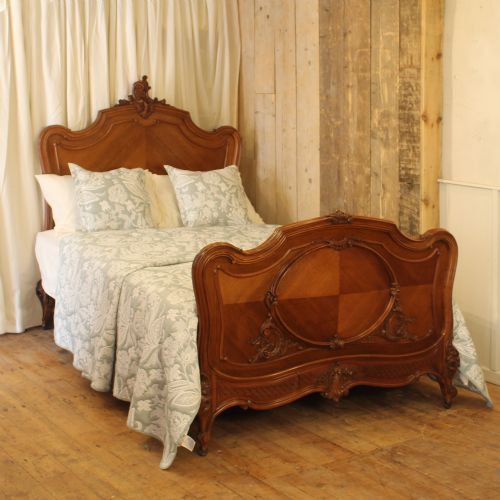
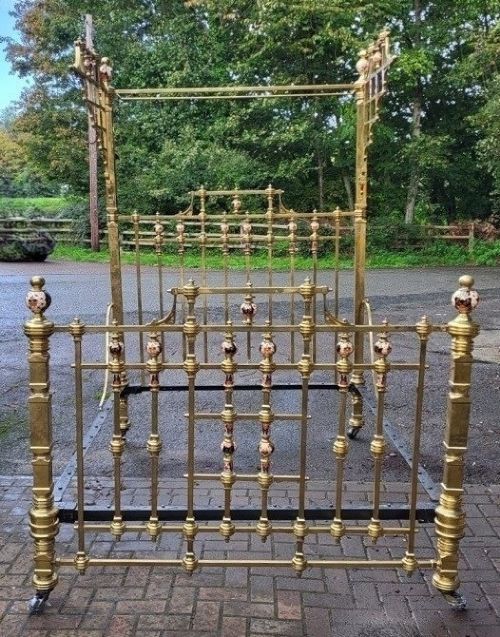
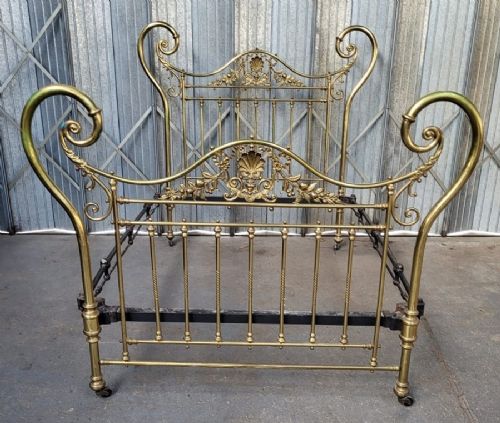
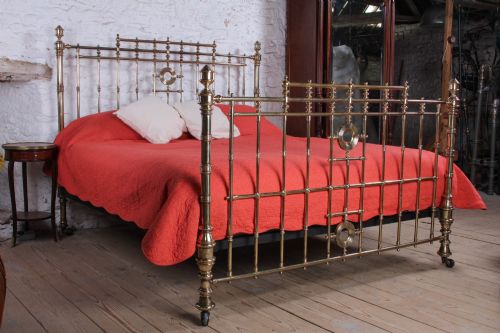
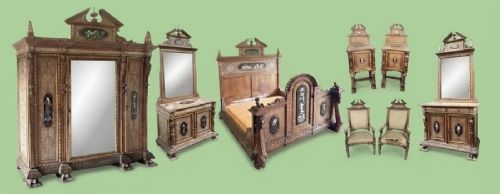
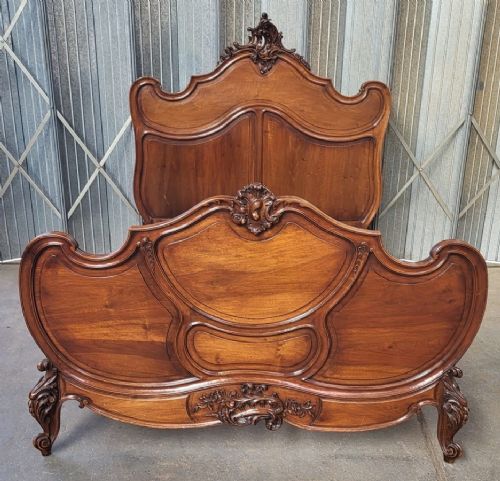
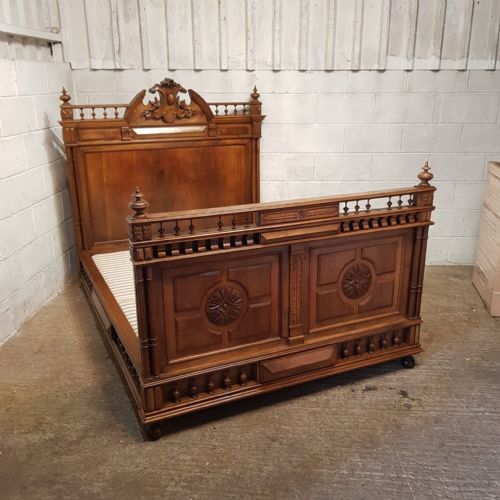
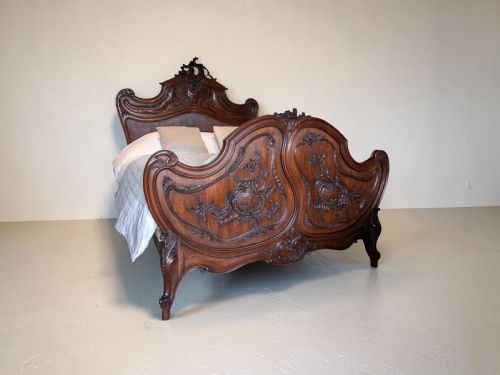
An ornate antique bed brings heavy Victorian brass or French walnut framework into a modern bedroom with substantial presence.
Ornate Bed
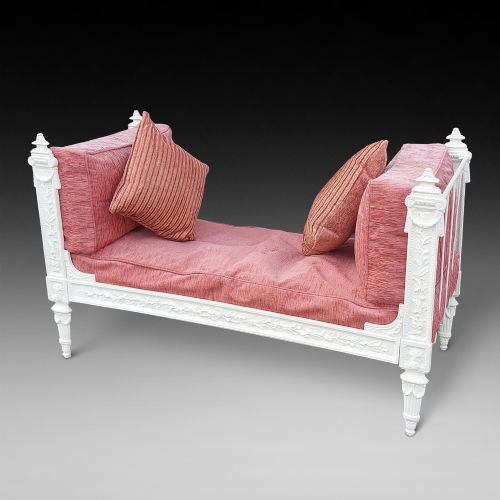
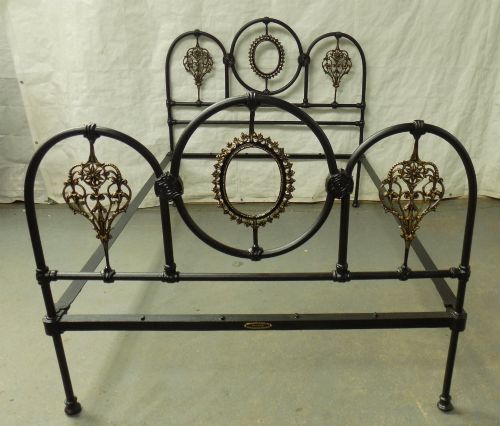
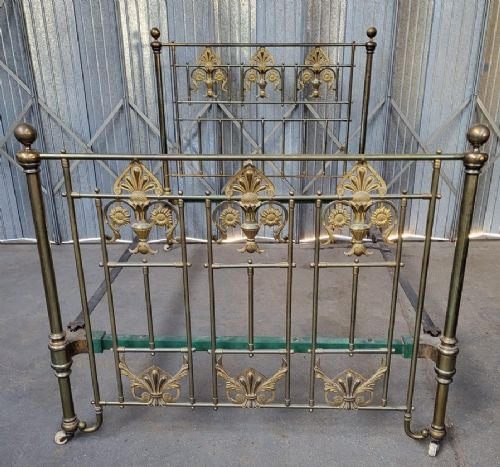
An ornate antique bed spans Victorian, Edwardian and late nineteenth century periods, appearing most frequently as double and king size brass or iron frames. Makers also produced daybeds, half tester frames and larger bedroom suites alongside single beds that could be joined.
Continental examples introduce French Louis XV, Italian Rococo and Portuguese designs alongside English workshop pieces. Forms range from simple cast iron daybeds to monumental four poster brass structures with elaborate metalwork.
Materials and construction
Foundries shaped brass, cast iron and wrought iron into tubular frames, decorative spindles and curvaceous headboards. Woodworkers utilised walnut, maple and oak, often applying giltwood or paint finishes to carved surfaces.
Specialist firms combined metal casting with hand-finished brass components, creating robust structural frames embellished with detailed castings and original joints.
Listings feature brass, iron, walnut and oak across Victorian, Edwardian and late nineteenth century periods.
Assessing craftsmanship
Quality rests in the crispness of the brass castings and the weight of the iron framework, where master makers achieved greater depth and definition in decorative mounts. Finer pieces retain original components, uncompromised joints and substantial gauge metal.
Cabinetwork quality shows in the depth of walnut or maple carving and the integration of matching elements within larger bedroom suites. Maker attribution to established firms like Winfield or Maple and Co often signals superior workshop execution.
Winfield·Maple and Co·Waring and Gillows
The Ornate Bed Glossary
- Half tester
- A bedstead featuring a partial canopy extending only partway over the head of the bed, supported by pillars attached to the headboard.
- Tole ware
- Lacquered and enamelled metal items, typically featuring painted decorative details found on specific nineteenth century bedframes.
- Giltwood
- Timber treated with gold leaf or a gold-coloured metallic finish to simulate solid gold enrichment on carved ornamentation.
- Bedstead
- The complete framework of a bed, comprising the headboard, footboard and side rails, excluding the mattress and base.
Ornate Bed: Frequently Asked Questions
Will an antique bed take a standard mattress?
Many nineteenth century frames were built to dimensions that differ slightly from modern standard mattress sizes. Buyers often need bespoke mattresses made to fit the exact internal dimensions of these historic iron and brass frameworks.
Working with specialist mattress makers ensures the bed base sits securely within the antique side rails without damaging the original metal or wood structure.
How do I assemble a vintage metal bed?
Most brass and iron bedsteads utilise heavy tapered dovetail joints or iron wedge fasteners that lock the side rails to the headboard and footboard. These require a heavy rubber mallet to seat properly during assembly.
Care must be taken not to force misaligned vintage components, as excessive pressure can crack historic cast iron brackets or bend hollow brass tubing.
How do I care for polished brass frames?
Historic brass benefits from gentle dusting and occasional cleaning with non-abrasive metal cleaners to preserve the aged patina without stripping surface character. Heavy chemical polishing can remove desirable historical warmth from Victorian metalwork.
Checking structural bolts periodically prevents loosening caused by daily use and protects the original threaded fixings from wear.
Can wooden French beds be dismantled easily?
Walnut and giltwood French bedsteads typically use internal bed bolts that secure the side rails directly into threaded sockets within the headboard and footboard posts. A proper spanner matches these older fastener heads.
Keeping the original bolts organised prevents damage to historic internal wood threads when moving or reassembling the bed framework.