



Ornamental Pendulum Clock
These ornamental pendulum clock examples bring architectural bronze, marble and gilt brass into a room, measuring time with swinging motion.
Ornamental Pendulum Clock
When you search for an ornamental pendulum clock, you enter a field dominated by French mantel pieces from the nineteenth century, alongside earlier Georgian wooden wall designs. These objects combine timekeeping mechanics with sculptural bronze, carved oak or polished marble housing.
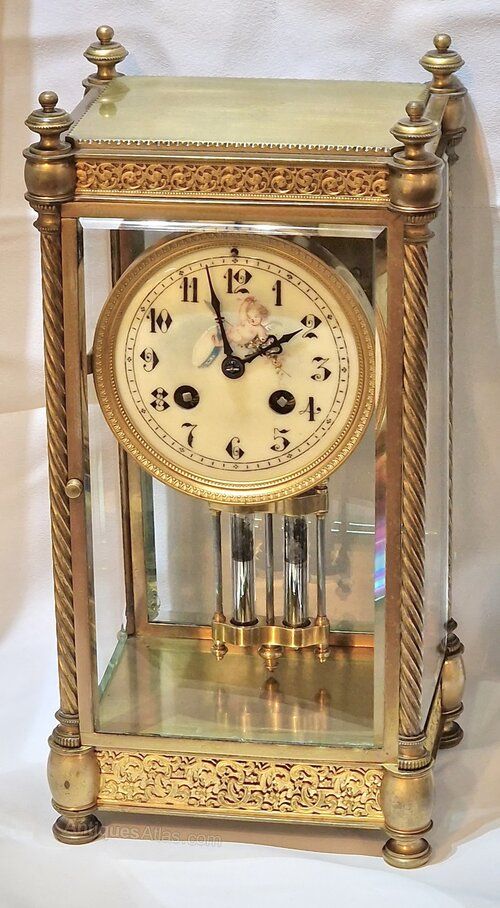
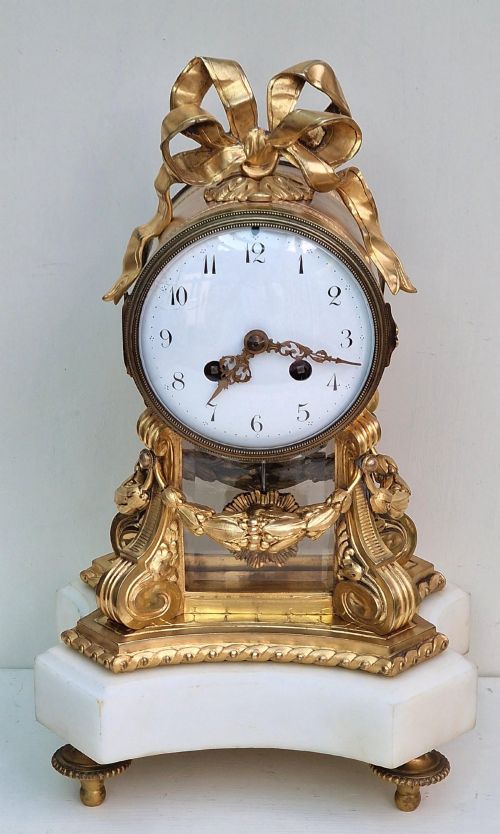
The versions most common on this page are French mantel clocks from the nineteenth century, featuring visible pendulums, cherub dials or lyre frames. You also encounter four glass designs and heavy ormolu and marble figural sets dating from the eighteen-eighties to nineteen-ten.
Earlier examples bridge the eighteenth century through George III period carved wood and gilt cartel clocks designed for walls. Across all periods, the core appeal lies in the interplay between moving pendulums and decorative metalwork.
How they were made
Maker workshops relied on cast bronze, brass and gilt metal, often mercury gilded to achieve a deep lustre known as ormolu. These metal mounts were paired with carved oak, white marble or glass panels that allowed a clear view of the inner mechanics.
Dials frequently combined painted enamel numerals with delicate brass hands, while specialised glasshouses produced four glass cases with bevelled panes. Movement construction involved brass plates and gear trains, driven by springs or double fusee mechanisms for steady timekeeping.
Ornamental Pendulum Clock Retail Price Guide 2026
Typical asking prices for ornamental pendulum clock among the pieces listed under this phrase on Sellingantiques today, from the lower quarter to the upper quarter. They describe what is for sale here now, not the wider market.
Listings demonstrate diverse French and English design traditions, including Louis XVI, Gothic, Empire, and Belle Epoque styles applied to mantel and wall clocks.
What varies in quality
Quality rests in the crispness of the bronze chasing and the depth of the gilding, where sharp relief work distinguishes premier foundry output from simpler cast metal. The integration of materials also defines the tier, such as heavy solid marble blocks matched with finely articulated cherub figures rather than thin plated shells.
Signed movements by known makers elevate a piece significantly above unmarked production work. The complexity of the design, from simple gilt metal cases to intricate lyre mystery clocks or double fusee London movements, marks the upper reaches of the craft.
Ravrio·Lemerle Charpentier·James Murray London
The Ornamental Pendulum Clock Glossary
- Ormolu
- Gilt bronze created by applying a mercury and gold amalgam to cast bronze before firing. This technique produced a rich golden finish characteristic of nineteenth century French pieces.
- Double fusee
- A mechanical movement using conical pulleys and chains to equalize the pull of the mainspring as it winds down. This system provides consistent force to the pendulum for improved accuracy.
- Cartel clock
- A wall-mounted clock housed in an ornate frame made of carved wood, gilt metal or bronze. These decorative pieces appeared frequently during the eighteenth century.
- Four glass clock
- A mantel clock enclosed in glass panels on all four sides, offering an unobstructed view of the movement and swinging pendulum. This style gained popularity around nineteen hundred.
- Mystery clock
- A clock design where the motion of the hands appears magical or unsupported, often utilising a suspended glass dial or concealed drive train. These pieces showcase advanced nineteenth century horological showmanship.
Ornamental Pendulum Clock: Frequently Asked Questions
What is an ornamental pendulum clock?
These pieces are decorative timepieces housed in bronze, marble, wood or glass cases designed to display both artistic sculpture and the motion of the pendulum. They function primarily as mantel or wall centrepieces.
Most examples on this page date from the nineteenth century French tradition, featuring materials like ormolu and enamel dials alongside visible mechanics.
How do I wind them?
Winding typically involves inserting a specific key into the dial arbors to tension the mainsprings. Care must be taken not to overwind the mechanism.
Double fusee movements require careful attention to the chain and pulley system during maintenance to ensure the gear train engages properly.
Where should I place one?
These clocks require a stable, level surface such as a mantelpiece, sideboard or heavy bracket shelf to keep the pendulum swinging evenly. Placing them away from direct sunlight protects enamel dials and gilt finishes.
Wall-mounted cartel clocks need secure fixing directly into masonry or solid studs to support the weight of the carved wood and metal components.
How do I tell periods apart?
Georgian and eighteenth century pieces often feature carved wood and gilt frames built for walls, following classical architectural proportions. Nineteenth century French items rely heavily on heavy cast bronze, marble bases and elaborate figural or cherub ornamentation.
Later nineteenth and early twentieth century works introduce bevelled four glass cases and visible pendulums reflecting Belle Epoque taste.