





Ornamental Ormolu Clock
An ornamental ormolu clock brings the gilded grandeur of French revival design and gleaming metalwork into a room.
Ornamental Ormolu Clock
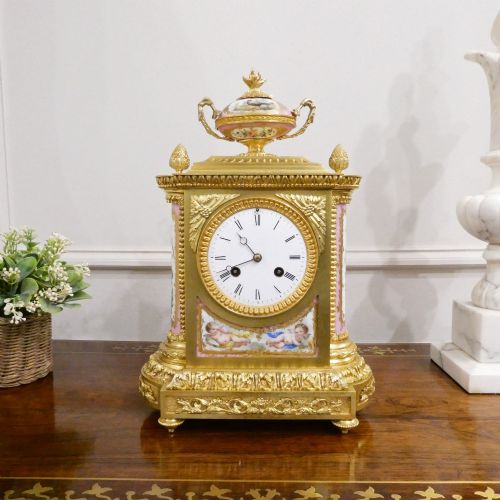
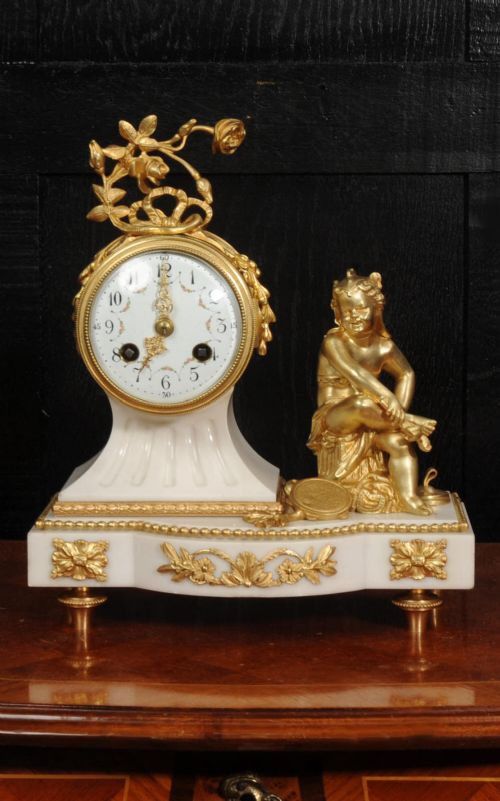
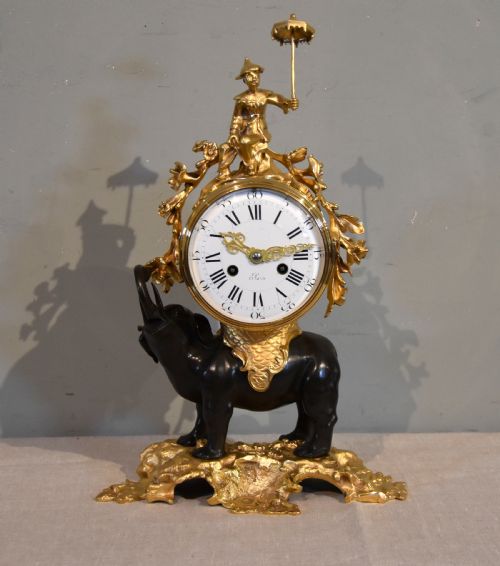
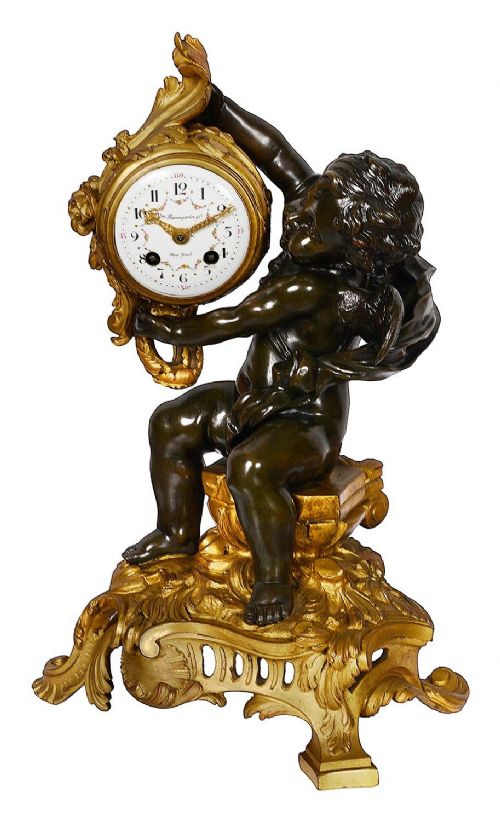
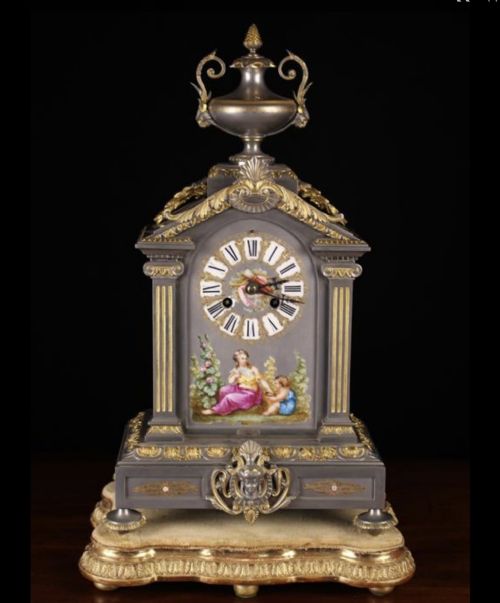
An ornamental ormolu clock is typically a French mantel clock or clock garniture dating from the nineteenth century, including Victorian examples and revivals of Louis XVI and Louis XV styles. These decorative timepieces often take the form of architectural portico clocks, figurative models featuring cherubs or animals like elephants and lions, or elaborate porcelain and marble designs.
Buyers most frequently encounter nineteenth-century pieces produced in France, spanning periods from the 1860s to the 1890s. They combine timekeeping with sculptural presence, often resting on swept marble or gilt bronze bases intended for prominent placement on a mantelpiece.
Materials and construction
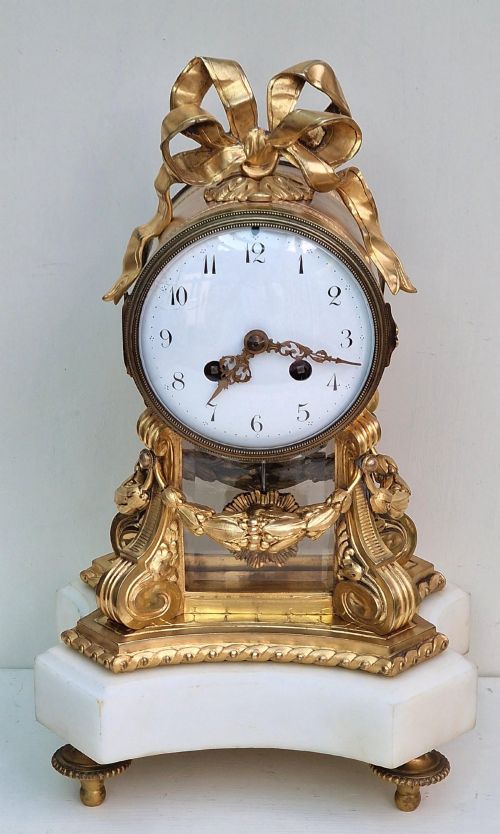
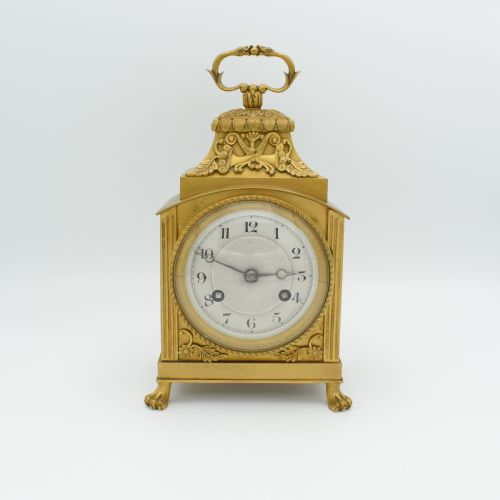
The construction relies heavily on ormolu and gilt bronze, often paired with contrasting materials such as white or pink marble, alabaster, glass, and porcelain dials or plaques. Ormolu involves applying finely ground gold to a bronze base, creating a durable and rich metallic finish that defines the appearance of these pieces.
Clockmakers incorporated precision eight-day striking movements, sometimes featuring visible pendulums, double fusee systems, or mystery mechanisms. Cases were cast in bronze or brass, then hand-chased and gilded, enclosing enamel dial faces behind glass.
Materials recorded across the selection include ormolu, patinated bronze, alabaster, rosewood, enamel, and glass.
Markers of quality
Quality in an ornamental ormolu clock rests upon the crispness of the bronze casting and the depth of the hand-chasing. Superior examples display sharply defined details in figurative elements like cherubs, foliage, or animal forms, whereas lesser pieces exhibit softer edges and shallow surface definition.
The integration of the movement with the decorative case also dictates the standard of the piece. Finer clocks feature robust movements by notable makers, high-grade enamel dials, and substantial marble or rosewood bases that anchor the gilded metalwork securely.
Jean-Baptiste Delettrez·Japy Freres·Henry Dasson·Ravrio·James Murray London·F Marti
The Ornamental Ormolu Clock Glossary
- Ormolu
- A technique of applying finely ground gold-mercury amalgam to a bronze object. It creates the brilliant golden surface characteristic of these decorative French clocks.
- Clock Garniture
- A set comprising a central mantel clock accompanied by matching side ornaments such as urns or candelabra. They were designed to create a symmetrical display on a mantelpiece.
- Portico Clock
- A clock built within an architectural frame resembling a classical portico, supported by columns. They often incorporate inlay and delicate metal mounts.
- Double Fusee
- A mechanical movement control system using chains and conical pulleys to equalise the force of the mainspring. It ensures more accurate timekeeping throughout the running cycle.
- Enamel Dial
- A clock face made by fusing powdered glass to a metal substrate at high temperatures. These dials provide a smooth, glossy surface with painted numerals.
Ornamental Ormolu Clock: Frequently Asked Questions
How do I wind an antique clock?
Most of these clocks utilise an eight-day movement requiring a key to tension the springs through winding arbors on the dial.
Care must be taken not to over-wind the mechanism, stopping as soon as resistance is felt to protect the mainspring.
Where should I place a clock garniture?
A clock garniture is traditionally set upon a mantelpiece or a pier table where the central clock and its matching side pieces can be viewed together.
Ensure the surface is level and stable to support the weight of the marble and bronze components.
How do I identify a Louis XVI style clock?
Louis XVI style clocks are characterised by classical symmetry, straight architectural lines, and decorative motifs such as ribbons, urns, and acanthus leaves.
They frequently employ gilt bronze mounts against white marble bases.