




Figurine Mantel Clock
A figurine mantel clock combines timekeeping with sculptural bronze, porcelain or pottery, bringing Victorian and Regency craftsmanship directly into your room.
Figurine Mantel Clock
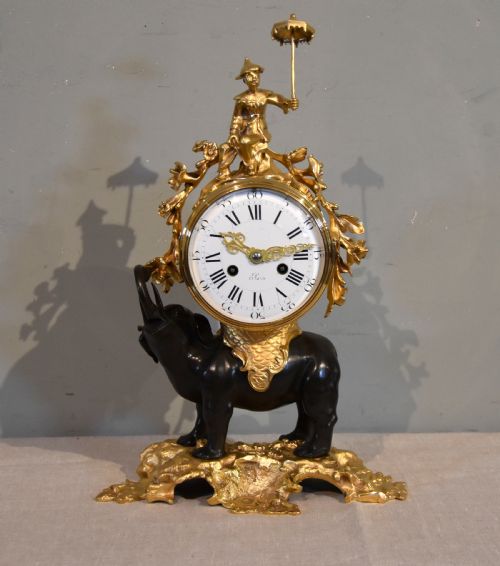
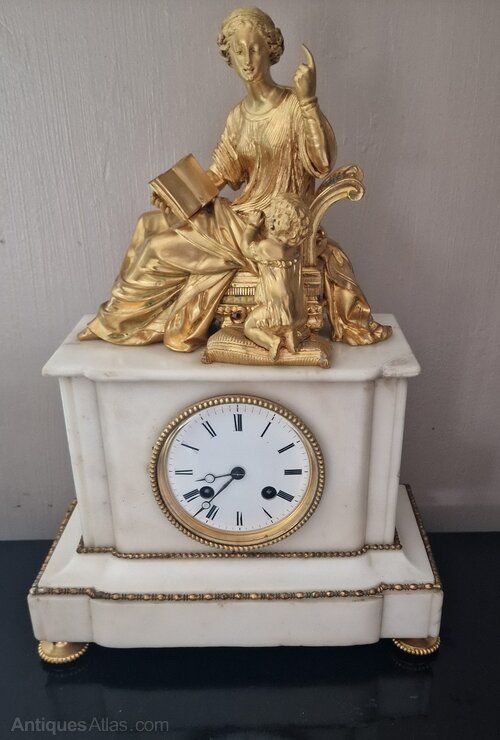
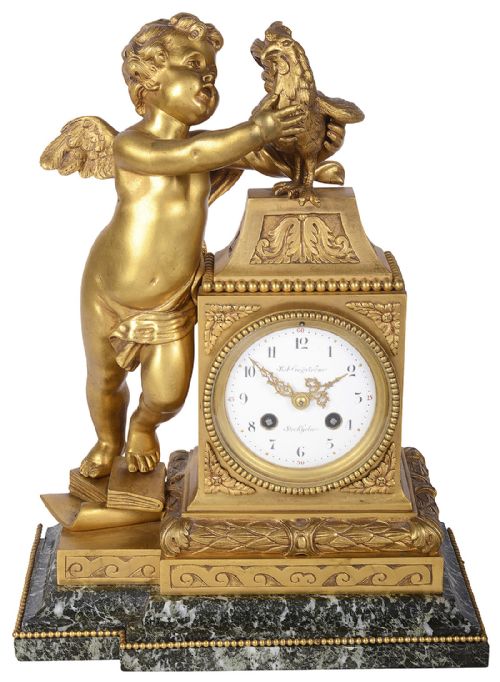
A figurine mantel clock marries a mechanical timekeeper with sculpted figures, ranging from classical cherubs and animals to historical personages. When you search for figurine mantel clock, you encounter domestic timepieces that double as ornamental sculpture.
Most examples found here date from the nineteenth century, spanning Victorian, Regency, and diverse French revival styles. They sit upon marble or wooden stands, integrating decorative pottery, enamel dials, and metallic casings into a single composition.
How they were made
Makers utilised cast metals such as ormolu, gilt bronze, and silver-plated bronze to form intricate figurative elements, often paired with contrasting white marble or variegated marble bases. Enamel dials and painted earthenware or porcelain provide colour and texture.
Movements required precision engineering, such as chain fusee mechanisms housed within sculptural housings, while ceramic components involved fired earthenware, glaze, and detailed hand-painting.
Napoleon watches firmly from his charger while a cherub persistently tries to catch birds in a tree.
What varies in quality
Quality rests in the crispness of the metal casting and the artistic depth of the accompanying figures, whether carved wood from the Black Forest or finely chased ormolu. Finer examples display harmonious integration between the sculptural subject and the clock housing.
The sophistication of the movement, such as signed mechanisms by known makers, elevates a piece beyond standard domestic production. Materials like heavy variegated marble and detailed porcelain painting similarly distinguish superior specimens.
Berger Paris·Achille Brocot Delettrez·Baetens London
The Figurine Mantel Clock Glossary
- Ormolu
- Gilt bronze produced by applying a mercury and gold amalgam to cast brass or bronze. This technique creates a rich golden surface found frequently on nineteenth-century French cases.
- Chain fusee
- A mechanism utilising a conical pulley and chain to ensure even drive force as the mainspring unwinds. It represents a higher standard of clockmaking precision.
- Gilt bronze
- Bronze that has been coated with a thin layer of gold leaf or gold paint. It provides a durable metallic lustre.
- Earthenware
- Porous pottery fired at lower temperatures, commonly used for Staffordshire figures and pottery clock groups. It takes brightly coloured glazes effectively.
- White marble
- A fine-grained metamorphic rock used extensively for classical clock bases. It offers a smooth, neutral foundation for gilded metal mounts.
Figurine Mantel Clock: Frequently Asked Questions
Where should I place a marble clock?
Position your timepiece on a sturdy mantelpiece, shelf, or table capable of supporting substantial weight.
Ensure the surface is completely level so the pendulum swings evenly.
How do I identify French pieces?
French examples often feature fire-gilt ormolu, neoclassical styling, and makers' signatures on the movement backplate.
Stylistic cues include cherubs, classical drapery, and detailed porcelain panels.
What is a fusee movement?
A fusee mechanism uses a conical gear and chain to equalise the power delivered by the mainspring.
This system improves timekeeping accuracy as the clock runs down between windings.