



Ormolu Vitrine Table
An ormolu vitrine table brings together glass display surfaces and gilt bronze mounts to show small treasures inside French revival furniture.
Ormolu Vitrine Table
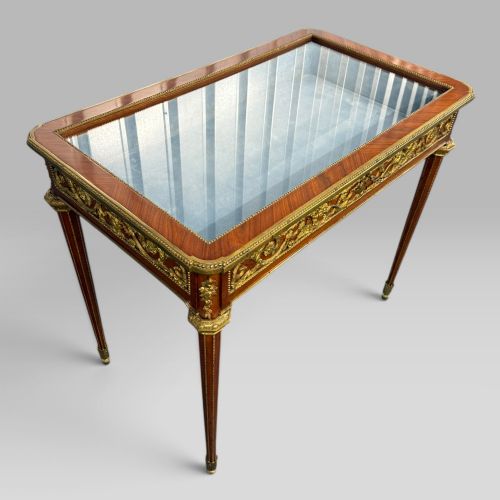
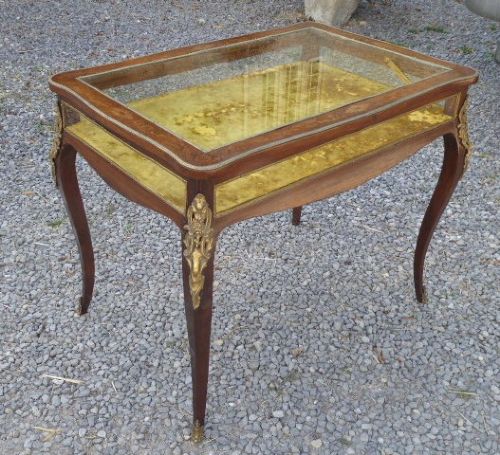
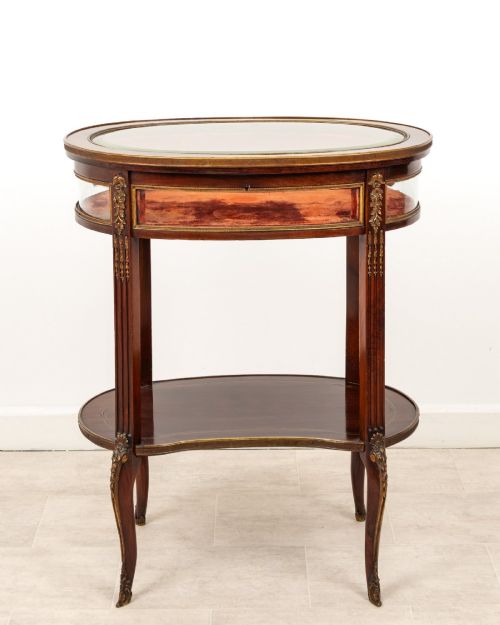
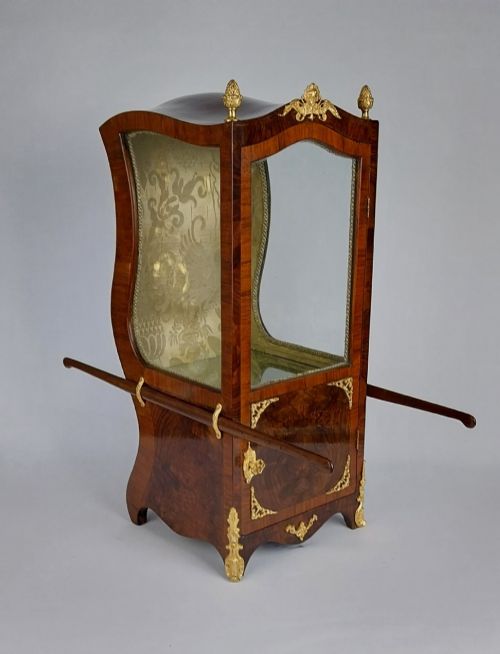
An ormolu vitrine table is a piece of furniture designed to exhibit small items under glass, combining the functions of a display cabinet and a small table. These tables appear in forms such as bijouterie tables, display cabinets, and table top sedan vitrines dating from the nineteenth century into the twentieth century. Examples draw on Louis XV and Louis XVI styles, reflecting French revival tastes across Victorian and later periods.
The pieces most frequently met on this page are French in origin, constructed with glazed tops or sides and mounted with gilt bronze. Makers and workshops built them in oval, rectangular, and heart shapes to suit nineteenth-century drawing rooms and salons. The physical evidence shows these furnishings serving primarily as showcases for collections of medals, trinkets, and small valuables.
How they were made
Makers constructed the carcases of these display tables using timbers such as mahogany, kingwood, and rosewood, frequently incorporating marquetry decoration and fabric or velvet linings. The structural frames support glass panels on the top and sides, allowing light to illuminate the interior chamber from multiple angles.
Gilt bronze, known as ormolu, forms the decorative mounts that edge the glass, frame the aprons, and shape the legs. Craftsmen cast and chased these metal mounts to mirror French rococo and neoclassical revival designs before fixing them securely to the wooden frames.
The archive includes pieces attributed to François Linke.
What varies in quality
The standard of an ormolu vitrine table depends largely on the crispness of the gilt bronze casting and the precision of the cabinetwork. Finer examples display deeply chased ormolu mounts with sharply defined details, whereas simpler pieces feature smoother, less articulated metalwork.
Selection of timber veneer, such as figured mahogany or patterned kingwood, also distinguishes the work. Tables associated with notable makers demonstrate superior joinery and more complex marquetry patterns across the carcase.
François Linke
The Ormolu Vitrine Table Glossary
- Ormolu
- Gilded bronze used for decorative mounts on furniture. The technique involves applying a gold amalgam to bronze and heating it.
- Vitrine
- A glass-fronted cabinet or table designed for displaying objects. These enclosures protect contents from dust while offering maximum visibility.
- Bijouterie table
- A shallow display table with a glass top specifically intended for jewellery and small ornaments. They often feature hinged lids for easy access.
- Kingwood
- A dense, heavy Brazilian timber with distinctive dark violet-brown graining. Cabinetmakers utilised it extensively for high-end French revival furniture.
- Marquetry
- Inlaid wood veneers arranged in decorative patterns or pictures on a furniture surface. This technique creates geometric or floral designs across tabletops.
Ormolu Vitrine Table: Frequently Asked Questions
What is an ormolu vitrine table?
An ormolu vitrine table is a glazed display piece featuring gilt bronze mounts designed to hold small decorative items and jewellery.
These tables combine the functions of a showcase and a decorative stand, drawing heavily on French stylistic traditions from the nineteenth century.
How were these tables used?
Owners used them in drawing rooms to exhibit collections of small valuables, medals, and curiosities safely under glass.
The glazed top and sides allowed guests to inspect the contents from above and around without handling the objects directly.
Which woods appear most often?
Mahogany, kingwood, and rosewood form the primary timbers used in the construction of these display tables.
Craftsmen often selected these dense, richly coloured woods to complement the gleaming finish of the surrounding ormolu mounts.
How do you distinguish styles?
Styles are identified by the decorative vocabulary of the wood and metalwork, referencing either the curving lines of Louis XV or the geometric symmetry of Louis XVI.
Revival pieces from the nineteenth century adapt these earlier French court aesthetics for Victorian interiors.