
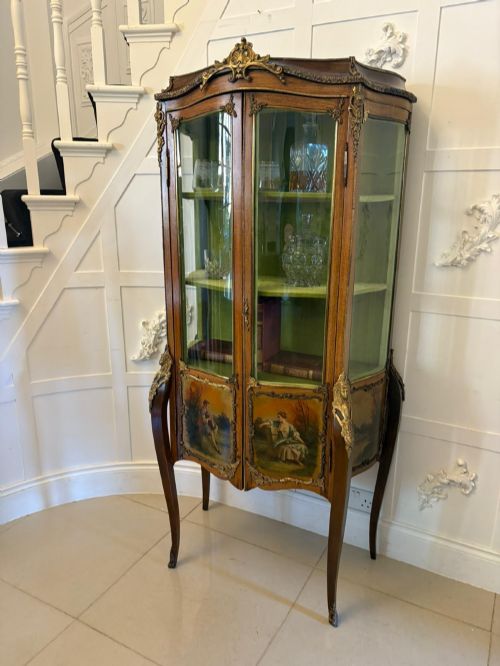
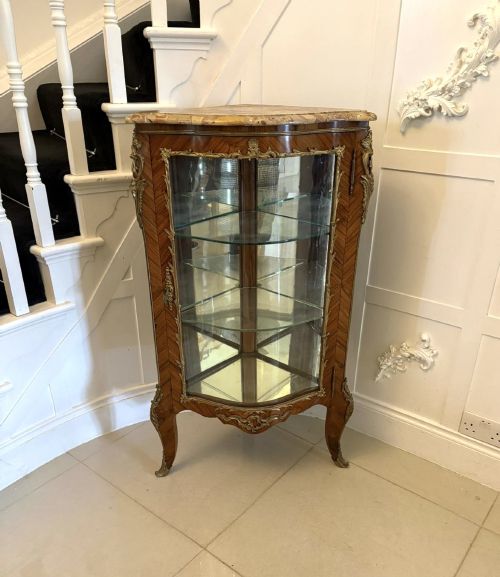


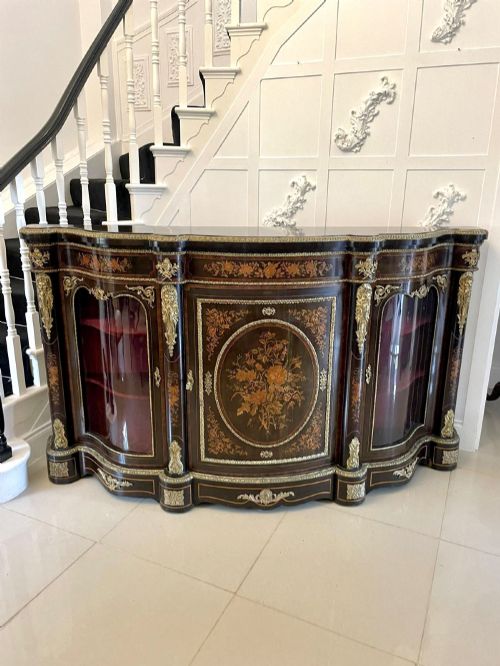
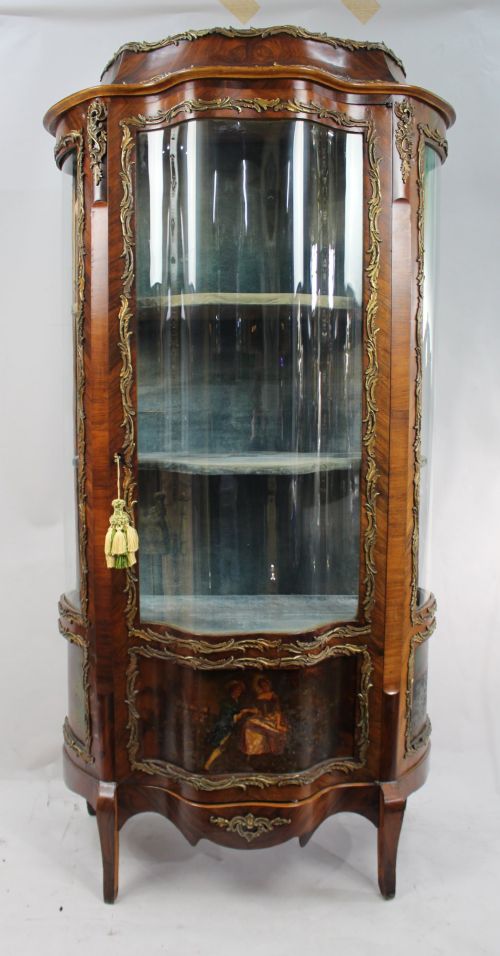
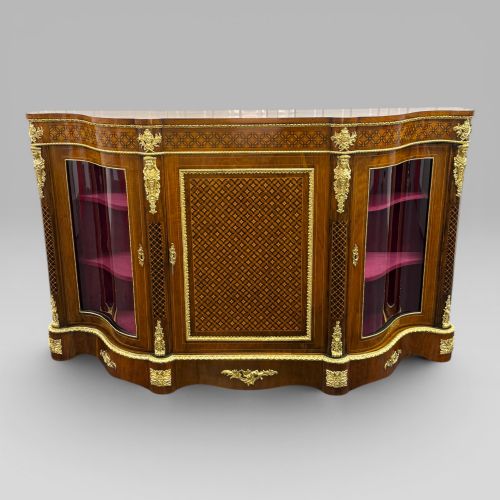


Ormolu Serpentine Display Cabinet
An ormolu serpentine display cabinet combines curved timber fronts with gilt-metal mounts to show off collections inside drawing rooms and salons.
Ormolu Serpentine Display Cabinet
When you search for an ormolu serpentine display cabinet, you encounter nineteenth-century credenzas, vitrines, and side cabinets shaped with undulating curves. These pieces originate predominantly from Victorian Britain and French revival workshops operating between eighteen-fifty and nineteen-hundred.
The most common formats on this page are burr walnut and kingwood credenzas alongside tall glass-fronted vitrines. Makers shaped the timber into gentle serpentine contours to catch the light across domestic interiors.
Victorian cabinet-makers and French workshops produced these items for formal reception rooms to display porcelain, glass, and decorative objects behind glazed doors. They serve today as focal points in period rooms.
Materials and construction methods
Workshops built carcases from solid pine or oak before applying decorativeveneers of burr walnut and kingwood. Marquetry and parquetry patterns enriched the timber surfaces using contrasting wood species.
Gilders cast and chased bronze mounts, known as ormolu, which frame corners, borders, and feet. Glass panels fitted into wooden door frames to protect items placed on interior shelves.
Secret curved drawers tucked into serpentine friezes often hide spare keys and forgotten collector notes.
Distinguishing quality across pieces
The sophistication of the marquetry and the crispness of the cast ormolu mounts separate standard production from exhibition-grade examples. Finer pieces display deeply figured burr walnut veneers matched symmetrically across the serpentine curves.
Internal joinery, the thickness of the timber, and the weight of the bronze mounts indicate workshop standards. Pieces bearing signature marquetry panels or painted Vernis Martin details sit at the upper end of the range.
Maison Gagneau
The Ormolu Serpentine Display Cabinet Glossary
- Ormolu
- Gilt-bronze decorative mounts applied to furniture. This technique involved coating cast bronze with gold amalgam.
- Serpentine
- A furniture front curving outward in the centre and inward at the sides. This shape required skilled woodworking to follow the undulating line.
- Credenza
- A low side cabinet used for storage and display. Victorian examples often incorporate mirrored backs and glazed side compartments.
- Vitrine
- A glass-fronted display cabinet designed to showcase porcelain and curiosities. These tall pieces protect delicate items from dust while offering all-round visibility.
- Vernis Martin
- A type of simulated Japanese lacquer developed in France. Furniture makers used these painted panels on cabinet doors to add colour and narrative scenes.
Ormolu Serpentine Display Cabinet: Frequently Asked Questions
Where should I place an ormolu serpentine display cabinet?
These cabinets suit principal reception rooms or hallways where natural light illuminates the gilt mounts and figured timber. Keep them away from direct sunlight and heat sources to protect wood veneers and fabric linings.
Ensure the floor is level so the doors hang correctly and latch securely within their serpentine frames.
How do I clean the ormolu mounts?
Dust the gilt-metal mounts gently with a dry, soft bristle brush to remove particles from crevices. Avoid abrasive metal cleaners or chemical polishes, which strip the gold gilding from the bronze beneath.
If necessary, wipe surfaces with a barely damp cloth and dry immediately with a lint-free duster.
What is the difference between a credenza and a vitrine?
A credenza is typically a low, wide side cabinet featuring enclosed cupboards and central display space, often topped with marble or wood. A vitrine is a taller, upright glass-fronted cabinet built specifically to exhibit collections on multiple interior shelves.
Both forms utilise serpentine curves and ormolu mounts, but serve different spatial requirements within a room.
How do I identify a French revival piece from a Victorian one?
French revival pieces frequently incorporate painted Vernis Martin panels, extensive kingwood parquetry, and Louis XV or Louis XVI styling. Victorian examples tend to focus on burr walnut veneers, floral marquetry, and mirrored backs.
Many nineteenth-century British makers drew heavily on French designs, resulting in hybrid pieces that combine both aesthetic traditions.