


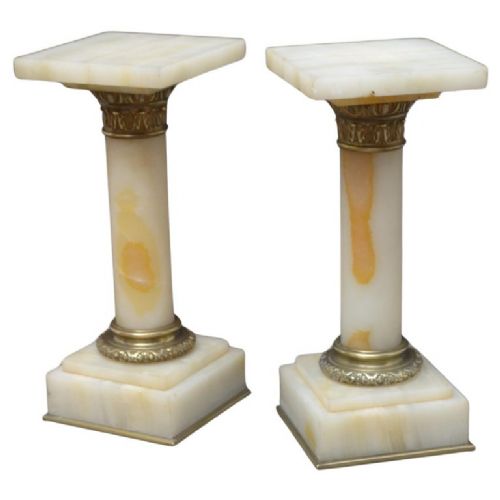


Ormolu Plant Pedestal
An ormolu plant pedestal brings architectural presence to a room, combining cast gilt mounts with stone columns to elevate display pieces.
Ormolu Plant Pedestal
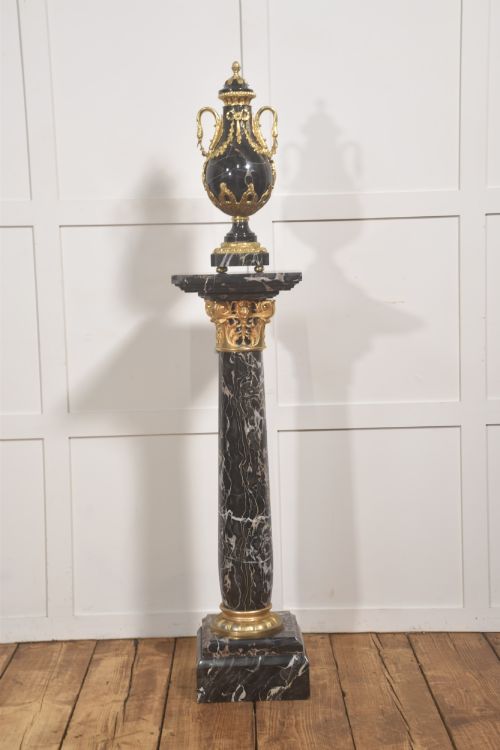
An ormolu plant pedestal is a classical support structure designed to elevate urns, figures, or botanical specimens within a grand interior. These stands combine substantial stone shafts or rich cabinet timbers with intricate gilt-metal mounts that echo classical ornamentation.
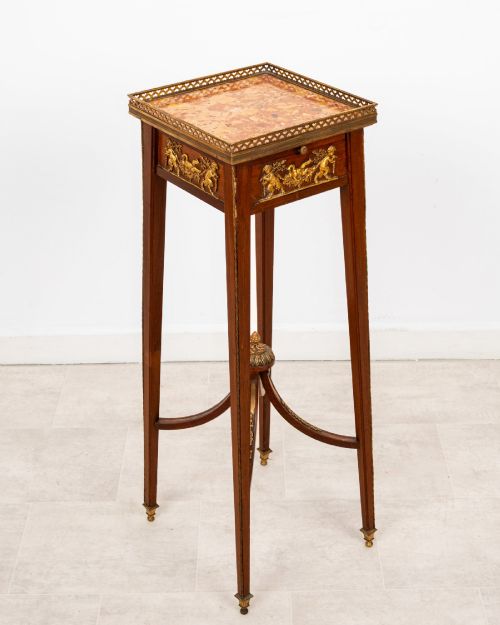
The versions most commonly met on this page date from the nineteenth century and the Edwardian era, spanning styles from French Empire and Neoclassical to Rococo and Louis XVI. They appear as slender columns, fluted pillars, and occasionally as cabinet stands topped with marble.
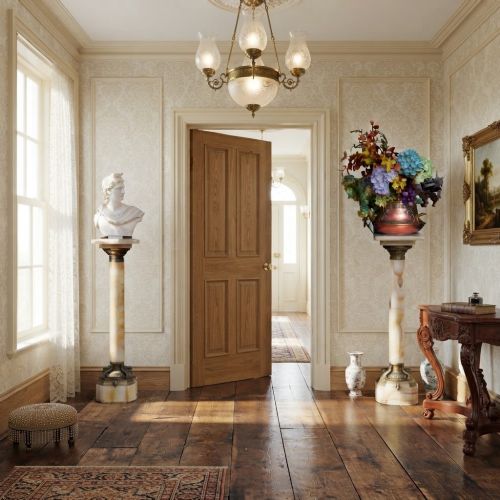
Makers drew heavily upon French design repertoires, producing pieces intended to anchor corners, frame doorways, or serve as independent focal points in formal reception rooms.
What varies in quality
The refinement of the cast bronze mounts sets the upper tier apart from standard production, as deeply chased ormolu displays crisp botanical motifs and sharp undercutting rather than soft, rounded edges. The choice and matching of materials also dictate worth, particularly where flawless natural onyx, figured mahogany, or finely selected marbles are employed.
Structural ambition separates basic utility stands from sculptural masterpieces designed in the manner of renowned makers. Pieces featuring complex parquetry, integrated cabinet work, or sophisticated neoclassical proportions demonstrate a higher level of workshop design.
Ormolu Plant Pedestal Retail Price Guide 2026
Typical asking prices for ormolu plant pedestal among the pieces listed under this phrase on Sellingantiques today, from the lower quarter to the upper quarter. They describe what is for sale here now, not the wider market.
Materials recorded across these stands include onyx, rouge marble, and black marble, paired with ormolu, brass, mahogany, and satinwood.
The Ormolu Plant Pedestal Glossary
- Ormolu
- Gilt bronze or gilt metal applied as decorative mounts to furniture and architectural supports. The technique involves coating a base metal with gold amalgam and firing it to drive off the mercury.
- Torchere
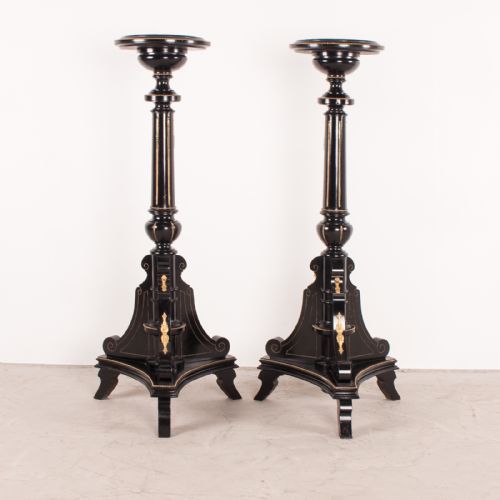
- A tall, slender stand originally designed to hold a candle or torch, later adapted to support urns, vases, or plants. They frequently take the form of classical columns.
- Neoclassical
- A style drawing inspiration from the classical art and architecture of ancient Greece and Rome. It prioritises symmetry, straight lines, and restrained classical motifs.
- Vernis Martin
- A type of simulated Japanese lacquer developed in France during the eighteenth century and later emulated in nineteenth-century decorative pieces. It uses successive layers of translucent varnish to achieve depth and lustre.
- Parquetry
- Geometric mosaic woodwork arranged in decorative patterns on furniture surfaces. Makers utilised contrasting timbers to create optical depth on tabletops and pedestals.
Ormolu Plant Pedestal: Frequently Asked Questions
Where should I place a pedestal?
These pieces function best in corners, empty wall spaces, or flanking doorways where height and vertical emphasis break up flat expanses. They provide a dedicated stage for sculpture, heavy ceramic vessels, or trailing plants.
Ensure the floor surface is level so that heavy stone columns remain stable. Placing them away from heavy foot traffic protects the protruding gilt mounts from accidental knocks.
How do I clean ormolu mounts?
Dust gilt-bronze mounts gently with a soft, dry brush to prevent dirt accumulation in the recessed chasings. Avoid harsh metal polishes, as abrasive compounds strip away the historic gold surface.
Should the metal require deeper cleaning, consult a specialist conservator rather than applying domestic chemical cleaners. Protecting the original gilding preserves both the visual warmth and the historical integrity of the piece.
Are these pedestals structurally stable?
Nineteenth-century stands built with stone shafts and bronze collars possess considerable weight that keeps them anchored to the floor. However, tall, slender columns require careful handling when repositioned to prevent tipping.
Checking that internal threaded rods or central fixings remain secure ensures the stone sections do not shift. Placing heavy display items centrally on the top surface maintains proper balance.
How do I identify French Empire style?
French Empire pieces display heavy classical authority, often incorporating military trophies, sphinxes, laurel wreaths, and bold ormolu mounts against dark mahogany or ebonised wood. The proportions are robust and draw direct inspiration from Roman antiquity.
This aesthetic contrasts with the lighter, curving lines of Louis XV rococo work or the refined geometric restraint associated with Louis XVI designs. Examining the specific vocabulary of the gilt mounts usually reveals the intended historical revival period.