

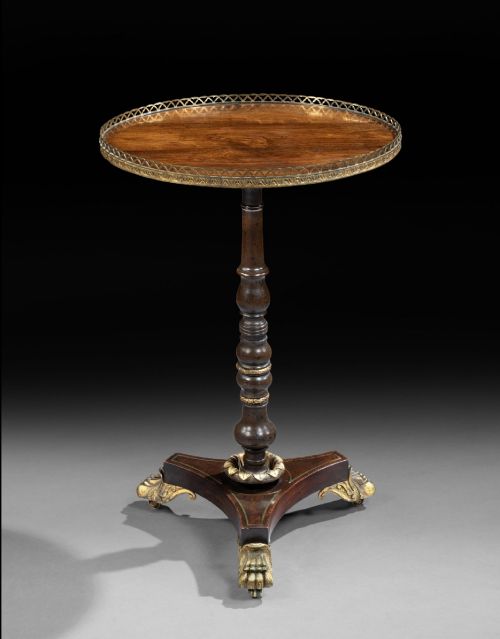
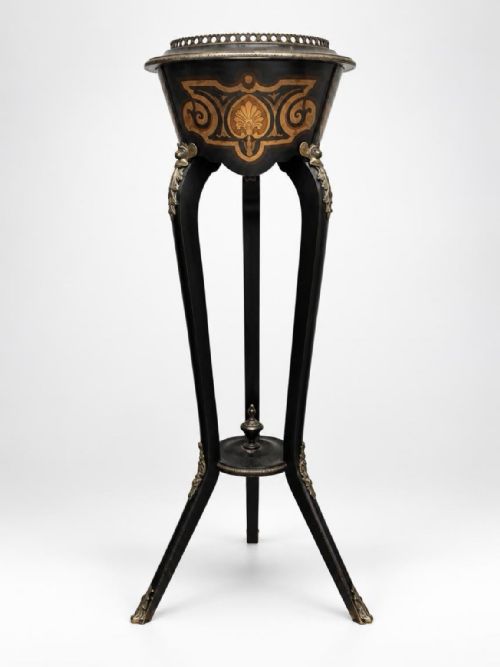
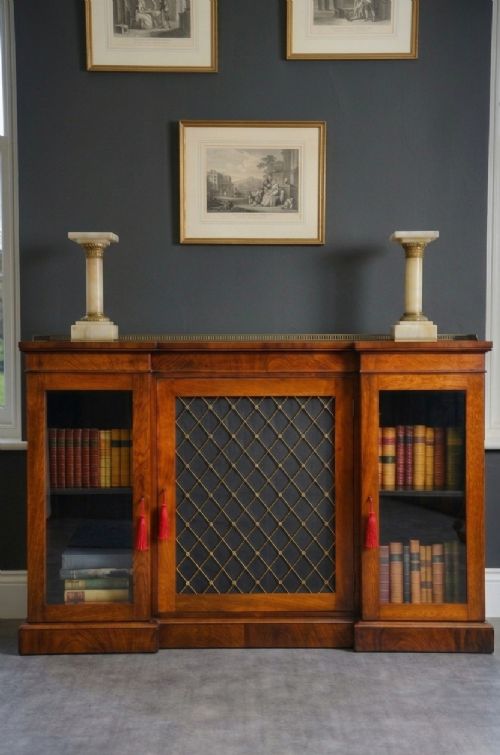
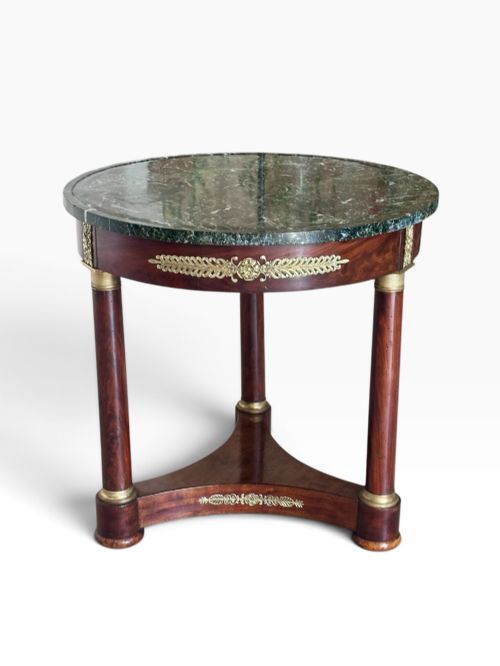
Ormolu Pedestal
An ormolu pedestal brings neoclassical or French Empire drama to a room, lifting urns, clocks and bronzes on columns of marble, onyx or mahogany.
Ormolu Pedestal
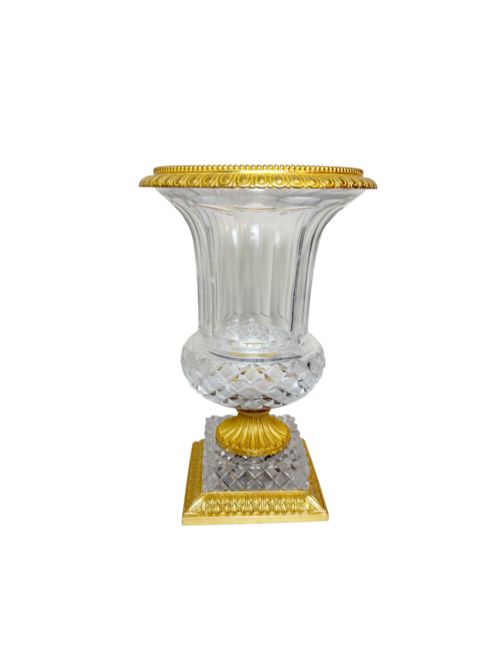
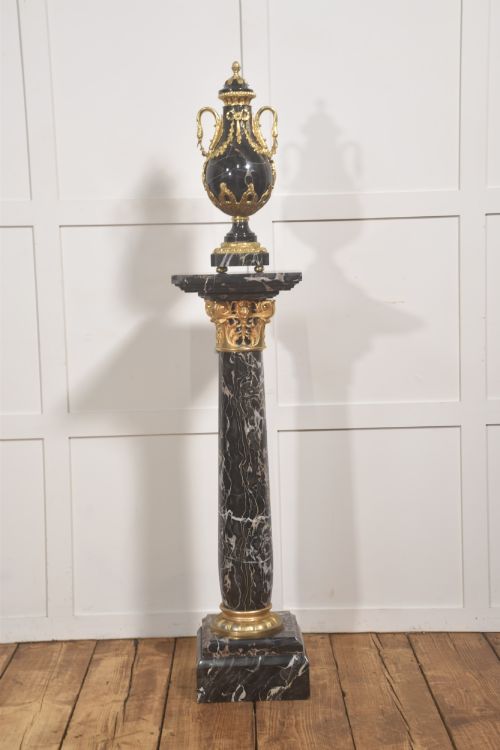
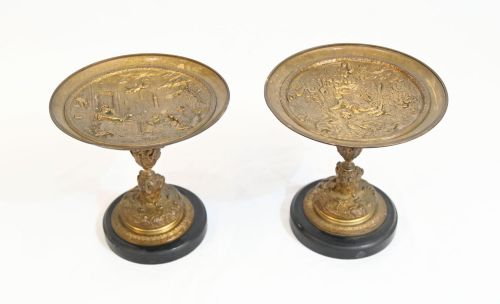
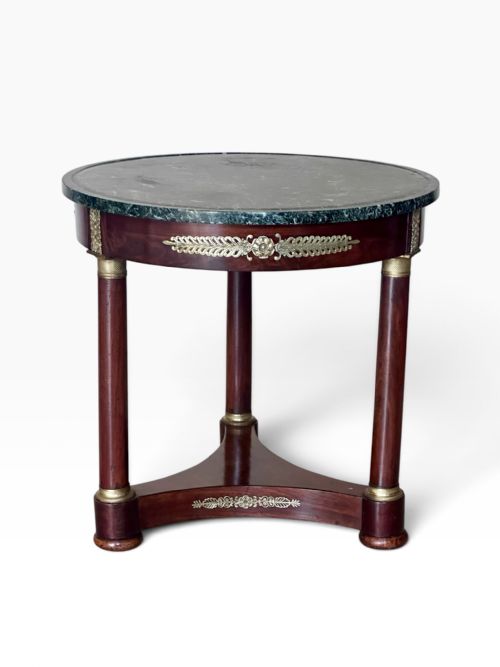
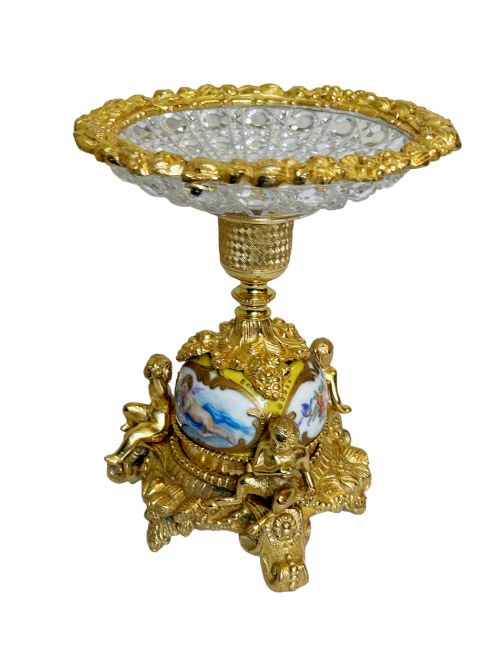
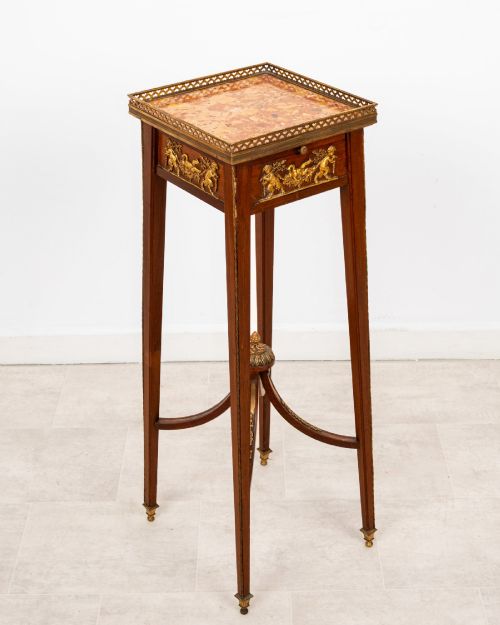
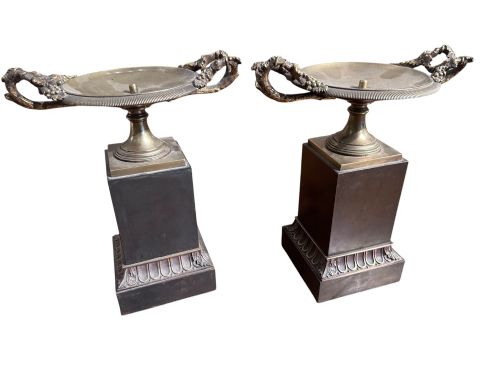
An ormolu pedestal is a columnar support or display stand enriched with gilded bronze mounts, designed to elevate sculptural works, vases, or clocks within nineteenth-century interiors.
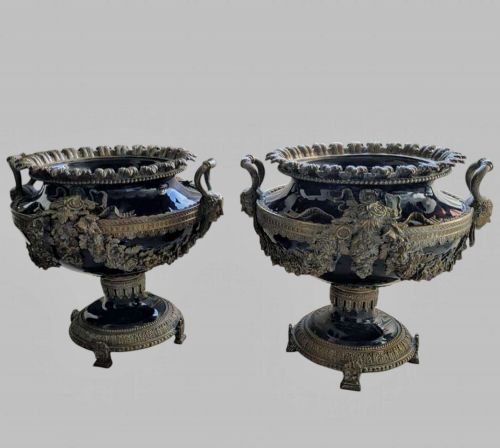
Most examples found here combine stones such as black marble or onyx with cast ormolu collars and bases, reflecting French Empire and Neoclassical design influences.
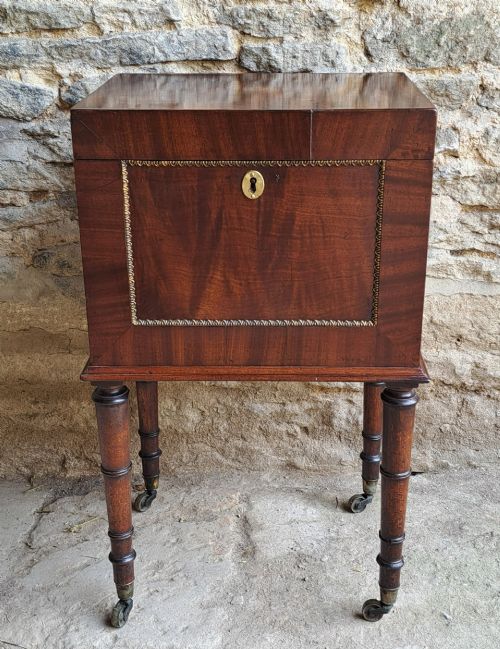
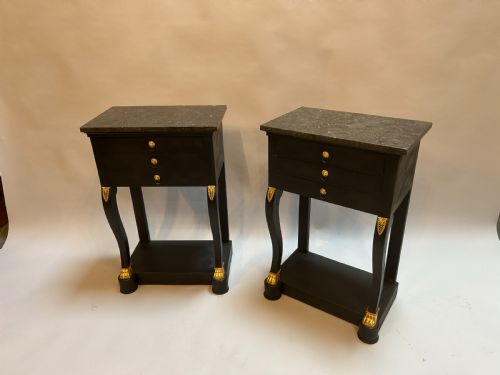
The selection ranges from tall freestanding marble columns to compact mahogany and kingwood stands carrying brass or gilt metal mounts.
Materials and construction
Makers utilised dense natural materials like marble, onyx, and hardwoods including mahogany and kingwood to construct the structural shafts of these stands.
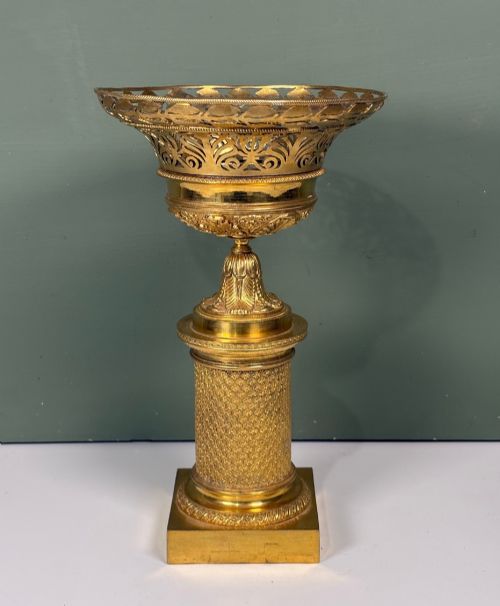
Ornaments were cast in bronze or brass and subsequently mercury gilded or fire gilt to create the bright ormolu surface characteristic of French furniture.
Subtle mechanical joints and brass pins secure the heavy metal mounts to the stone or wood bodies without damaging the polished surfaces.
Ormolu Pedestal Retail Price Guide 2026
Typical asking prices for ormolu pedestal among the pieces listed under this phrase on Sellingantiques today, from the lower quarter to the upper quarter. They describe what is for sale here now, not the wider market.
Listings feature 19th-century pieces alongside Victorian and Edwardian works, constructed from marble, onyx, mahogany, and ormolu.
Markers of quality
Superior quality shows in the crispness of the bronze chasing, where finer details in hair, foliage, and drapery remain sharp after gilding.
The stability of the piece depends on the density of the underlying stone or timber and the precision with which the column segments align.
The Ormolu Pedestal Glossary
- Ormolu
- Gilded bronze, produced by applying an amalgam of gold and mercury to a bronze base before heating. It provides a durable, bright golden finish common in French decorative arts.
- Torchere
- A tall, slender stand or candlestick designed to hold a light source or display an object at height. These often take the form of fluted columns made from wood or marble.
- Gueridon
- A small French table supported by one or more columns, often matching the materials and mounts of associated pedestals in a grand interior scheme.
- Champleve
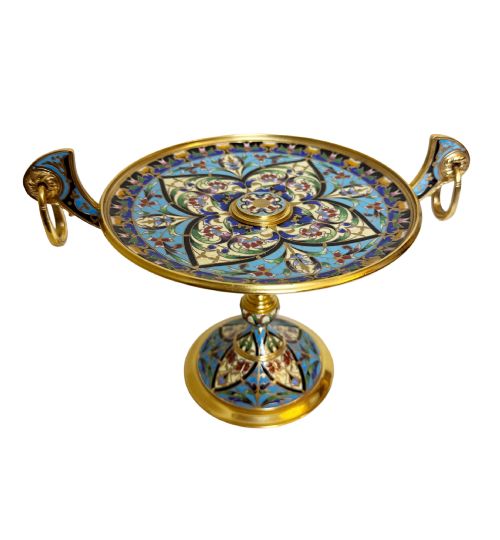
- An enamelling technique where troughs are dug into a metal surface and filled with vitreous paste before firing, seen on decorative mounts and vessels.
Ormolu Pedestal: Frequently Asked Questions
What were ormolu pedestals used for originally?
These supports served to elevate important decorative objects such as bronze sculptures, porcelain urns, and mantel clocks within formal reception rooms. By raising the pieces to eye level, the maker ensured that fine details could be appreciated properly.
In nineteenth-century interiors, matching pairs often anchored the corners of a room or flanked doorways, creating a symmetrical backdrop for collections amassed during the Grand Tour.
How do I care for an ormolu mount?
Gilt bronze requires gentle dusting with a soft, dry brush to prevent dirt from settling into the recessed chaste lines. Avoid chemical metal cleaners entirely, as they strip the historic fire-gilt surface.
Stone columns and mahogany shafts benefit from occasional polishing with suitable wax applied sparingly, taking care to keep oils away from the delicate metal collars.
How do I distinguish French Empire from Victorian examples?
French Empire pieces, often dating from around eighteen hundred to eighteen twenty, favor strict classical proportions, military motifs, and heavy architectural marble columns with bold ormolu mounts. They lean heavily on ancient Roman and Greek vocabulary.
Victorian variants from later in the nineteenth century frequently blend styles, incorporating richer woods like burr walnut alongside lighter revival ornamentation, including Louis XIV and Louis XV scrolls.
Can these pedestals support heavy stone urns?
Most solid marble and onyx columns are engineered specifically to bear substantial weight from heavy bronze or ceramic vessels placed directly upon their top surfaces. The internal construction distributes downward force safely through the central shaft.
It remains wise to check that the top plate sits level and that any supporting brass pins or wood joints show no signs of wobble before placing heavy items atop them.