
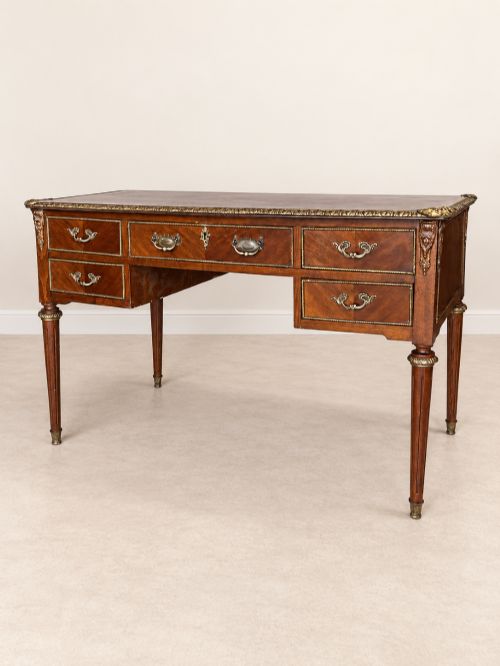
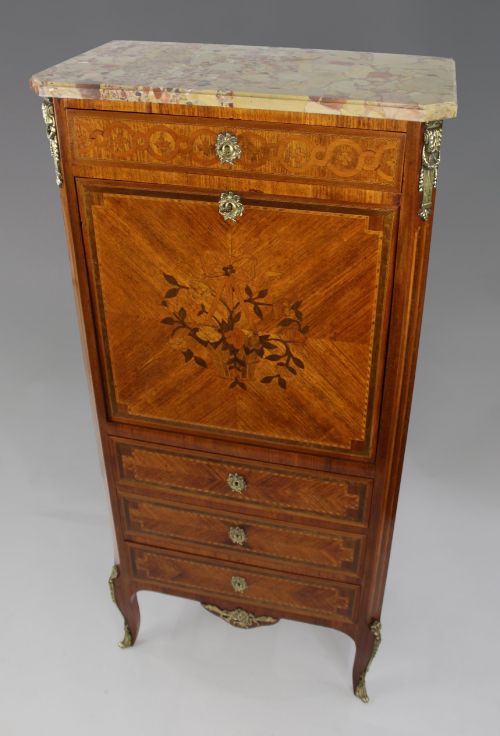
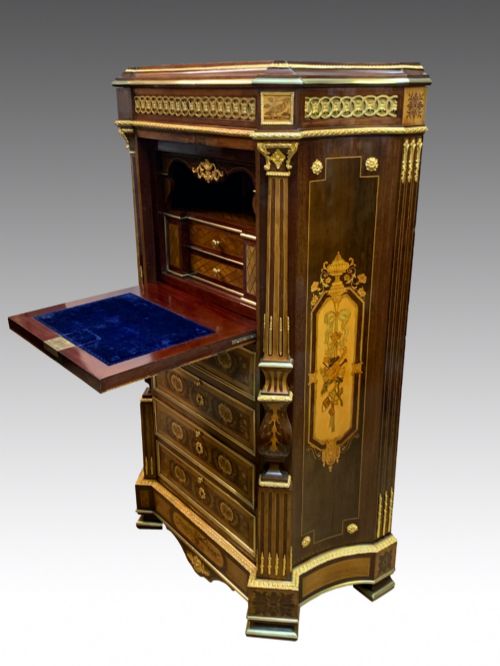
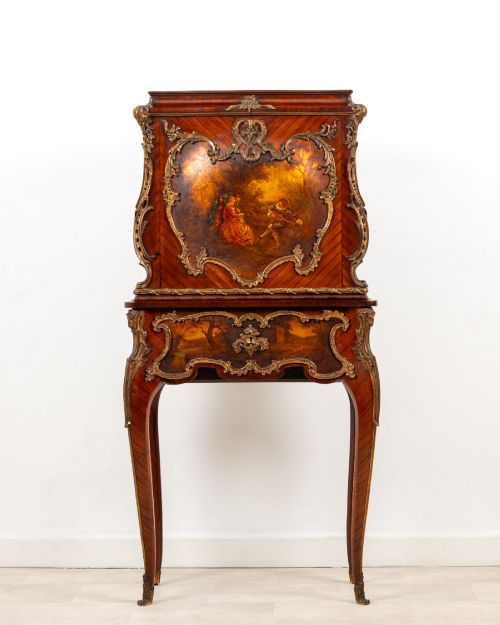



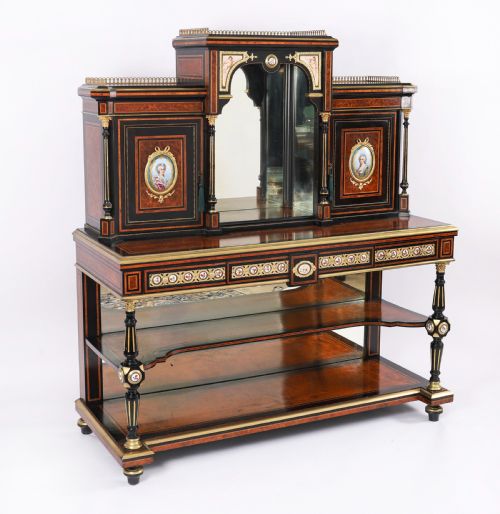


Ormolu Mounted Writing Cabinet
An ormolu mounted writing cabinet brings together fine cabinet-making and gilded bronze mounts to create a functional workspace with undeniable presence.
Ormolu Mounted Writing Cabinet
When you search for an ormolu mounted writing cabinet, you encounter nineteenth-century pieces largely originating from French and Victorian workshops.
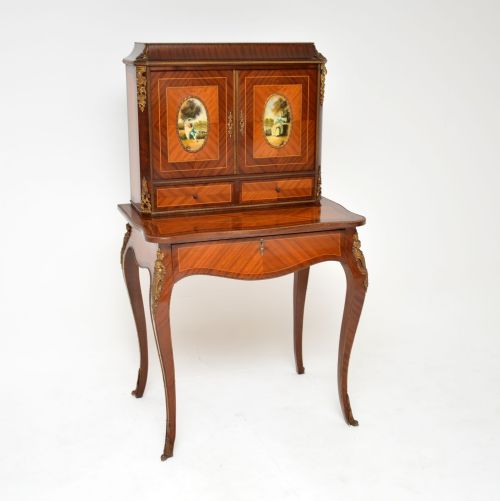
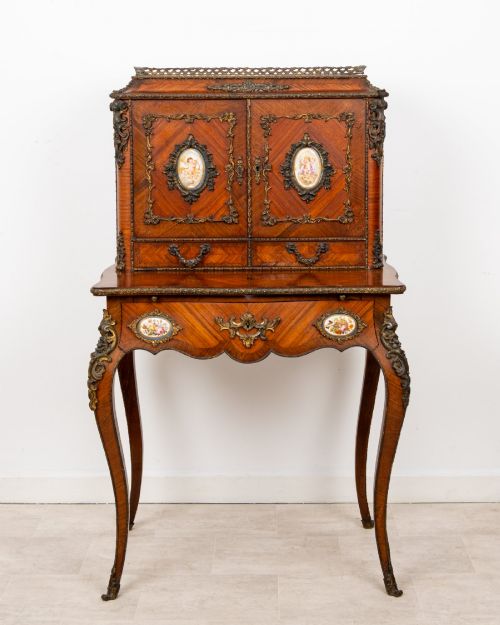
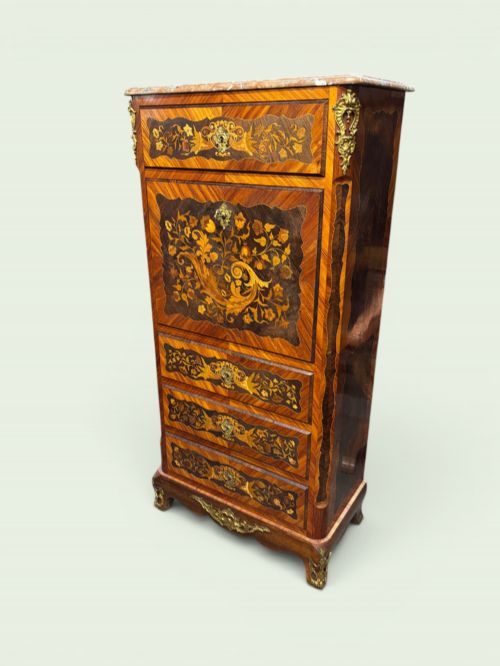
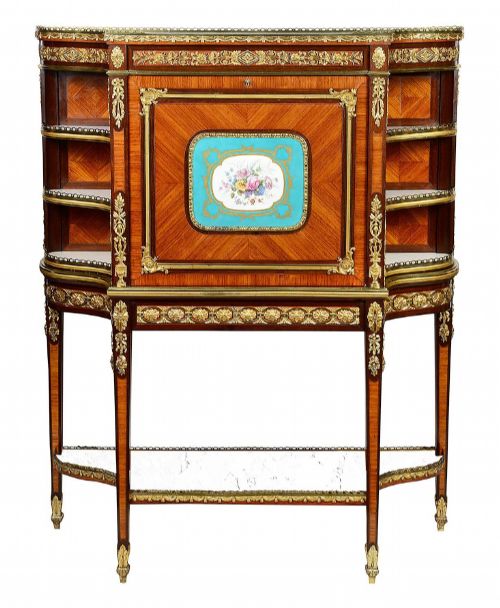
The selection on this page centres on form types such as the secretaire abattant, bonheur du jour, and escritoire, which combine enclosed storage with a dedicated writing surface.
These items span periods from the mid nineteenth century through to the early twentieth century, reflecting the enduring popularity of revivalist aesthetics.
Materials and Technique
Craftsmen built these pieces using structural carcases of walnut or mahogany, overlaid with decorative veneers including kingwood, satinwood, and marquetry patterns.
Cast ormolu and gilt bronze mounts were applied to corners, friezes, and feet to accentuate the architectural lines of the cabinet.
Selected examples incorporate porcelain plaques or Vernis Martin panels, inset into the timber housing to provide colour and contrast.
Listings span the nineteenth and early twentieth centuries, featuring French and Victorian pieces constructed in kingwood, walnut, and mahogany.
Execution and Detail
The distinction between standard production and exceptional work rests on the crispness of the ormolu casting and the precision of the underlying marquetry or parquetry.
Superior cabinets display seamless veneer matching across moving flaps and drawers, alongside finely chased metalwork that sits flush against the timber body.
Maison Krieger·Blake·Linke·Jean Werner
The Ormolu Mounted Writing Cabinet Glossary
- Ormolu
- Gilt bronze applied as a decorative mount on furniture. It involves mercury gilding techniques on cast brass or bronze.
- Secretaire abattant
- A tall writing cabinet featuring a drop-down fall front that conceals a fitted interior of small drawers and pigeonholes.
- Bonheur du jour
- A light lady's writing desk featuring a small cabinet or superstructure on top of the writing surface.
- Marquetry
- Inlaid wood veneers arranged in decorative pictorial or geometric patterns across the surface of the carcase.
- Vernis Martin
- A type of simulated Japanese lacquer developed in France during the eighteenth century and emulated in later revival pieces.
Ormolu Mounted Writing Cabinet: Frequently Asked Questions
What is a bonheur du jour?
A bonheur du jour is a small, elegant writing desk topped with a set of small drawers or a cabinet. These pieces gained popularity in the nineteenth century for use in private sitting rooms.
They often feature delicate timber veneers and bronze mounts, providing a compact surface for correspondence rather than heavy administrative work.
How do I identify an abattant?
An abattant is distinguished by its vertical fall-front panel that pulls down horizontally to form a writing ledge. Behind this main flap lies a fitted interior with compartments for stationery.
This format allows a tall cabinet to occupy minimal floor space while offering substantial concealed storage.
What wood types are common?
Kingwood and walnut form the primary structural and decorative timbers across these nineteenth-century pieces. Craftsmen utilised them for both solid construction and intricate patterned veneers.
Secondary woods like mahogany and satinwood also appear regularly in internal drawers and contrasting borders.
Where were these cabinets made?
The majority of these pieces originate from French workshops, particularly in Paris, alongside Victorian British equivalents. French cabinet-makers dominated the revival styles seen in this selection.
Maker signatures or stamps occasionally appear on the bronze mounts or timber carcases of higher-tier workshops.