


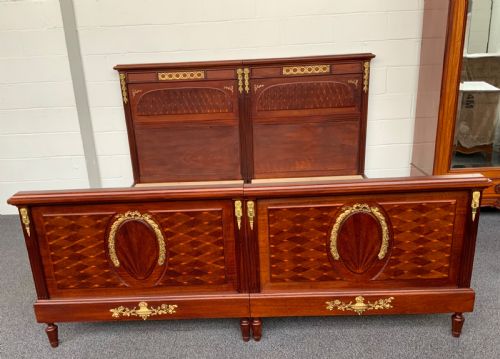
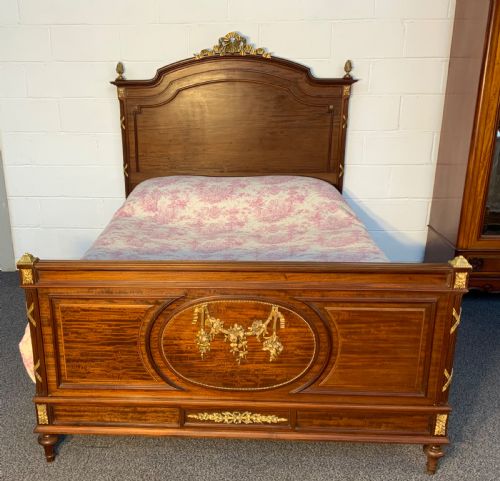


Ormolu Mounted Wooden Bed
These ormolu mounted wooden beds bring grand continental presence to a bedroom through rich timber and cast metal detail.
Ormolu Mounted Wooden Bed
An ormolu mounted wooden bed provides substantial sleeping furniture formed from timbers such as mahogany, walnut, fruitwood and burr. These pieces originate across the nineteenth century and into the early twentieth century, drawing heavily on French design vocabulary.
The buyer meets forms ranging from double beds to king size, super king and emperor proportions. Matching bedside cabinets occasionally accompany the main bedstead, creating a unified bedroom scheme.
Stylistic influences lean towards French Empire, Louis XVI and Neoclassical traditions. The overarching aesthetic pairs warm wood grains with classical metallic accents.
How these beds were constructed
Cabinetmakers utilised dense hardwoods for the primary structures, incorporating quarter veneered walnut, plum pudding mahogany and parquetry patterns to display decorative grain. Fruitwood and burr sections add varied tone and texture across the timber surfaces.
Mounts and embellishments in ormolu, gilt bronze, brass and gilt brass are secured to the wooden frames. These metallic elements provide formal classical framing to the expanses of polished wood.
Ormolu Mounted Wooden Bed Retail Price Guide 2026
Typical asking prices for ormolu mounted wooden bed among the pieces listed under this phrase on Sellingantiques today, from the lower quarter to the upper quarter. They describe what is for sale here now, not the wider market.
Several grand beds arrive with matching bedside cabinets, ensuring your chamber pot holder coordinates with the headboard.
Distinguishing finer examples
Quality rests upon the selection and matching of timber veneers, such as figured mahogany or intricate parquetry work. Superior examples display thoughtful grain arrangement across large headboards and footboards.
The crispness and weight of the ormolu and brass mounts dictate the refinement of the piece. Finer metalwork shows sharp detailing and secure integration with the underlying woodwork.
The Ormolu Mounted Wooden Bed Glossary
- Ormolu
- Gilt bronze or brass applied as a decorative mount to furniture. This technique creates bright metallic contrast against dark timber surfaces.
- Parquetry
- Geometric mosaic woodwork arranged in patterns such as squares or diagonals. It forms decorative panels on bed frames.
- Neoclassical
- A revival style drawing on classical antiquity with symmetrical lines and restrained ornamentation. It dominates late nineteenth century French furniture design.
- Quarter veneered
- Timber slices cut radially from the log and arranged to mirror the grain pattern. This method produces balanced visual symmetry on large panels.
Ormolu Mounted Wooden Bed: Frequently Asked Questions
How do I choose the right size?
Check the internal dimensions against your mattress size rather than relying on historical size descriptions alone. Nineteenth century sizing terms often differ from modern standards.
Ensure your room has adequate clearance for the substantial headboards and footboards typical of these French bedsteads.
Are these beds structurally sound for daily use?
Most antique wooden beds require modern slat systems or concealed metal frames to support contemporary mattresses securely. Consult a specialist restorer to adapt the internal fixings safely.
Regularly check visible bolts and structural joints to maintain stability over time.
How do I care for the wood and metal?
Dust timber surfaces gently with a dry, soft cloth and avoid chemical polishes that build up residue. Feed dry wood with appropriate natural wax periodically.
Keep ormolu and brass mounts free of moisture and clean them without abrasive agents to preserve the gilt surface.
How can I identify the style period?
Examine the timber selection, such as plum pudding mahogany or burr walnut, alongside the linearity of the headboard design. Neoclassical and Louis XVI influences show restrained classical geometry.
Cast brass detailing and painted finishes point towards late nineteenth and early twentieth century French workshops.