



Ormolu Mounted Tallboy
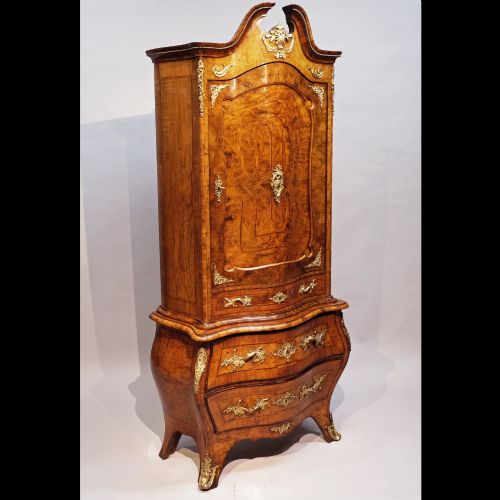
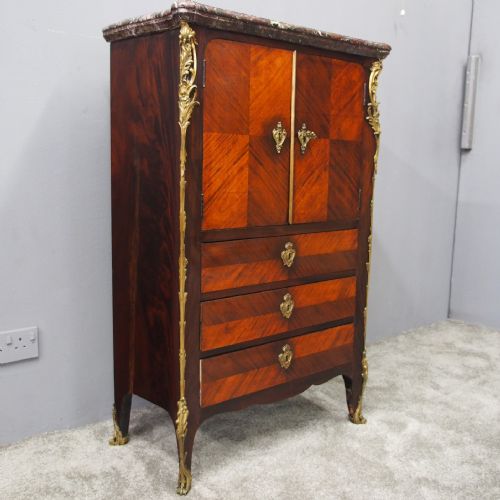
An ormolu mounted tallboy brings vertical presence and gilt detail to a room, combining fine cabinetry with striking metal mounts.
Ormolu Mounted Tallboy
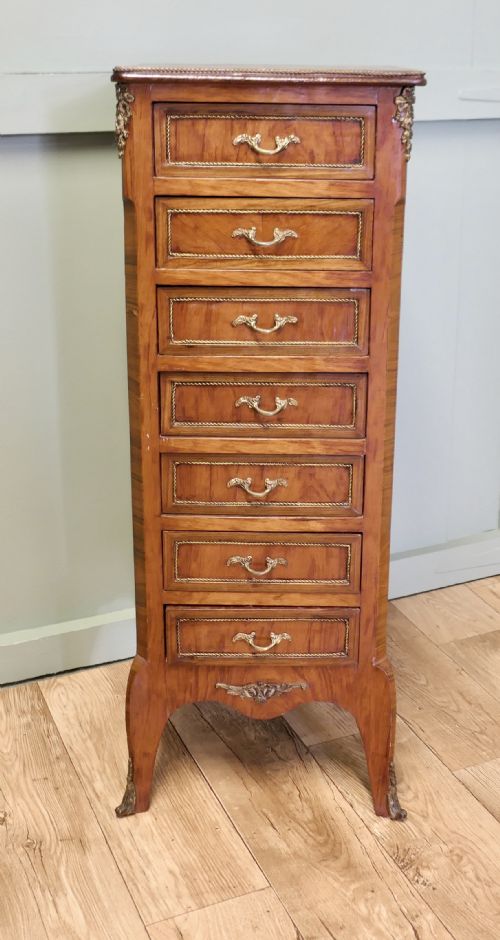
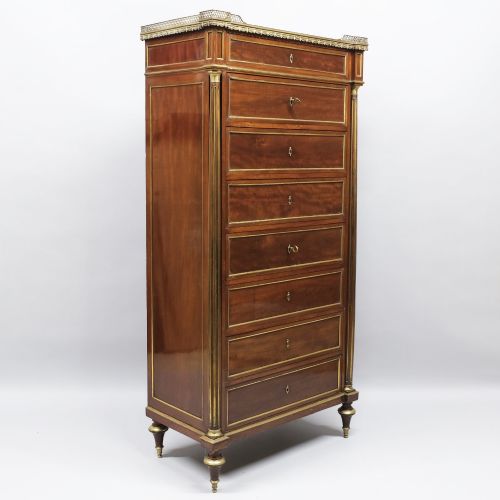
An ormolu mounted tallboy takes the form of tall chests of drawers, semainiers, and cabinets originating mostly from nineteenth century France. These pieces rise high off the floor to maximise storage while occupying a modest footprint in a room.
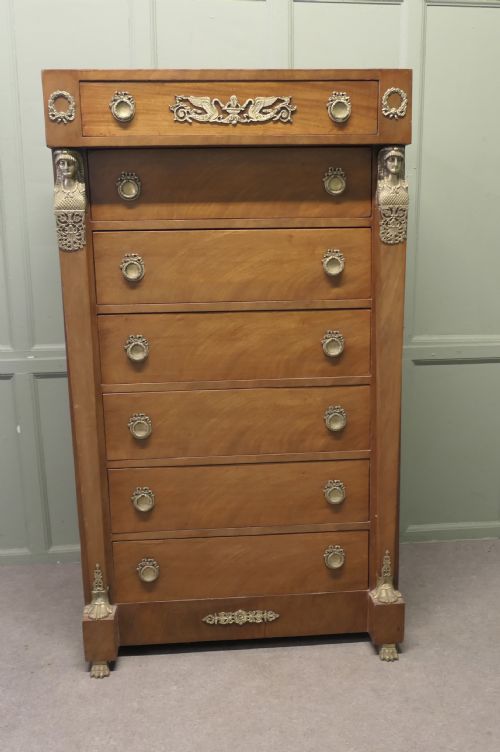
The selection here encompasses French Empire, Louis XV, and Louis XVI styles, alongside specific forms like walnut wellington chests and marquetry secretaire cabinets. Such tall furniture provides substantial drawer space combined with decorative surfaces.
Makers and cabinetmakers constructed these high chests using timbers like walnut, mahogany, kingwood, rosewood, and tulipwood. The vertical proportions give each piece a commanding presence suited to traditional interiors.
How these pieces were made
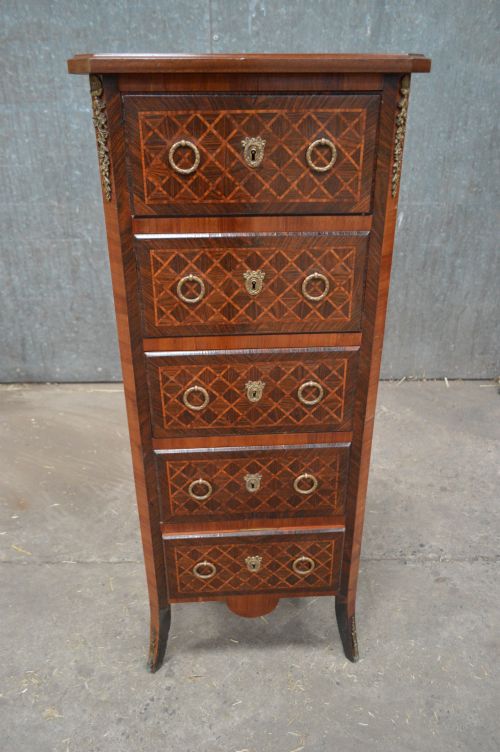
Cabinetmakers built these tall chests using solid and veneered hardwoods over sturdy carcases, incorporating parquetry, marquetry, and delicate inlay work. Timber choice defined the primary surface colour and grain pattern of each piece.
Craftsmen applied ormolu, gilt bronze, or gilt metal mounts to corners, drawer fronts, and feet to accentuate the structural lines. These cast mounts required precise fitting to complement the curves and angles of the timber woodwork.
Listings feature nineteenth century French tall chests utilising walnut, mahogany, kingwood, rosewood, and marble.
What varies in quality
Quality rests upon the crispness of the cast ormolu mounts and the precision of the underlying parquetry or marquetry patterns. Finer pieces demonstrate superior timber selection, seamless veneer matching, and well-executed joinery throughout the drawer construction.
The distinction between ordinary and exceptional examples lies in the depth of the chasing on the gilt bronze mounts and the elegance of the proportions. Stamped signatures from established workshops further elevate a piece by confirming its origin.
Maison Krieger·Leonard Boudin
The Ormolu Mounted Tallboy Glossary
- Ormolu
- Gilt bronze ornamentation applied to furniture and decorative objects. This technique involves coating cast bronze with a finely ground gold-mercury amalgam and heating it to leave a durable golden finish.
- Semainier
- A tall, narrow chest of drawers traditionally designed with seven drawers, one for each day of the week. This French form offers significant vertical storage without taking up excessive floor space.
- Parquetry
- Geometric wood inlay work arranged in patterns such as cubes, chequers, or herringbone. Cabinetmakers utilise contrasting timbers to create these decorative surface designs.
- Wellington chest
- A tall, narrow chest of drawers secured by a hinged locking side pilaster that fastens over the drawer edges. Originating in the nineteenth century, this form protects the contents with a single lock.
Ormolu Mounted Tallboy: Frequently Asked Questions
What is a semainier?
A semainier is a tall, narrow chest traditionally featuring seven drawers. It served as a practical piece for organising weekly garments in continental bedrooms.
Today, these pieces function well in bedrooms or studies where floor space is limited but vertical storage is required.
How do I care for ormolu?
Ormolu requires gentle dusting with a soft, dry cloth to prevent the accumulation of dirt within the chased details. Avoid harsh cleaning products that can strip the gilt surface.
Keeping the timber and metal away from direct sunlight and excessive heat preserves the finish of both materials over time.
Where should I place a tall chest?
These tall chests fit well against empty wall spaces in bedrooms, hallways, or living rooms where their height can add vertical balance. Ensure the floor is level so the drawers open smoothly.
Because of their height, anchoring them securely to the wall prevents tipping and protects the furniture.
What is French Empire style?
French Empire style draws inspiration from classical antiquity, featuring dark timbers, symmetrical forms, and bold gilt bronze mounts. It emerged during the early nineteenth century under Napoleonic rule.
Pieces from this period command attention through their austere yet grand architectural lines and restrained decoration.