
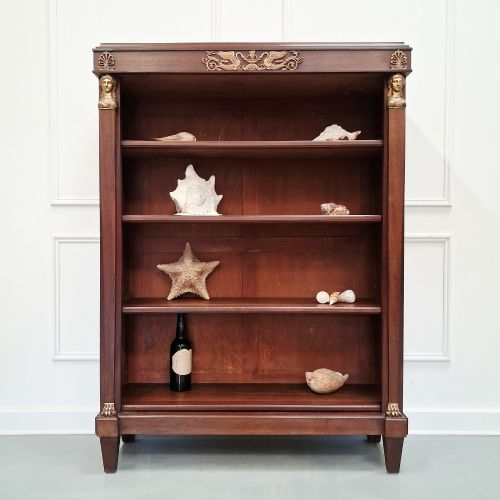
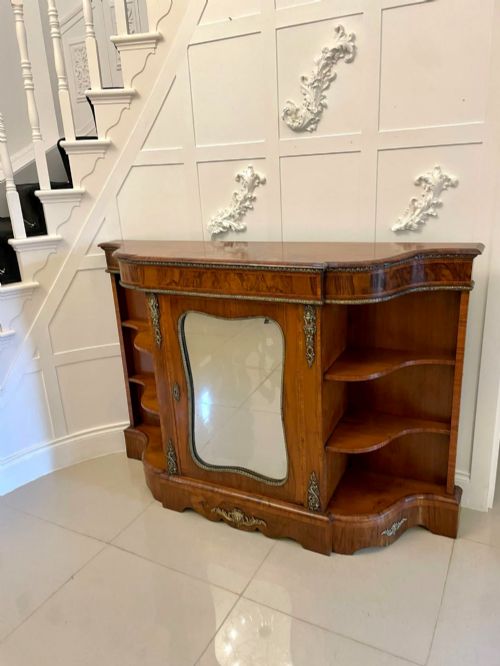
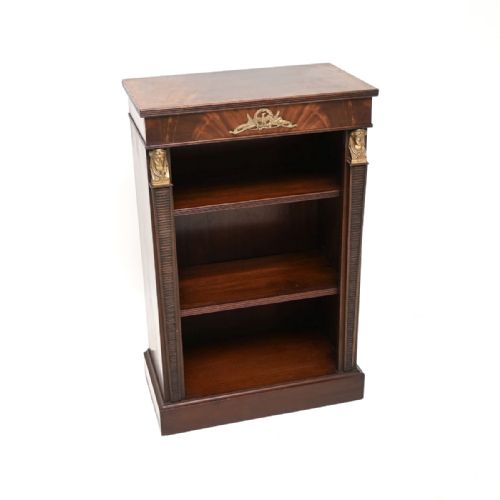
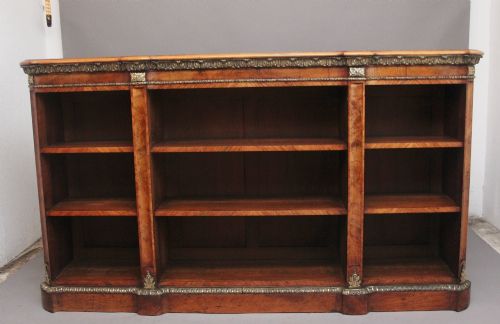
Ormolu Mounted Shelves
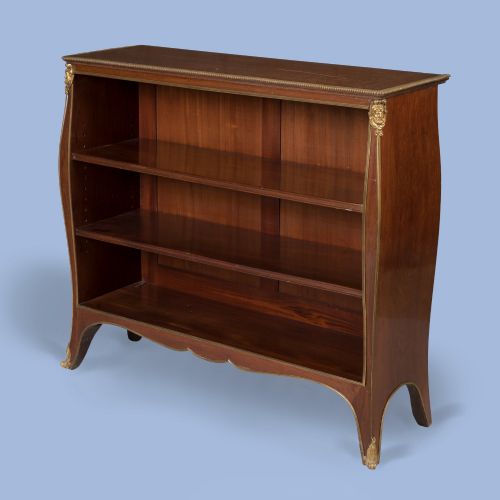
These ormolu mounted shelves bring together polished timber and cast gilt metal to create display pieces that anchor a room.
Ormolu Mounted Shelves
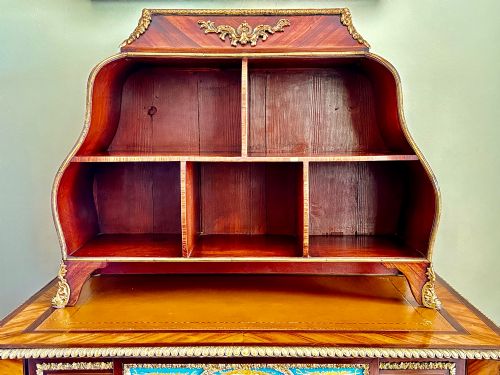
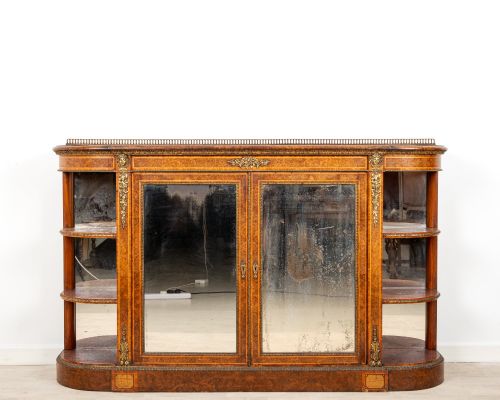
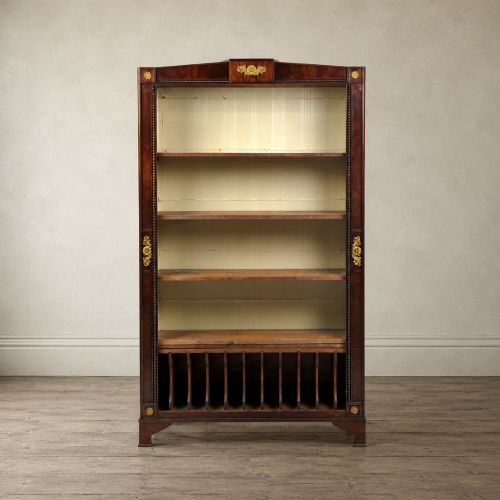
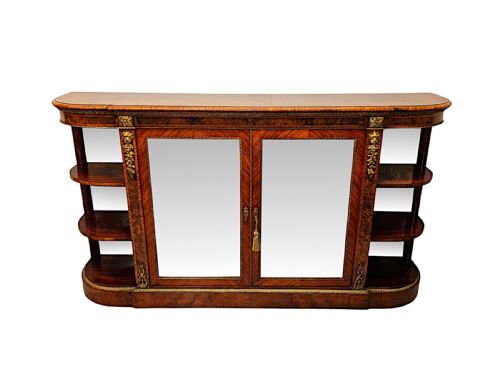
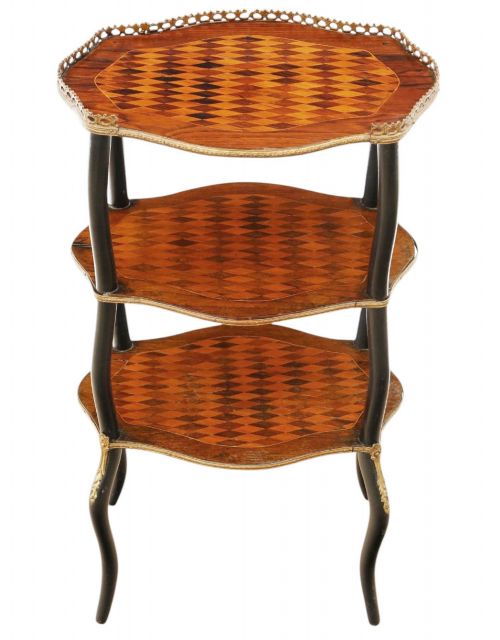
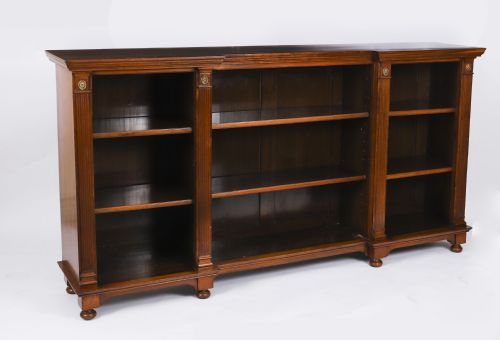
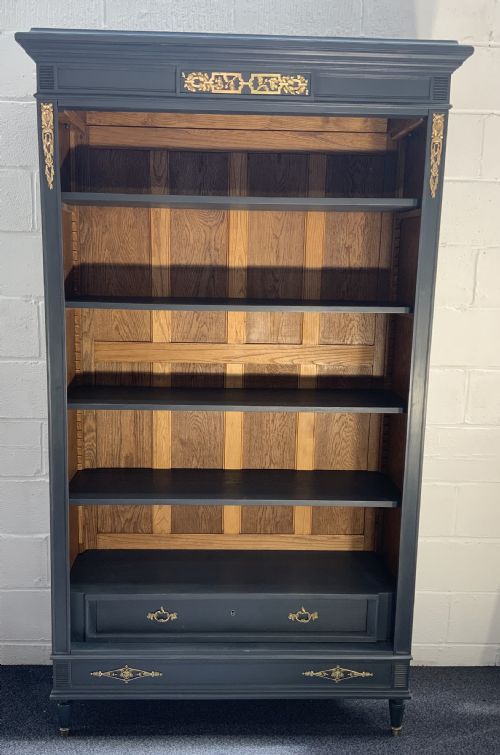
When you search for ormolu mounted shelves, you encounter a selection of open bookcases, étagères, and display cabinets originating from the nineteenth century. These forms draw heavily on French design, spanning the Rococo Revival, Empire, and Louis XV styles.
The timber framework frequently utilises burr walnut, rosewood, mahogany, or kingwood, often enhanced with marquetry or parquetry inlays. Ormolu mounts define the corners, borders, and feet, adding a layer of metallic contrast to the polished wood.
Materials and construction methods
Cabinet makers constructed the foundational carcase from dense hardwoods, applying fine veneers of burr walnut, rosewood, or mahogany to the visible surfaces. Marquetry panels incorporated contrasting timbers and sometimes porcelain plaques to build intricate visual patterns.
The gilt bronze or ormolu mounts were cast separately, chased by hand to sharpen the leaf and scroll details, and then secured to the timber via small brass screws. Brass embellishments and glass panels completed the detailing on display cabinets and étagères.
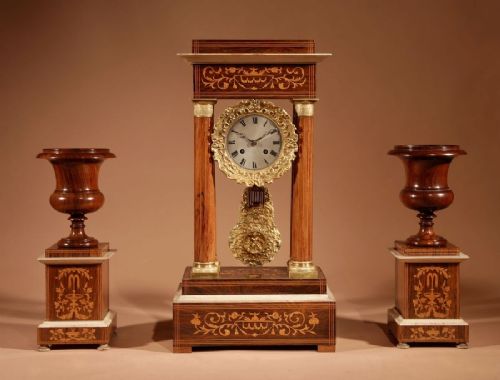
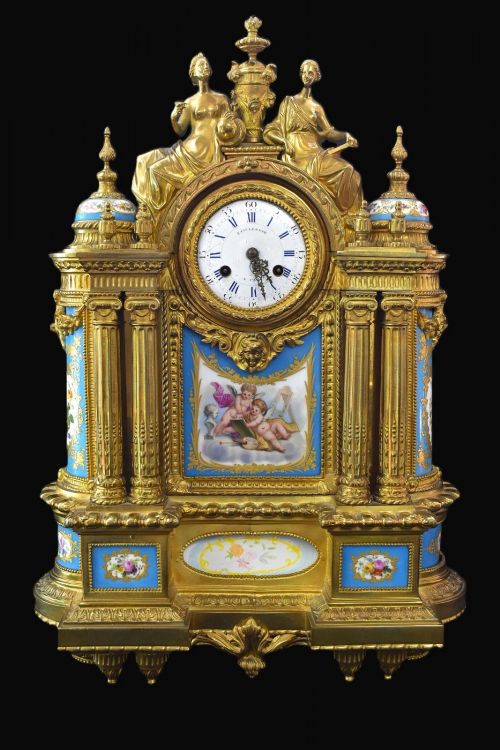
A tiny wind-up mechanism ticks quietly inside a burr walnut lyre-shaped clock, keeping time beside your books.
Assessing the grade and execution
The standard of an ormolu mount depends on the crispness of the chasing and the depth of the original gilding, where flat or worn metal indicates lesser handwork. Heavily chased mounts show distinct texture and relief in the foliage or geometric motifs.
Cabinetwork quality reveals itself in the precision of the veneer matching and the tightness of the marquetry joints. Superior pieces maintain alignment in their doors and shelves despite changes in humidity over the decades.
Johnstone And Jeanes·Charles A Orleans·Gillows·Etienne Lenoir·Lenzkirch
The Ormolu Mounted Shelves Glossary
- Ormolu
- A gilded bronze technique utilising a mercury amalgam applied to cast brass or bronze. This process yields a distinctive matte and burnished golden finish common on nineteenth-century French furniture.
- Étagère
- A set of open shelves designed for displaying small objects, supported by slender pillars or columns. These pieces appear frequently in walnut, rosewood, and mahogany.
- Marquetry
- The art of applying small pieces of veneer to a structure to form decorative patterns or pictures. Craftsmen selected different coloured woods to create contrast without paint.
- Credenza
- A low cabinet enclosed by doors, often featuring glass panels and prominent ormolu mounts. Victorian and French makers adapted this form for formal display.
- Parquetry
- Geometric mosaic woodwork used for floors or cabinet surfaces. The technique relies on repeating angular wood blocks to form patterned borders or panels.
Ormolu Mounted Shelves: Frequently Asked Questions
How do I clean ormolu mounts safely?
Dust the metal gently with a soft, dry brush to remove surface particles without disturbing the underlying surface.
Avoid commercial metal polishes entirely, as abrasive liquids strip away the original gilding on antique bronze.
Where were these shelves typically placed?
These open bookcases and étagères stood in principal reception rooms to display ceramics, books, and decorative objects.
Their polished veneers and gilded mounts were intended to catch the candlelight or natural daylight in formal drawing rooms.
How do I identify French revival styles?
French Revival pieces from the nineteenth century adopt the curves, floral motifs, and symmetry associated with Louis XV and Louis XVI designs.
Look for cabriole legs, symmetrical acanthus mounts, and kingwood or rosewood veneers arranged in intricate parquetry.
Are the shelves adjustable on these bookcases?
Many nineteenth-century open bookcases utilise fixed shelving systems integrated directly into the vertical side panels.
Some later or larger examples incorporate traditional wooden peg supports allowing limited height adjustment for books.