




Ormolu Mounted Secretaire
An ormolu mounted secretaire brings sculptural bronze mounts and fitted writing surfaces together into a substantial piece of antique furniture.
What They Are
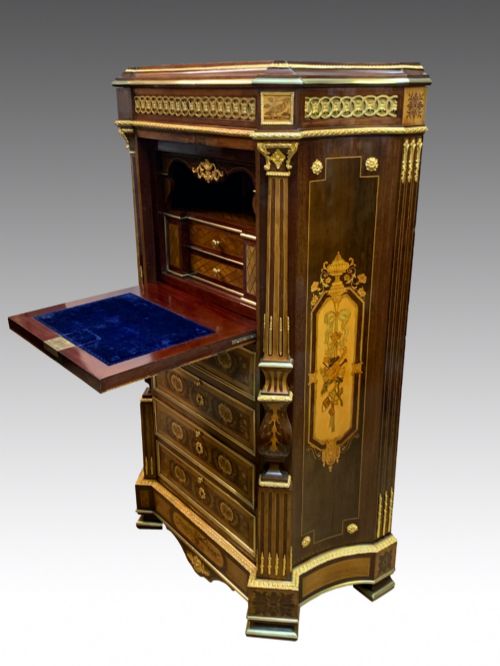
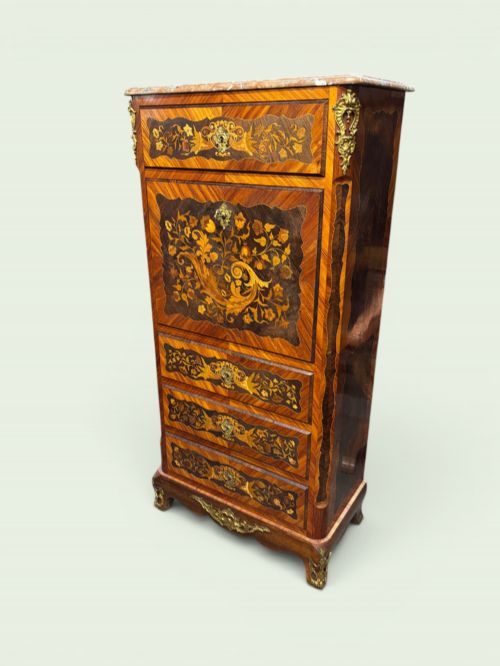
An ormolu mounted secretaire is a cabinet designed for correspondence and storage, frequently incorporating a drop-down writing flap known as an abattant. These pieces date across the nineteenth century, with examples emerging from periods such as eighteen eighty, eighteen ninety, and nineteen ten.
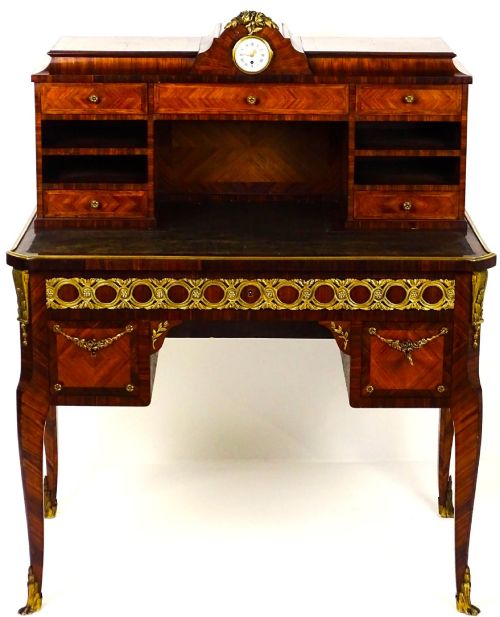
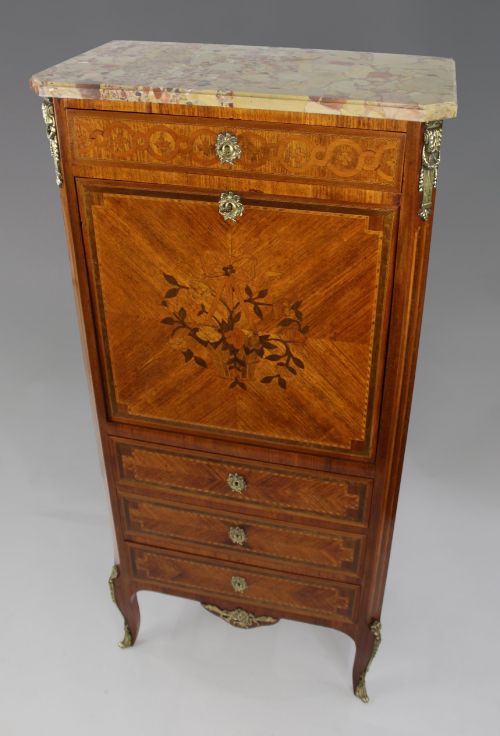
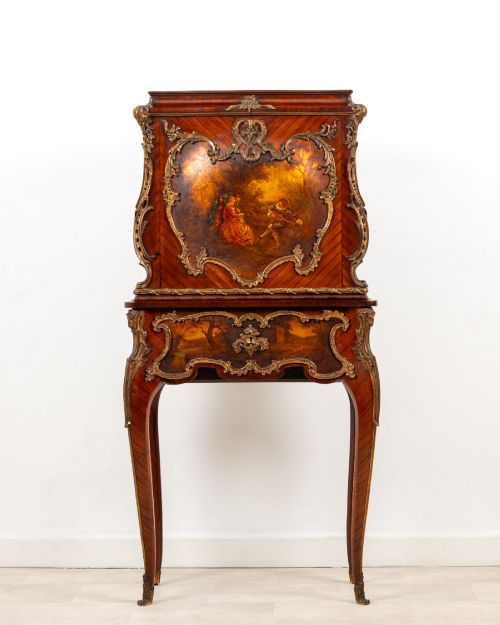
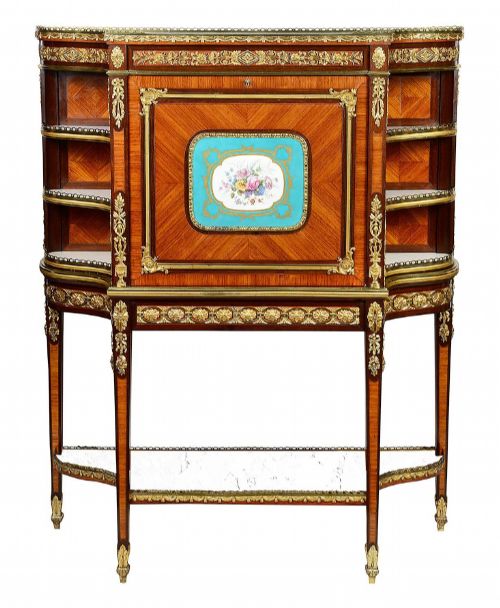
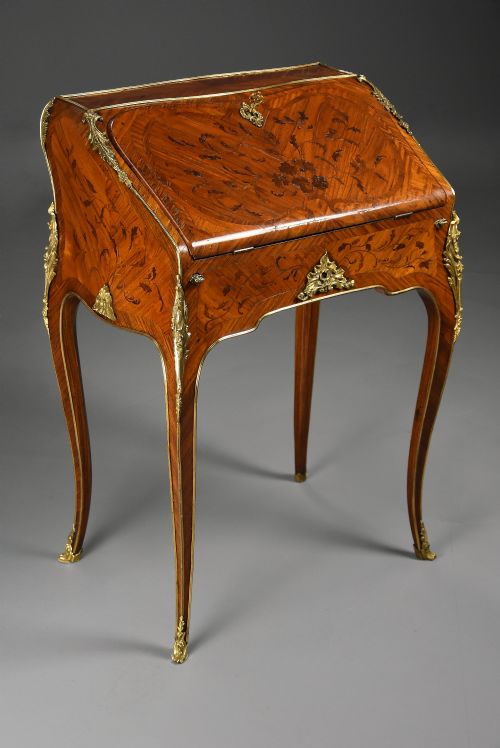
The objects seen here encompass French Rococo Revival, Louis XV, Louis XVI style, and French Transition styles. Forms range from secretaire cabinets and writing desks to chests of drawers and writing cabinets.
Buyers most frequently encounter variations executed in walnut, rosewood, and kingwood, often featuring marquetry and porcelain alongside the characteristic bronze mounts. Originating predominantly within French cabinet-making traditions, certain examples reflect London craftsmanship through makers such as Blake.
How They Were Made
Craftsmen built the carcasses of these secretaires using foundational timbers like walnut, overlaid with decorative veneers including kingwood and rosewood. Marquetry techniques introduced intricate floral or geometric patterns across the exterior surfaces.
Gilded bronze, known as ormolu, was cast, chased, and applied to corners, feet, and key escutcheons to accentuate the architectural lines. Marble slabs were frequently fitted to the upper surfaces of these cabinets to provide a durable and contrasting top.
Retail Price Guide 2026
Typical UK retail prices for ormolu mounted secretaire, calculated from the Sellingantiques database of over a million retail prices indexed since 2003. This retail price guide relies exclusively on Sellingantiques data; no external sources or auction records are used, so the figures do not describe the wider market.
Some secretaires hide secret compartments behind miniature drawers, designed for letters that required absolute discretion.
What Varies in Quality
The refinement of the ormolu mounts distinguishes the finer examples, where crisp chasing and deep gilding create sharp relief against the wood. Lesser pieces rely on softer, shallower bronze castings with simpler surface finishing.
The complexity and precision of the marquetry inlay determine the visual depth of the cabinet, alongside the selection of cabinet woods like figured walnut and rich kingwood. Structural integrity in the fall-front mechanism and the interior pigeonholes further separates standard production from superior work.
Blake London
The Ormolu Mounted Secretaire Glossary
- Ormolu
- Gilded bronze used for decorative mounts and furnishings. It provides a bright metallic contrast against dark cabinet woods.
- Secrétaire à abattant
- A tall cabinet featuring a hinged fall-front writing flap that conceals an inner arrangement of drawers and pigeonholes. This form keeps correspondence concealed when not in use.
- Marquetry
- The art of applying pieces of veneer to a structure to form decorative patterns. Craftsmen utilise various coloured woods to achieve pictorial designs.
- Kingwood
- A dense, richly grained exotic timber often utilised in fine French cabinet-making. Its distinct dark striping defines high-end nineteenth-century surfaces.
- Louis XVI Style
- A neoclassical design vocabulary characterised by straight lines, symmetrical geometry, and restrained ornamentation. It appears frequently in later nineteenth-century revival pieces.
Frequently Asked Questions
What is an ormolu mounted secretaire?
An ormolu mounted secretaire is a writing cabinet adorned with gilded bronze mounts, combining storage compartments with a functional writing surface.
These pieces span the nineteenth century and reflect French design movements including Rococo Revival and Louis XVI styles.
How were these cabinets used originally?
Owners utilised the drop-down writing flap for correspondence, while internal compartments held stationery, documents, and valuables.
The lower doors or drawers provided secure storage for household linens or additional papers.
What woods appear in these pieces?
Cabinetmakers employed a foundation of walnut, frequently encasing the exterior in decorative veneers such as rosewood and kingwood.
Intricate marquetry work often embellishes the surfaces alongside the characteristic bronze mounts.
How do you identify a Louis XVI style secretaire?
Louis XVI style pieces generally exhibit straight lines, symmetrical proportions, and neoclassical bronze mounts rather than curving Rococo forms.
Marble tops and restrained geometric marquetry frequently accompany this architectural aesthetic.