





Ormolu Mounted Lidded Urns
Ormolu mounted lidded urns bring French classical elegance and nineteenth-century craftsmanship into a room through gilded metal and painted porcelain.
Ormolu Mounted Lidded Urns
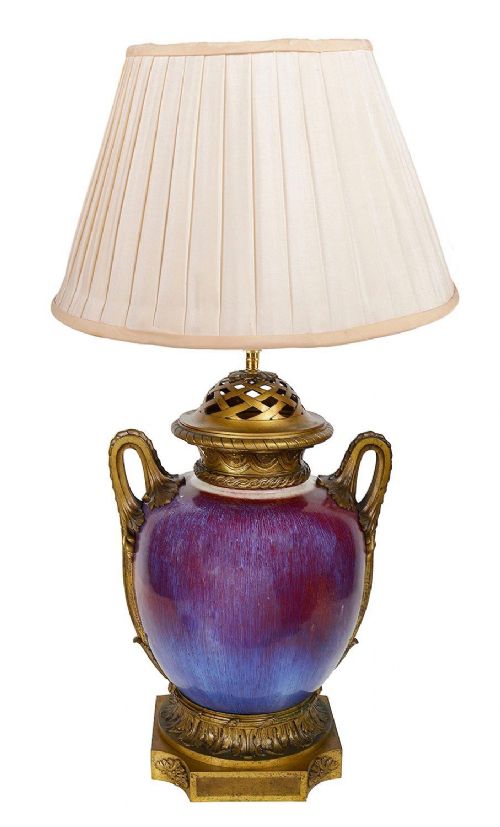
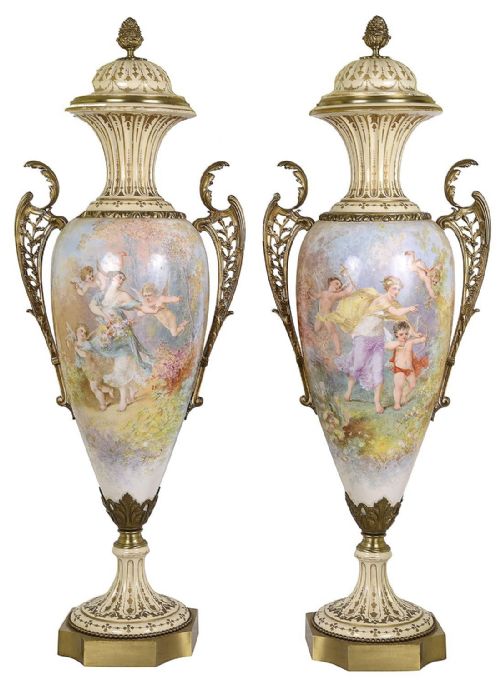
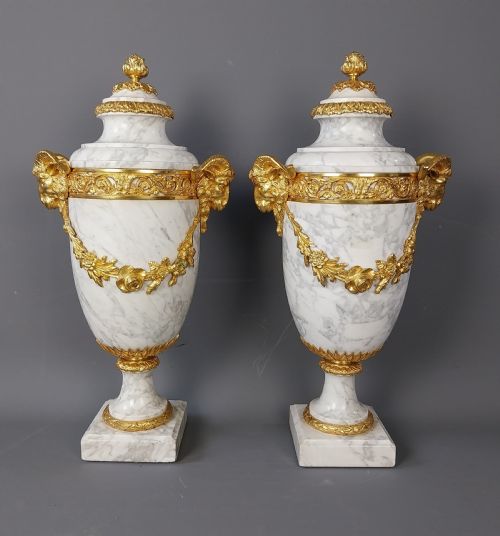
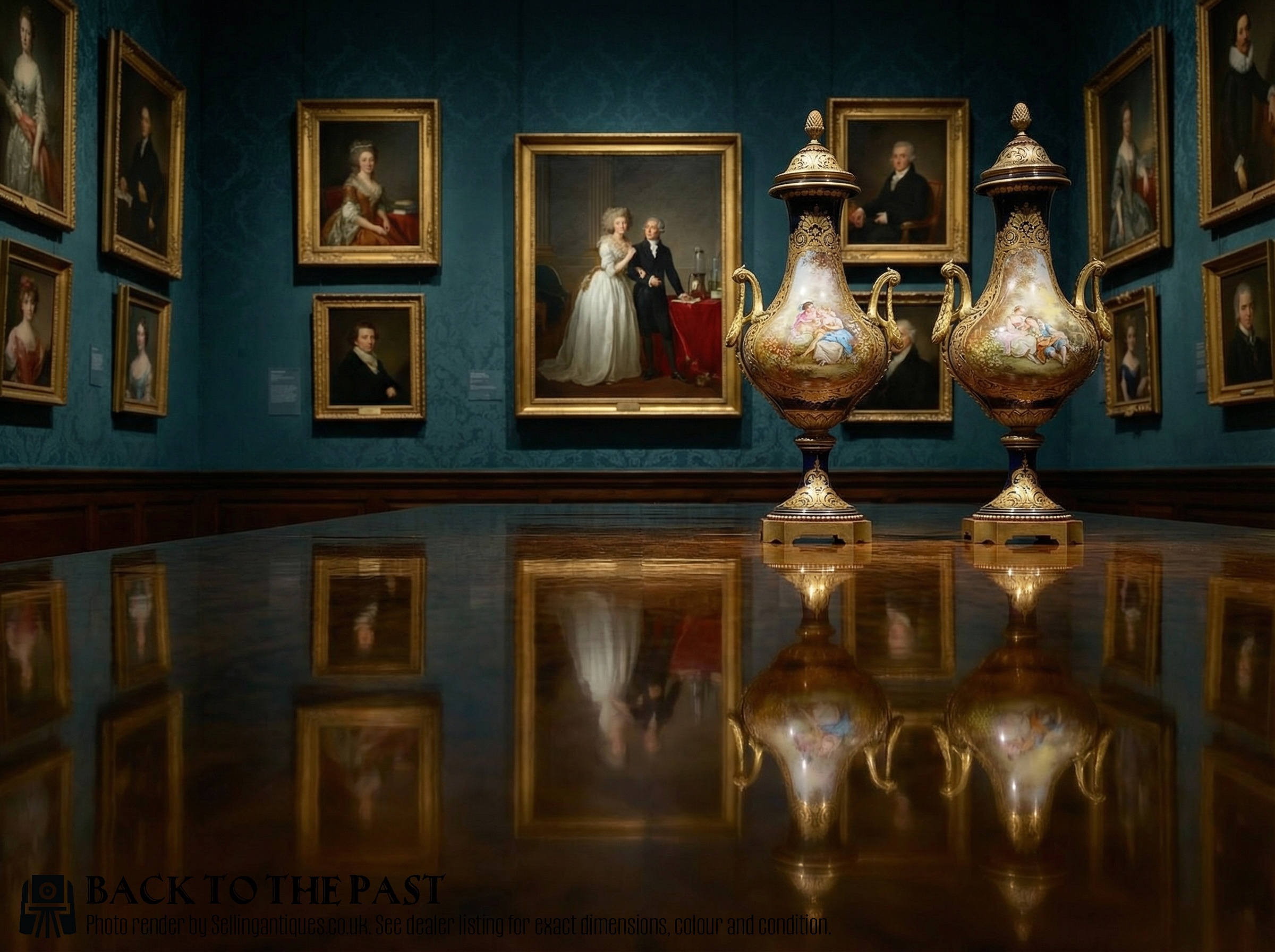
When you search for ormolu mounted lidded urns, you encounter decorative vessels primarily created during the nineteenth century in the French Sevres style, alongside Chinese export porcelain adapted for European interiors. These ornamental pieces combine lidded porcelain or white marble bodies with cast metal mounts, often appearing as matched pairs designed for grand display on tables or mantels.
The dominant forms on this page include tall decorative vases, cassolettes, and table lamps that retain their removable covers. Most examples draw upon French Rococo Revival, Louis XVI, and Empire design vocabulary, featuring classical proportions and handles integrated into the metalwork.
Materials and construction methods
The body of each piece relies on hard-paste porcelain or white marble, frequently glazed in pink, deep red such as Sang de Bouf, or classic white. Porcelain surfaces often carry hand-painted scenes or enamel detailing beneath the glaze, whilst marble components are carved to architectural proportions.
Mounts, feet, and finials consist of ormolu, gilt bronze, or gilt metal, shaped through precision casting and chiselling to clasp the ceramic vessel securely. This metalwork provides the structural framework for handles and decorative collars, uniting the disparate elements into a cohesive decorative object.
Listings feature items from the eighteenth and nineteenth centuries, utilising porcelain, white marble, ormolu, and gilt bronze within French revival styles.
Assessing quality and execution
Quality reveals itself most clearly in the crispness of the ormolu chasing and the depth of the gilding applied to the metal mounts. Finer examples exhibit sharp, detailed casting that requires no smoothing, whereas lesser versions rely on softer metalwork with muted definition.
The artistic merit of the porcelain painting and the symmetry of the ceramic body further distinguish top-tier items from standard production. Monumental scale and matched pairs executed with rigorous attention to classical proportions command greater appreciation among collectors.
The Ormolu Mounted Lidded Urns Glossary
- Ormolu
- Finely chopped gold leaf amalgamated with mercury and applied to bronze or metal, then fired to leave a rich golden layer. This technique creates the distinctive bright metallic finish seen on French decorative arts.
- Cassolette
- A decorative vessel that functions as a vase or burner, often featuring a reversible lid with a solid side and a pierced side. They appear frequently in white marble paired with gilt metal mounts.
- Sevrs Style
- Design characteristics originating from the French state porcelain manufactory, encompassing rich coloured grounds and classical figurative painting. Nineteenth-century makers widely emulated these aesthetics.
- Sang du Bouf
- Ox-blood red ceramic glaze known for its deep, variegated crimson tones. This high-temperature glaze originates in Chinese kilns and appears on eighteenth-century vessels adapted in Europe.
- Gilt Bronze
- Copper and zinc alloy finished with a layer of gold to prevent tarnish and provide a lustrous surface. It forms the structural and decorative mounts for many nineteenth-century urns.
Ormolu Mounted Lidded Urns: Frequently Asked Questions
How are ormolu mounted lidded urns cleaned?
Dust porcelain bodies gently with a soft dry cloth and avoid liquid cleaners that might disturb hand-painted enamel or gilding.
Clean ormolu mounts with a dry microfibre cloth, keeping polishes away from the adjacent ceramic to prevent staining.
What rooms suit ormolu mounted lidded urns?
These decorative vessels sit well on large mantelpieces, sideboards, or console tables where their height and gilding draw the eye.
Pooled light from lamps built into these urns highlights classical details and brings warmth to traditional reception spaces.
How do I spot Sevrs style pieces?
Look for characteristic coloured grounds such as pink or deep blue combined with ornate gilt bronze mounts and classical painted reserves.
Nineteenth-century interpretations often emphasise monumental scale and French Revival motifs rather than eighteenth-century originals.
Can the lids be removed safely?
Most covers lift off easily, resting on fitted collars or matching metal flanges designed to secure the top without adhesive.
Lift covers with both hands to protect delicate finials and delicate porcelain rims from accidental chipping during inspection.