



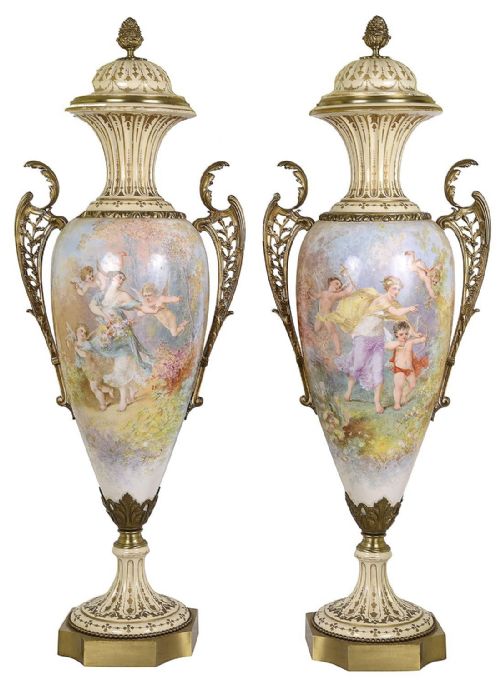


French Rococo Revival Vases
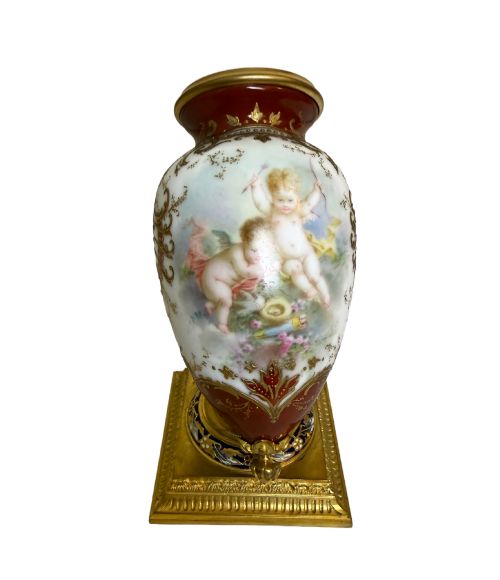
French rococo revival vases combine flamboyant porcelain bodies with chased gilt bronze mounts, bringing opulent nineteenth-century decorative arts straight into your room.
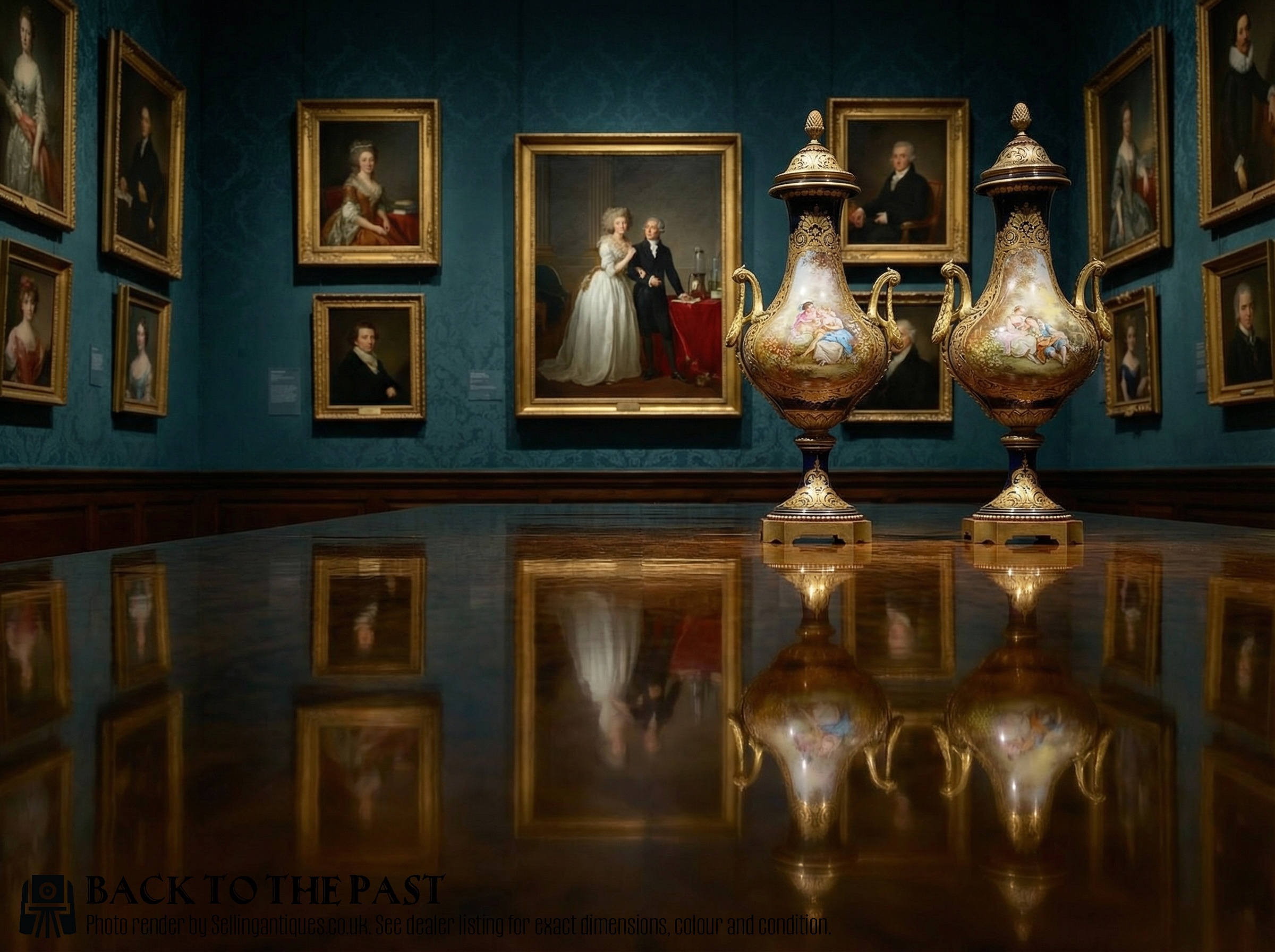
French Rococo Revival Vases
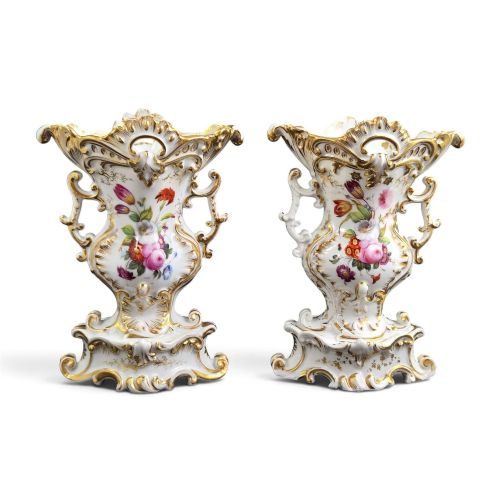
French rococo revival vases encompass nineteenth-century decorative vessels, garnitures, and lamps that draw heavily on eighteenth-century court aesthetics through asymmetric scrollwork, naturalistic motifs, and vibrant hand-painted floral panels.
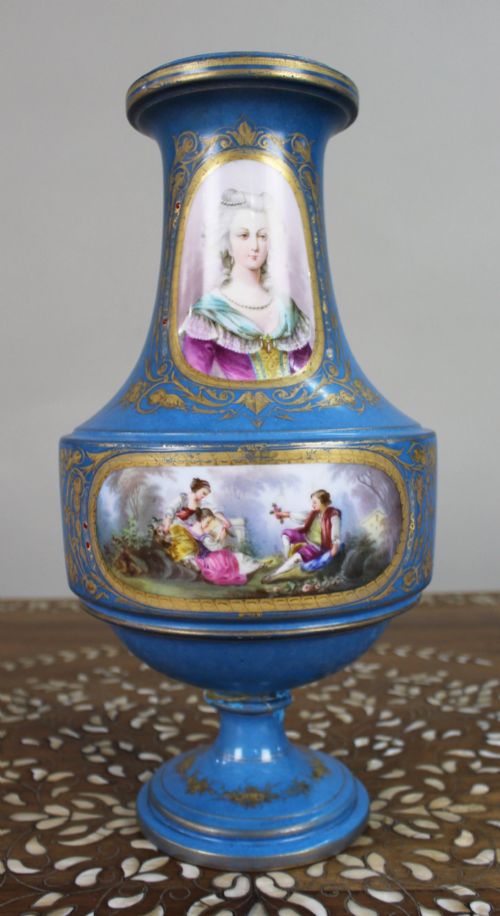
You will most frequently meet nineteenth-century porcelain bodies paired with gilt bronze or ormolu mounts, often reflecting the Sèvres taste or Paris ware production from periods spanning 1850 to 1890.
The forms range from lidded urns and potpourri jars to table lamps and decorative ewers, demonstrating the enduring nineteenth-century appetite for theatrical interior ornamentation.
Judging the range
Quality rests significantly in the crispness of the bronze casting and the precision of the hand-painted decoration, where finer examples display deeply chiselled mounts and meticulously detailed floral work rather than flat, repetitive stencilling.
The harmony between the ceramic body and the metal mounts dictates the overall success of the piece, separating standard factory productions from exceptional studio outputs bearing refined proportions.
Current selections feature 19th-century porcelain bodies combined with gilt bronze, ormolu, and enamel across various Sèvres-style and Paris ware productions.
Jacob Petit·Samson Paris·Vion et Baury
The French Rococo Revival Vases Glossary
- Ormolu
- A gilded bronze technique utilising finely ground high-carat gold mercury-gilded onto a cast brass or bronze base. This treatment provides the characteristic bright, metallic sheen seen on nineteenth-century mounts.
- Bleu Céleste
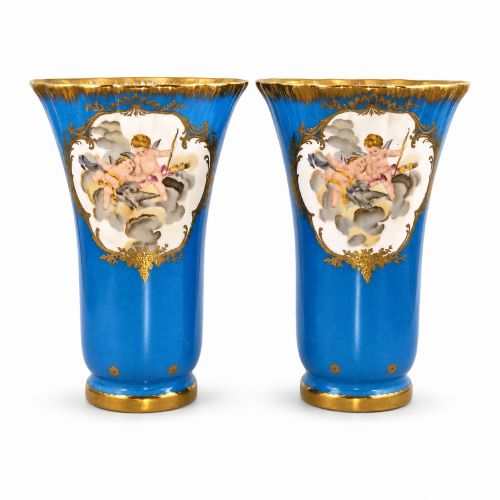
- A brilliant turquoise blue porcelain ground colour made famous by the Sèvres manufactory. It serves as a striking backdrop for polychrome floral paintings.
- Potpourri
- A perforated vessel designed to hold scented dried plant materials. These examples often feature elaborate pierced ceramic or bronze lids.
- Garniture
- A set of three or more matching decorative vases intended to be displayed together on a mantelpiece or sideboard. They typically comprise a central taller urn flanked by two matching smaller vessels.
- Bisque
- Unglazed white porcelain with a matte, biscuit-like texture. It allows sculptural forms to display subtle gradations of light and shadow without surface gloss.
French Rococo Revival Vases: Frequently Asked Questions
How do I spot Sèvres style pieces?
Look for characteristic bleu céleste grounds, fine hand-painted floral panels, and rich gilt bronze mounts that mimic the eighteenth-century royal French output.
Many nineteenth-century makers paid homage to these earlier factory designs while incorporating the heavier proportions typical of the Victorian era.
Were these vases used for flowers?
Most large decorative urns and lidded vases functioned primarily as ornamental garnitures rather than practical vessels for holding water and fresh stems.
Potpourri jars and ewers were similarly intended for ambient room fragrance or purely visual display within grand nineteenth-century interiors.
How are lamps adapted from vases?
Period conversions often incorporate drilled porcelain bases or internal brass wiring threading through existing mount apertures to support electrical fittings.
These adaptations allow fragile nineteenth-century decorative urns to serve modern functional lighting roles while preserving the original exterior body.
What defines Paris ware ceramics?
Paris ware describes pieces produced by numerous independent workshops operating around Paris during the nineteenth century, independent of the state-run manufactories.
They frequently combined bold floral painting with eclectic revival styles, supplying decorative goods to an expanding domestic and international market.