

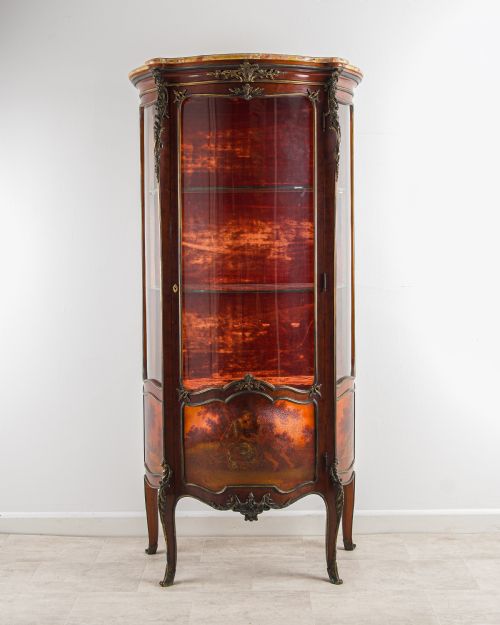


Ormolu Mounted Curio Case
An ormolu mounted curio case brings Parisian elegance to a room, framing precious objects in glass, rich timber, and gilded bronze.
Ormolu Mounted Curio Case
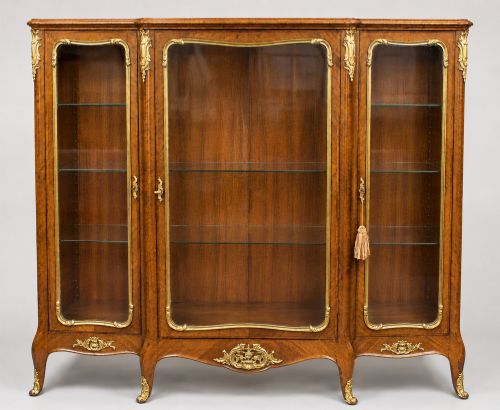
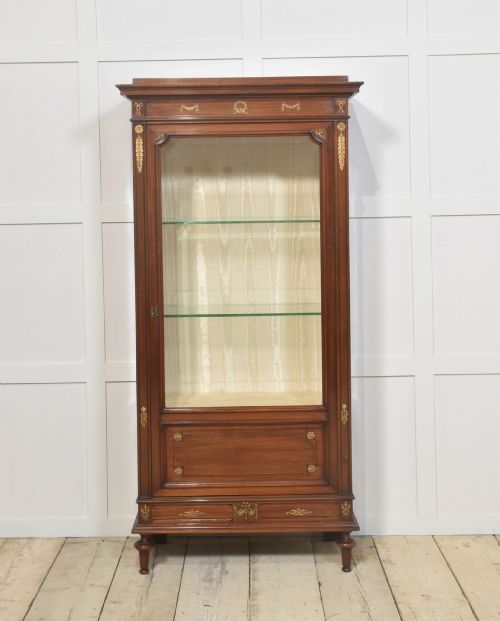
An ormolu mounted curio case serves to display precious small objects and cabinet treasures behind glass panels. These pieces span the nineteenth century and the Edwardian era, predominantly reflecting French design idioms such as Louis XV and Louis XVI revivals.
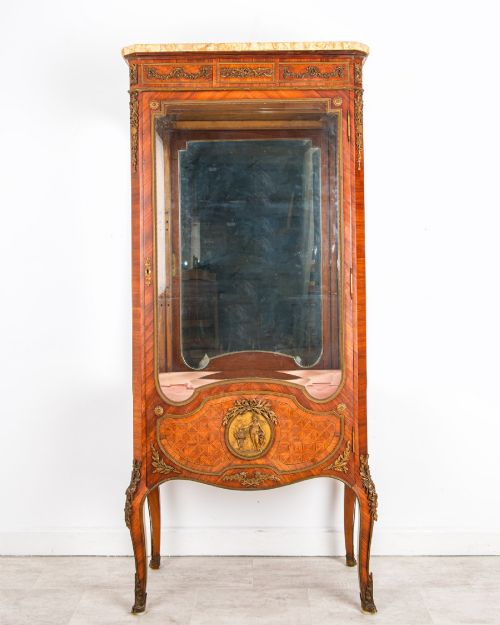
The form appears most frequently as a freestanding vitrine or display cabinet, often featuring shaped marble tops and glazed doors. Buyers encounter taller cabinets alongside compact table top versions and low bijouterie tables designed for tabletop inspection.
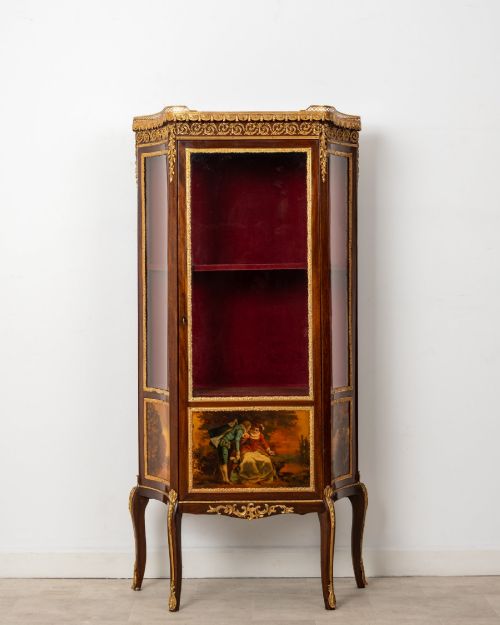
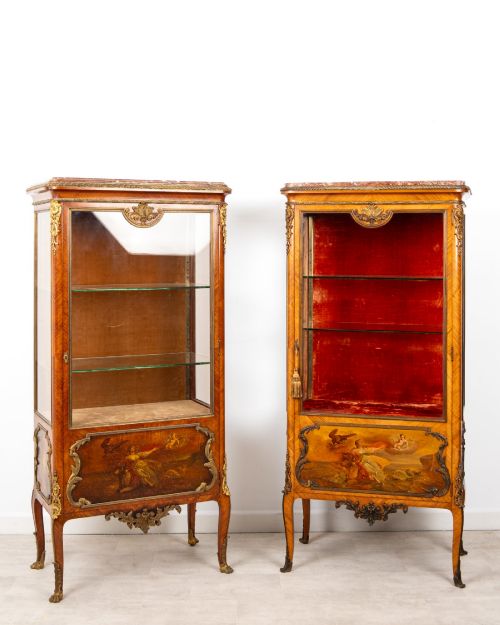
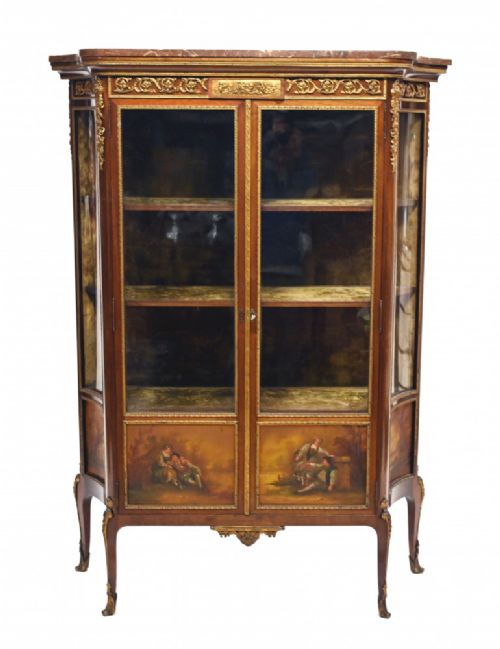
Construction relies heavily on imported cabinet timbers like kingwood and mahogany, frequently enhanced with parquetry, marquetry, and painted Vernis Martin panels. Ormolu mounts in gilt bronze frame the glass and articulate the structural corners.
Materials and Craftsmanship
Cabinetmakers constructed carcass frames in solid hardwoods such as mahogany and walnut, applying decorativeveneers of kingwood and rosewood in geometric parquetry patterns. Surfaces often received hand-painted pastoral scenes in the Vernis Martin technique, emulating traditional French lacquerwork.
Gilt bronze, known as ormolu, was cast, chased, and gilded to produce ornate mounts that accent the doors, aprons, and feet. Marble slabs, chosen for their veining, were shaped to fit the upper surfaces of the cabinets.
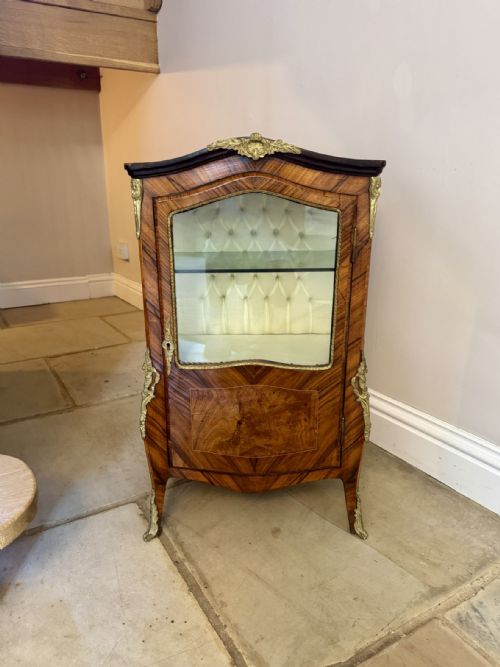
Glazing required curved or flat glass panels secured within rebated timber frames to keep dust from delicate interior displays. Silk, velvet, or fabric linings were traditionally fitted to the interior shelves and backboards.
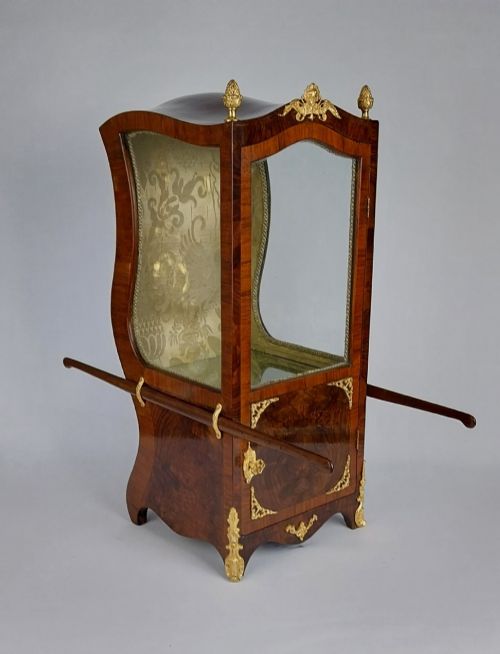
Sedan chair forms were occasionally repurposed into miniature table top vitrines for tabletop display.
Distinctions in Execution
Quality rests significantly in the crispness of the ormolu castings and the depth of the subsequent chasing work. Superior mounts exhibit sharp detail and heavy gilding, whereas lesser examples appear flat and lack definition.
The selection and matching of timber veneers dictate the visual harmony of the piece, with complex parquetry and intricate marquetry requiring high levels of joinery skill. Named makers and workshops operating in the manner of François Linke demonstrate superior mastery in proportion and bronze application.
Structural integrity, including the fit of glazed doors and the quality of original marble tops, separates standard production items from exhibition grade furnishings.
François Linke·G. Durand·Paul Somani
The Ormolu Mounted Curio Case Glossary
- Ormolu
- Gilded bronze mounts applied to furniture. The technique involves coating a cast bronze object with a mercury and gold amalgam before heating.
- Vitrine
- A glass-fronted display cabinet. These pieces allow visible storage for porcelain, silver, and small curiosities.
- Vernis Martin
- A simulated Japanese lacquer developed in eighteenth-century France. Artisans applied multiple layers of varnish and paint to produce glossy panels with pastoral imagery.
- Bijouterie Table
- A glazed display table with legs. These items hold jewellery and small collectibles beneath a glass top at viewing height.
- Parquetry
- Geometric patterns formed by fitted wood veneers. Cabinetmakers arranged contrasting timbers like kingwood and mahogany to create optical depth on flat surfaces.
Ormolu Mounted Curio Case: Frequently Asked Questions
What is an ormolu mounted curio case used for?
These cabinets were designed to display porcelain, miniatures, and precious trinkets safely behind glass doors. The enclosed shelving protected delicate items from dust while putting collections on view for guests.
Tabletop versions and bijouterie tables specifically suited objects that benefited from close inspection from above. Interiors lined with velvet or fabric provided a soft backdrop for metalwork and ceramics.
How do I identify a French style cabinet?
French style cabinets from the nineteenth century rely heavily on Louis XV and Louis XVI revival motifs. Look for cabriole legs, serpentine glass panels, and prominent gilt bronze mounts highlighting structural curves.
Painted Vernis Martin panels depicting figures or landscapes also point directly to French decorative traditions. Marble tops with moulded edges are another consistent feature of these pieces.
What is the difference between a vitrine and a bijouterie table?
A vitrine stands vertically as a tall cabinet with side and front glass panels enclosing multiple shelves. It is designed to stand against a wall or freestanding in a room to display various objects at eye level.
A bijouterie table sits lower on slender legs with a horizontal glass top. It functions primarily as a display surface for small flat objects, jewellery, and medals placed inside the shallow well beneath.
Where should I place a curio cabinet in my home?
Curio cabinets require stable indoor environments away from direct sunlight and dramatic temperature fluctuations. Placed in a drawing room or study, they command attention while keeping fragile displays secure.
Freestanding models benefit from positions where light strikes the glass panels from the side. This placement illuminates interior shelves without exposing delicate textiles to harsh UV rays.