

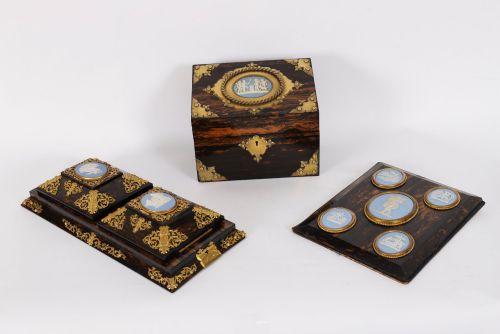
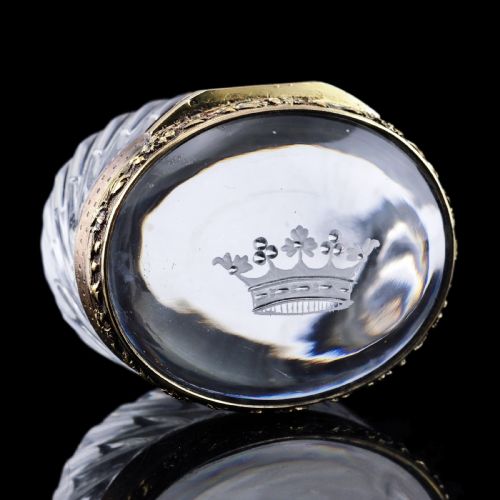


Ormolu Mounted Casket
An ormolu mounted casket brings gilt metal mounts together with crystal, porcelain, or exotic woods to hold your small treasures.
Ormolu Mounted Casket
When you search for an ormolu mounted casket, you encounter 19th-century decorative containers designed for jewellery, stationery, and scent bottles. These pieces range from French Rococo Revival styles to Victorian designs.
The version you meet most often on this page is the French 19th-century or Napoleon III box, frequently combining gilt bronze mounts with Sevres porcelain, cut crystal, or kingwood marquetry.
Makers utilised these secure lidded boxes for dressing tables and writing desks, where display and utility met in equal measure.
How they were made
Craftsmen cast and chased ormolu or gilt-brass mounts to frame panels of glass, porcelain, and stone. These metal mounts were screwed or pinned to wooden carcases veneered in kingwood, walnut, or coromandel.
Glazed panels, cut crystal bodies, and shaped porcelain plaques required precise joinery and brass framing to hold fragile materials securely together.
Marquetry and parquetry techniques surfaced timber boxes with intricate geometric or floral patterns before the heavy cast metal mounts were applied.
Ormolu Mounted Casket Retail Price Guide 2026
Typical asking prices for ormolu mounted casket among the pieces listed under this phrase on Sellingantiques today, from the lower quarter to the upper quarter. They describe what is for sale here now, not the wider market.
The documented styles span French Second Empire, Napoleon III, and Victorian English designs.
What varies in quality
The crispness of the chasing on the ormolu mounts separates the finest work from standard production, as sharp detail in the cast bronze requires skilled hand-finishing. Heavy gilding retains its warmth and depth over generations.
The integration of the materials dictates the overall success of the piece, with well-fitted porcelain panels and thick, polished cut crystal indicating superior workshop standards.
Asprey
The Ormolu Mounted Casket Glossary
- Ormolu
- Gilded bronze. The technique involves applying a gold amalgam to a bronze base and heating it to drive off the mercury.
- Sevres
- French porcelain factory. Pieces from this tradition feature hand-painted scenes or monogram medallions set directly into the box lid.
- Kingwood
- A dense tropical timber. Cabinet makers prized its rich dark grain for marquetry and veneered caskets.
- Boulle
- Brass and tortoiseshell inlay. This decorative method decorates the wooden surfaces of elaborate French boxes.
- Malachite
- A green copper carbonate mineral. Artisans used polished slices of this stone to veneer decorative lidded boxes.
Ormolu Mounted Casket: Frequently Asked Questions
What were ormolu mounted caskets used for?
These boxes served multiple domestic functions on 19th-century writing desks and dressing tables. Owners stored jewellery, correspondence, and perfume bottles inside their lined interiors.
Larger stationery boxes organised letters and writing implements, while smaller trinket caskets held rings and pins.
How do I date an ormolu mounted casket?
Dating relies on stylistic clues and construction methods visible in the wood and mounts. Napoleon III and Victorian pieces often combine eclectic revival styles with machine-sawn veneers.
Earlier examples from the Charles X period show simpler neoclassical proportions and hand-tooled leather or bronze fittings.
How should I clean ormolu mounts?
Ormolu requires gentle dusting with a soft dry brush to prevent dirt accumulation in the recessed chased details. Avoid harsh metal polishes that strip away the original fire gilding.
Professional conservation advice is recommended if the gilding shows active tarnishing or green corrosion.
What is the difference between ormolu and gilt brass?
Ormolu strictly refers to cast bronze that has been mercury-gilded, producing a deep and lasting golden lustre. Gilt brass is a lighter alloy treated with a gold wash or electroplating.
Under close inspection, cast bronze mounts display heavier weight and sharper chased detail than stamped brass alternatives.