


Ormolu Marquetry Credenzas
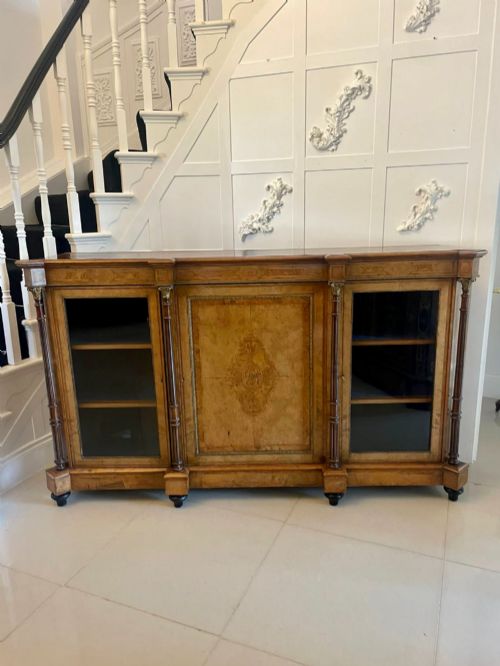
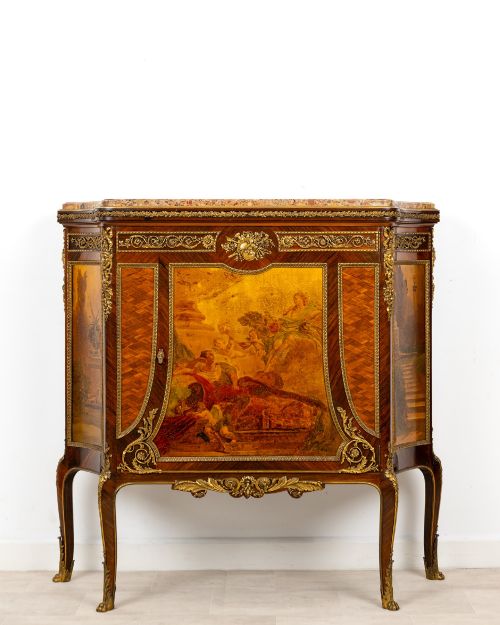
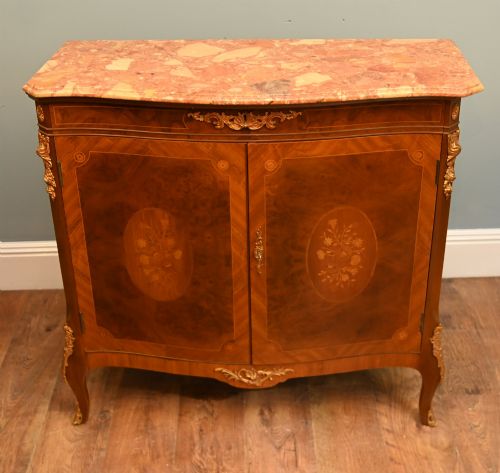
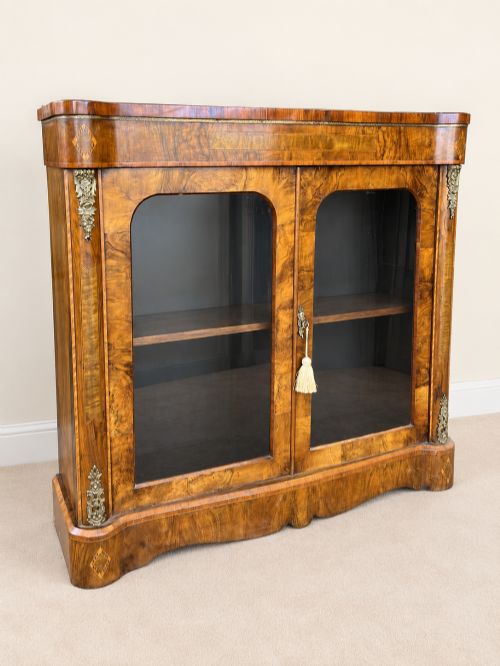
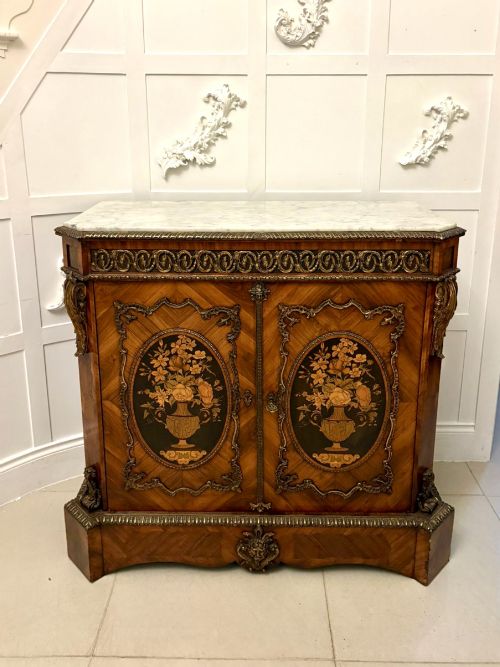
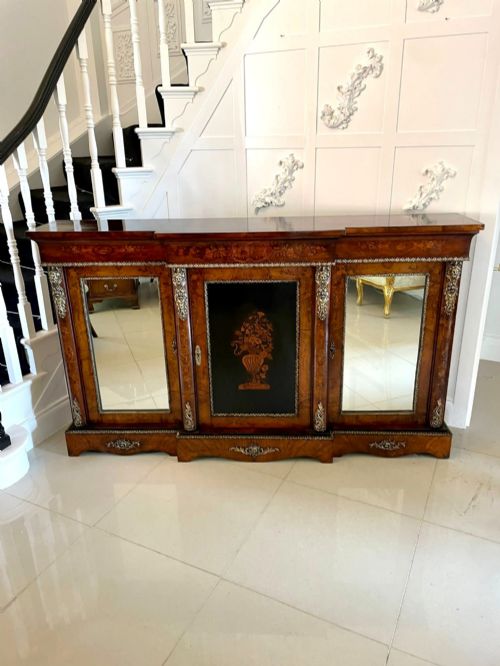
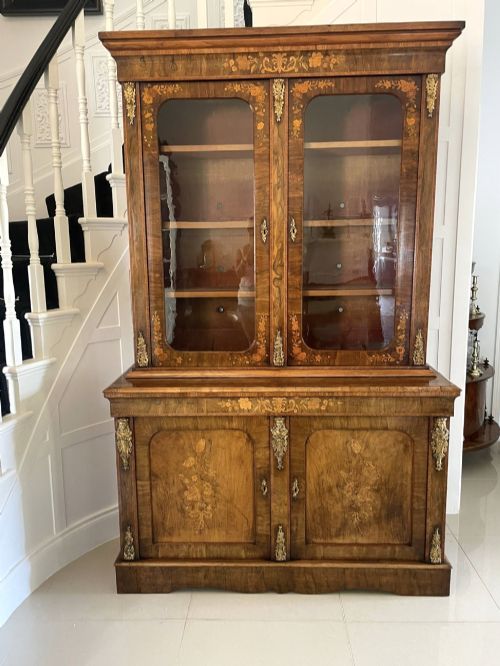
These ormolu marquetry credenzas combine rich wood veneers, floral inlays and gilded cast mounts to anchor a formal reception room.
Ormolu Marquetry Credenzas
When hunting for ormolu marquetry credenzas, collectors encounter low horizontal display cabinets and sideboards dating predominantly from the nineteenth century. The typical specimen found on this page belongs to the Victorian era or manifests in French revival styles such as Napoleon III.
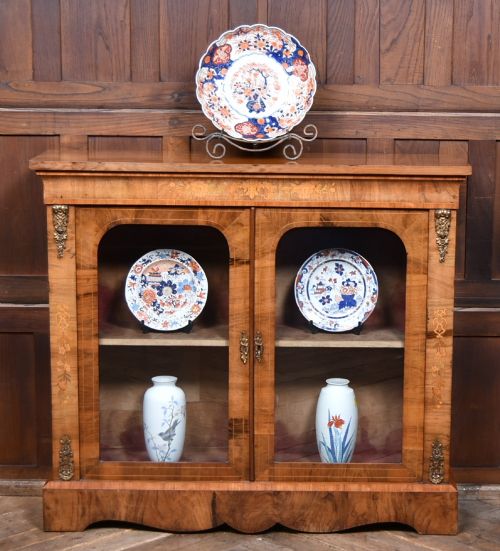
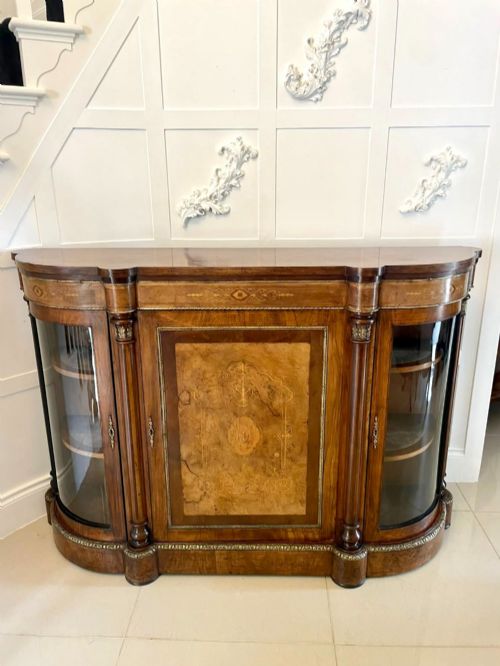
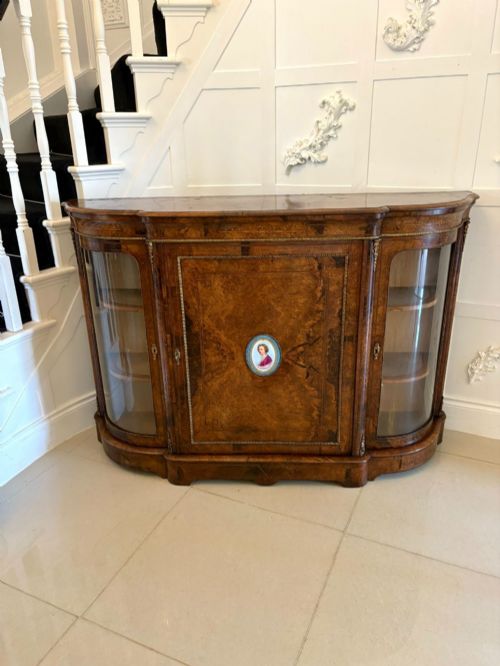
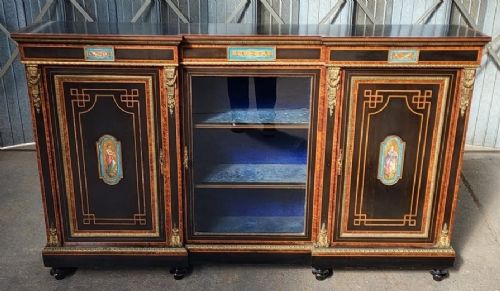
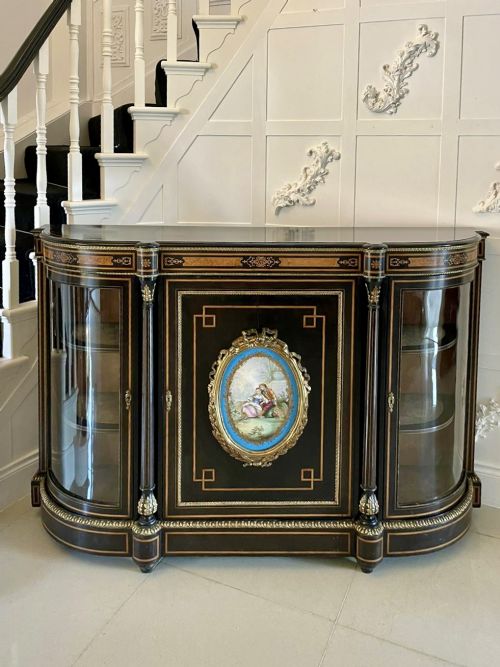
These pieces function primarily as statement furniture designed to sit flat against a wall while displaying porcelain or holding books behind glazed or panelled doors. Burr walnut, ebonised wood and rosewood form the main carcases, often shaped with serpentine or demi-lune fronts.
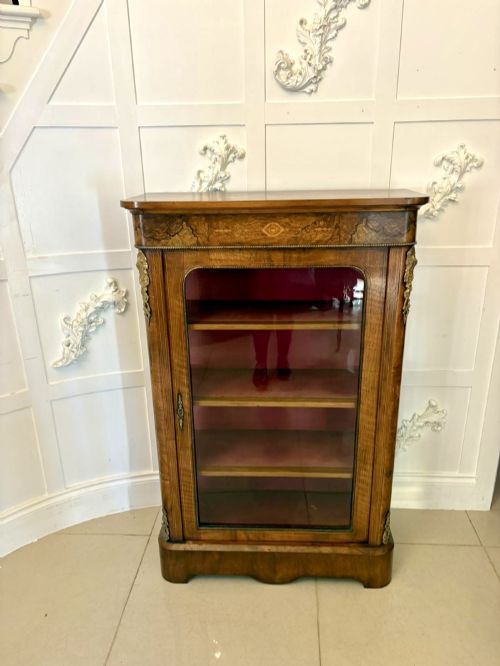
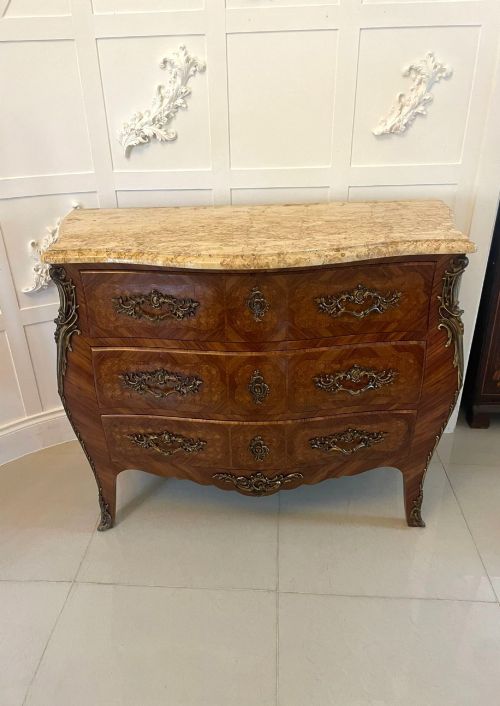
Makers utilised contrasting timbers like satinwood and amboyna to create intricate floral and geometric inlays across the doors and friezes. Alongside standard credenzas, the selection includes related forms like pier cabinets and marble-topped commodes sharing identical decorative vocabulary.
Materials and construction methods
Cabinetmakers laid delicate veneers of burr walnut, kingwood and tortoiseshell over solid oak or pine carcases, employing hand-cut marquetry to picture floral sprays and scrolling foliage. Brass and tortoiseshell inlays arranged in intricate boulle work appear alongside contrasting stringing.
Gilded bronze mounts, known as ormolu, are cast, chased and fixed to corners, feet and breakfronts to accentuate the architectural lines of the cabinet. Marble slabs, sourced in white or coloured varieties, provide heavy, polished tops for commodes and specific sideboards.
Glass panels fitted to doors and vitrine tops are held by wooden glazing bars, while porcelain plaques sometimes insert directly into the walnut or ebonised timber framing.
Listings span the Victorian era, the nineteenth century broadly, and later revivals up to nineteen-twenty, featuring walnut, ebonised wood and marble.
Judging execution and finish
Quality rests heavily on the crispness of the bronze casting and the depth of the hand-chasing on the ormolu mounts, where sharper details distinguish superior workshops. The density and grain pattern of the burr walnut veneer also dictate the visual weight and desirability of the piece.
Marquetry execution separates standard production from exhibition pieces, with finer examples incorporating multiple shaded woods and engraved bone or ivory details. The precision of the door fit, the weight of the interior mahogany or oak linings, and the complexity of serpentine or bow-front carcases signal higher manufacture standards.
Gillows·Edward Holmes Baldock·Maison Gagneau·Grand Ducal Workshops
The Ormolu Marquetry Credenzas Glossary
- Ormolu
- Gilded bronze mounts cast and applied to furniture for decorative enrichment. These metallic ornaments highlight corners and panels.
- Marquetry
- Decorative veneer work forming pictures or patterns using various coloured woods. Craftsmen assemble these wooden pieces onto the carcase surface.
- Credenza
- A low cabinet or sideboard designed for display and storage, often featuring glazed central doors flanked by curved side cupboards. This form sits prominently against drawing-room walls.
- Boulle
- Marquetry technique utilising tortoiseshell and brass inlaid together in symmetrical scrollwork patterns. French cabinetmakers popularised this ornate surface decoration.
- Pier cabinet
- A narrow upright cabinet built to stand against the wall space between windows. These slim display pieces match the timber and mounts of larger credenzas.
Ormolu Marquetry Credenzas: Frequently Asked Questions
Where were ormolu marquetry credenzas placed in a Victorian home?
These large cabinets sat against the main walls of drawing rooms and formal dining spaces where guests gathered. Their polished marble tops and glass doors served to reflect light and display prized porcelain collections.
Today, they function similarly in large reception rooms, providing surface area for lamps and decorative objects while offering concealed storage underneath.
How do I tell a Victorian English credenza from a French piece?
English versions often rely on rich burr walnut veneers with subtle marquetry and restrained brass mounts. French pieces from the Napoleon III period frequently feature ebonised wood, elaborate boullework, and heavier ormolu.
Examining the secondary timbers inside the carcase, such as oak or mahogany for English workshops versus pine or fruitwood for continental makers, confirms the origin.
What is the difference between a credenza and a pier cabinet?
A credenza is typically a wide, low piece featuring three or more doors, often with curved glass side compartments. A pier cabinet is much narrower and taller, designed specifically for tight wall spaces between windows.
Both utilise similar ormolu mounts and marquetry inlay when they come from the same stylistic period, allowing them to pair together in a room.
Can I use a marble top credenza as a sideboard?
Yes, marble-topped variants and commodes handle heavy use well because the stone surface resists moisture and heat from serving dishes. Many nineteenth-century households used them interchangeably for dining room service.
Care simply involves protecting the polished stone from acidic spills and ensuring the wooden base bears weight evenly.