






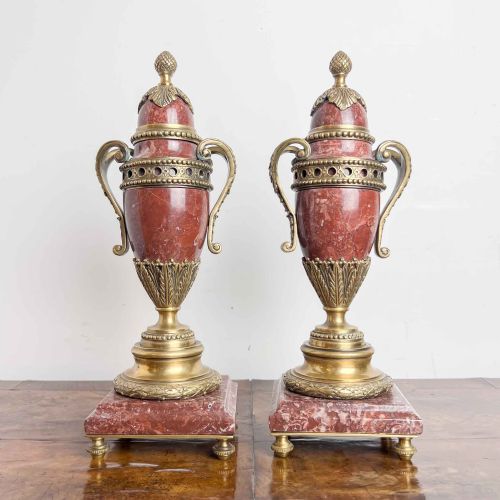

Ormolu Marble Vases
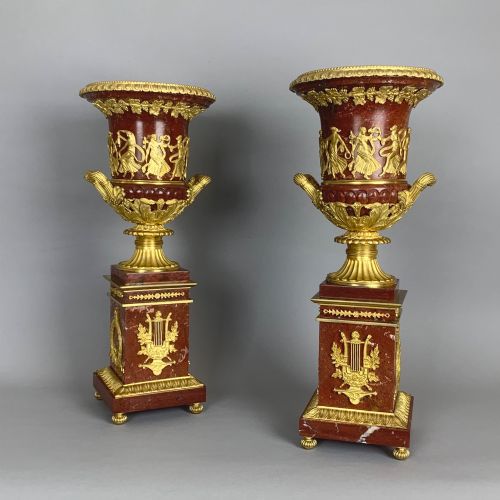
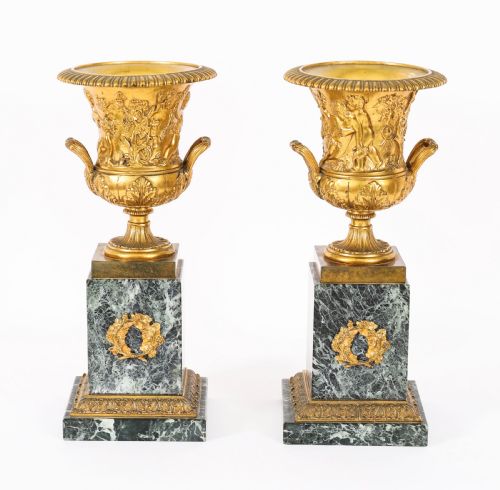
These ormolu marble vases combine cast gilt bronze mounts with carved stone bodies, offering the classical symmetry that nineteenth-century interiors prized.
Ormolu Marble Vases
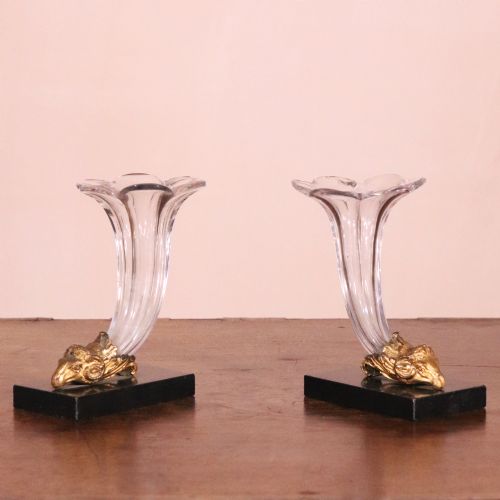
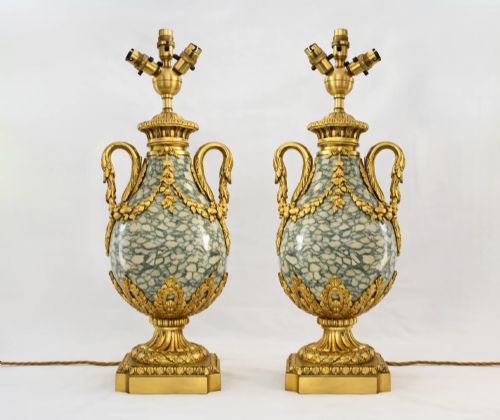
When you examine ormolu marble vases, you are looking at nineteenth-century decorative urns, cassolettes, and table lamps designed in Neoclassical, French Empire, and Louis XVI styles. These decorative vessels combine carved stone bodies with cast metal mounts, often created during the Grand Tour period.
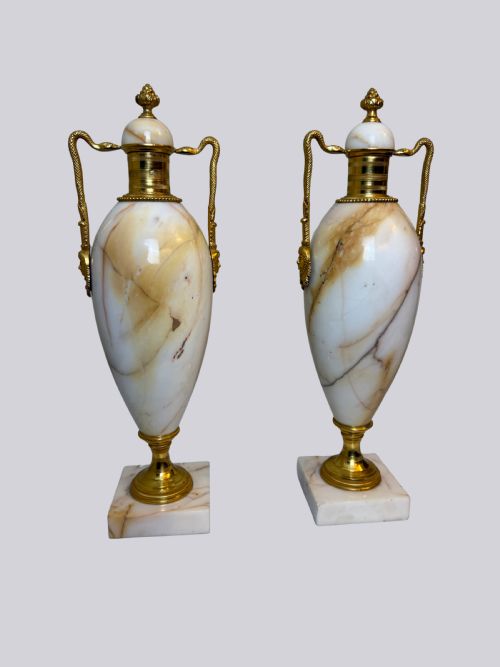
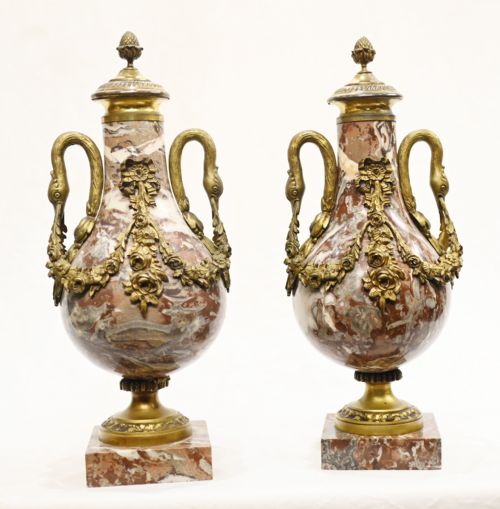
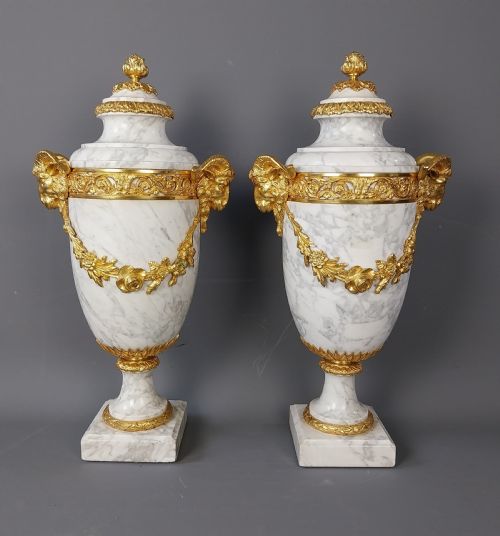
The version you are most likely to meet on this page is a nineteenth-century French pair, frequently taking the form of a cassolette with a reversible lid that serves as either a vase or an incense burner. They appear in white, green, and rouge marble, alongside onyx, alabaster, and quartz.
Many examples adhere strictly to Louis XVI Revival tastes, drawing inspiration from eighteenth-century French designs. Makers utilised specific stones such as Cippolino, nero portoro, and giallo di siena to give these decorative urns rich geological variety.
How they were made
The production of these pieces relies on combining stone-turning with bronze-casting and mercury or electro-gilding. Artisans hollowed and polished blocks of marble, alabaster, or onyx on a lathe before fitting them with cast bronze elements.
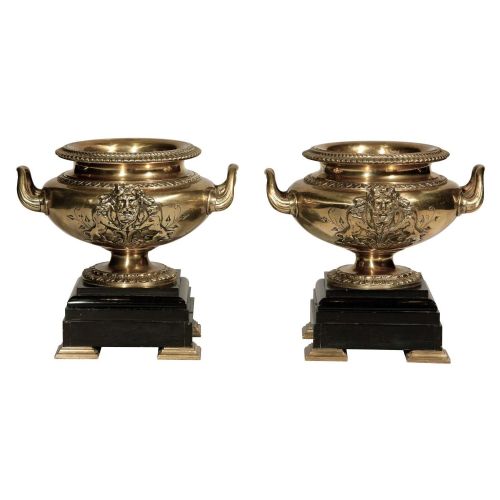
The metal components, known as ormolu, underwent elaborate chiselling and gilding to achieve a bright golden surface that contrasts sharply with the cool, polished stone. Mounts include handles, swags, collars, and square or circular plinths fixed with internal iron rods.
Some nineteenth-century cassolettes double as secret incense burners, hiding perforated lids that let nineteenth-century drawing rooms smell faintly of amber.
What varies in quality
The standard of the chasing on the gilt bronze mounts determines much of the visual success of the piece. Crisp, deeply articulated acanthus leaves and sharp bead-reels separate superior examples from softer, shallower castings.
The selection and turning of the marble body also dictate the piece's standing. Uniform veining, lack of structural repairs, and precise symmetry in the stone urn set the finer examples apart from simpler decorative objects.
The Ormolu Marble Vases Glossary
- Ormolu
- Gilded bronze, produced by applying a gold amalgam to a cast bronze object and heating it to drive off the mercury. This technique creates a durable, luminous golden finish characteristic of nineteenth-century decorative arts.
- Cassolette
- A vessel with a removable or reversible lid, designed to function either as a vase or as a burner for scented pastilles. They often feature pierced metal galleries on the lid.
- Grand Tour
- A traditional trip through Europe undertaken by upper-class young men in the eighteenth and nineteenth centuries to collect art and antiquities. Many pieces on this market reflect the souvenirs brought back from these journeys.
- Nero portoro
- A striking black marble featuring natural golden-yellow veins, quarried in Italy. It was frequently utilised by French makers for high-status neoclassical vases.
Ormolu Marble Vases: Frequently Asked Questions
What is an ormolu marble vase?
These decorative objects are nineteenth-century ornamental vessels made from carved stone bodies fitted with gilded bronze mounts. They were produced primarily in France following neoclassical and Louis XVI designs.
They served as mantelpiece ornaments, garnitures, and occasionally as table lamps during the Victorian era and the Grand Tour period.
How were cassolettes used?
Cassolettes functioned as dual-purpose decorative objects in nineteenth-century drawing rooms. The lid could be reversed to display either a solid stone top or a pierced burner grille for diffusing scents.
Most owners displayed them on marble bases as part of a garniture set on a mantelpiece or console table.
Are these vases strictly French?
The majority of pieces encountered on the market follow French design traditions, specifically the Louis XVI and Empire styles. Workshops in Paris produced the vast majority of these gilt bronze mounts.
Foreign buyers travelling through France and Italy acquired them as decorative souvenirs during the nineteenth century.
What stones are commonly used?
Makers utilised a wide variety of marbles and decorative stones including white statuary marble, green marble, rouge marble, and onyx. Specialised geological varieties like Cippolino and nero portoro also appear.
The choice of stone directly influences the visual weight and colour palette of each individual urn.