



Ormolu Mahogany Desk
An ormolu mahogany desk brings classical French proportion and gilt-metal mountwork into a room, combining rich timber with bright metallic detail.
Ormolu Mahogany Desk
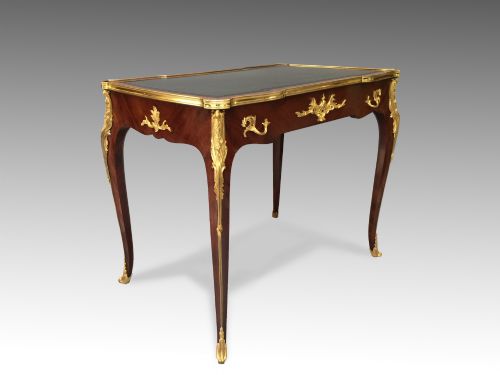
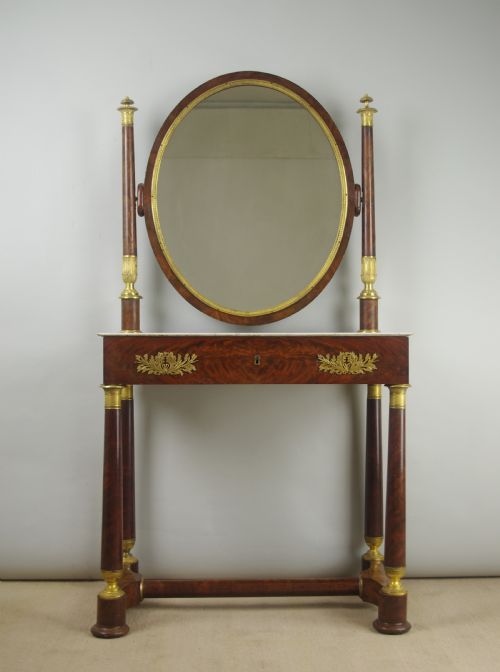
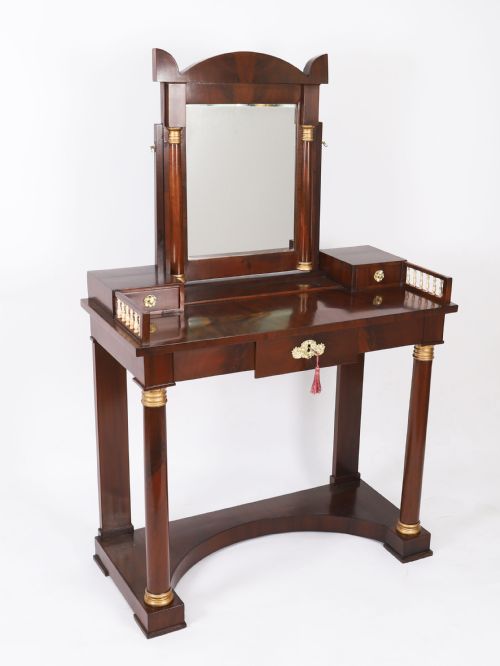
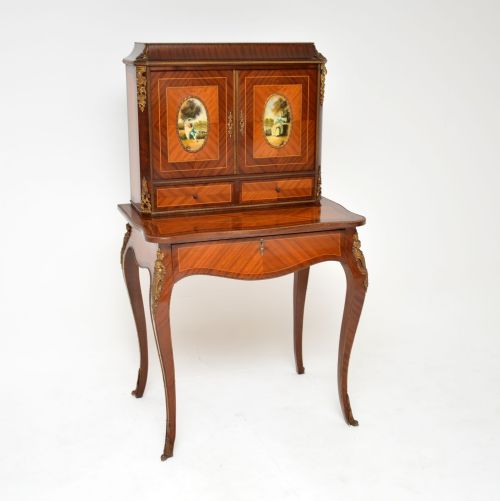
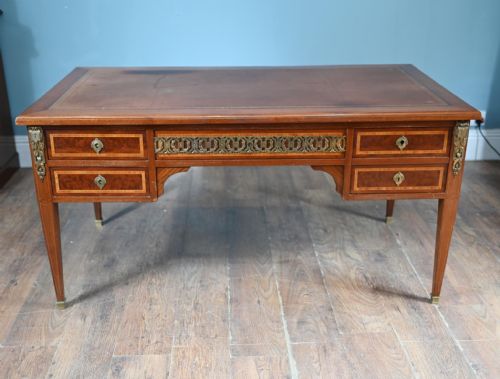
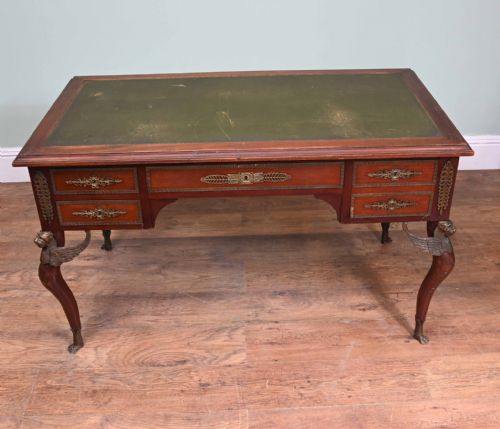
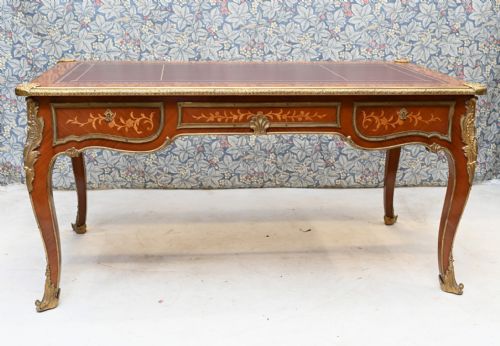
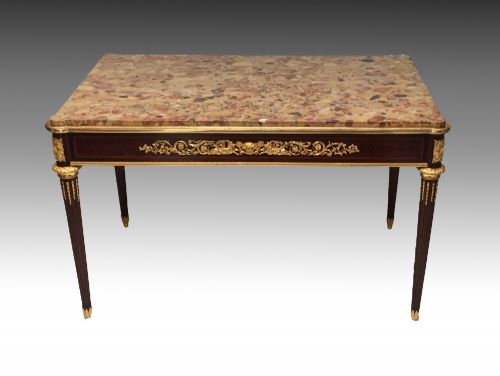
When searching for an ormolu mahogany desk, buyers encounter writing tables, bureau plats, and dressing tables that span the nineteenth and early twentieth centuries. These pieces reflect revival aesthetics including Louis XVI, French Empire, and Rococo styles.
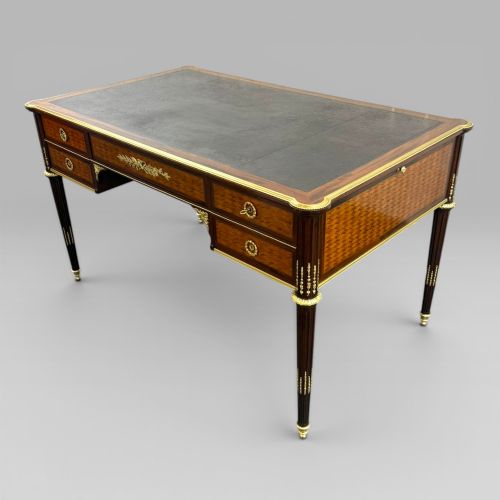
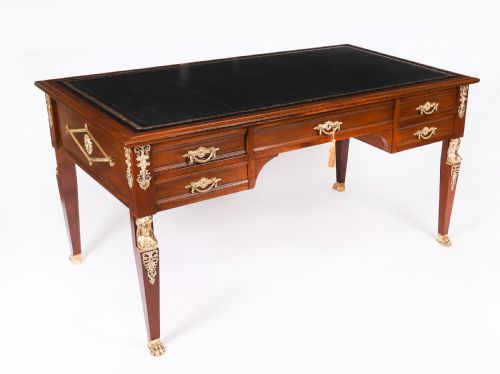
The form is dominated by the bureau plat, a flat-topped writing table fitted with drawers and set on four legs, often retaining an original leather writing surface. Dressing tables and cylinder desks also appear frequently in the selections.
Most pieces originate from French workshops and retail houses of the nineteenth century, carrying the distinct architectural lines and ornamental weight associated with continental cabinet-making of that era.
Materials and Construction
Makers built the primary carcase using solid and veneered mahogany, frequently selecting flame mahogany or incorporating satinwood and kingwood for decorative parquetry panels. Leather inserts formed the writing surface on tables and desks.
Cast gilt bronze, known as ormolu, provides the decorative mounts that frame drawers, corners, and aprons. Brass and gilt metal accents complement the bronze mounts alongside marble table tops.
Ormolu Mahogany Desk Retail Price Guide 2026
Typical asking prices for ormolu mahogany desk among the pieces listed under this phrase on Sellingantiques today, from the lower quarter to the upper quarter. They describe what is for sale here now, not the wider market.
Secret compartments occasionally wait behind hidden spring mechanisms inside nineteenth-century cylinder desks.
Judging Quality and Craft
The crispness of the ormolu chasing marks the division between standard production and exceptional work. Finer mounts display sharp definition in foliage and classical motifs, whereas lesser examples appear soft and blurred after casting.
Timber selection and cabinet joinery further distinguish the pieces, with figured mahogany veneers and precise parquetry indicating superior workshop standards. The integration of the mounts to the wooden carcase shows the maker's precision.
François Linke·Edwards and Roberts·Alphonse Tahan
The Ormolu Mahogany Desk Glossary
- Bureau plat
- A freestanding writing table with a rectangular top and drawers in the frieze. It usually sits in the centre of a room rather than against a wall.
- Ormolu
- Gilded bronze applied as decorative mounts to furniture frames and corners. The technique involves mercury gilding on bronze casting.
- Parquetry
- Geometric wood inlay patterns formed from small veneer tiles. It creates contrasting wooden designs across the surface of the desk.
- Escritoire
- A writing cabinet featuring a fall-front flap that opens to reveal internal compartments and drawers. It combines storage with a compact writing surface.
- Cylinder desk
- A writing desk enclosed by a curved wooden roll-top cylinder. Sliding the cylinder open reveals the desk interior and writing slide.
Ormolu Mahogany Desk: Frequently Asked Questions
How were these desks used historically?
These desks served for correspondence, estate management, and administrative duties in private libraries and principal rooms.
Owners placed them centrally in the room so the finished back allowed the piece to stand away from the wall.
How do I care for the leather top?
Leather writing surfaces require periodic treatment with neutral leather balms to maintain flexibility and prevent cracking.
Avoid excessive moisture and direct sunlight to preserve the gilt tooling around the edges.
How do I distinguish Louis XVI style from Empire style?
Louis XVI style pieces display straight tapered fluted legs, neoclassical symmetry, and restrained ormolu mounts.
Empire style examples feature heavier proportions, robust classical imagery, and bolder use of gilt bronze mounts.
Can I place these desks in modern interiors?
The rich timber tones and reflective ormolu work well against both traditional and contemporary wall colours.
Their finished backs allow them to function as room dividers or freestanding centre pieces.