

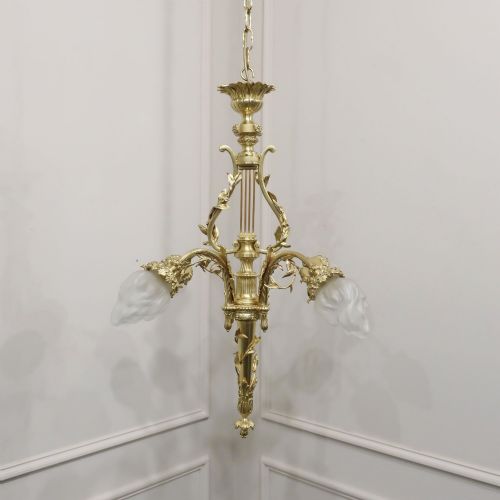
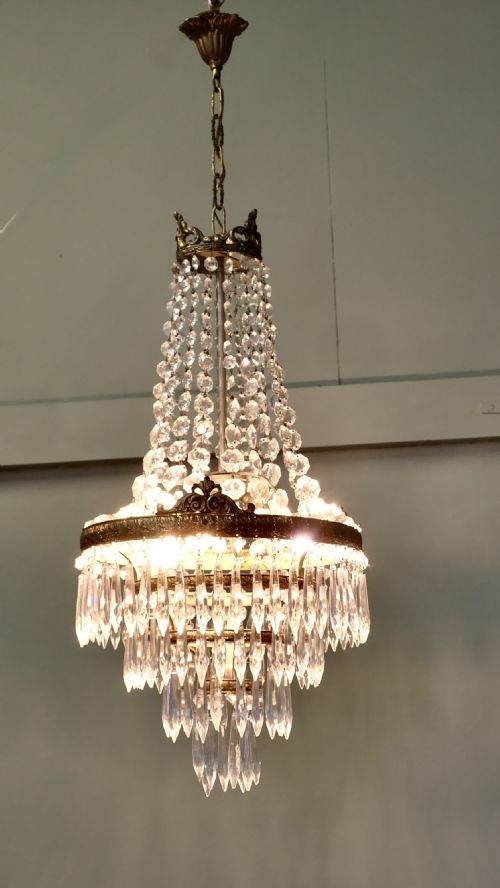
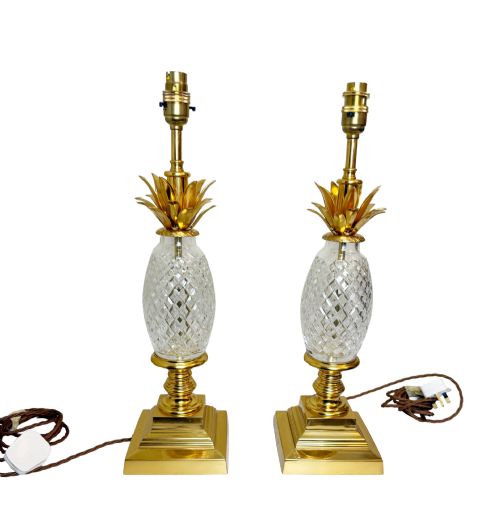
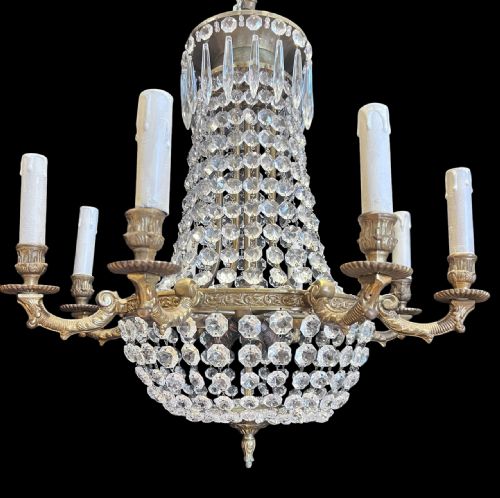
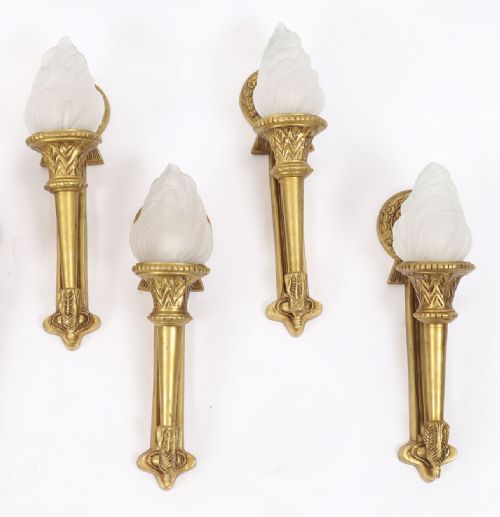


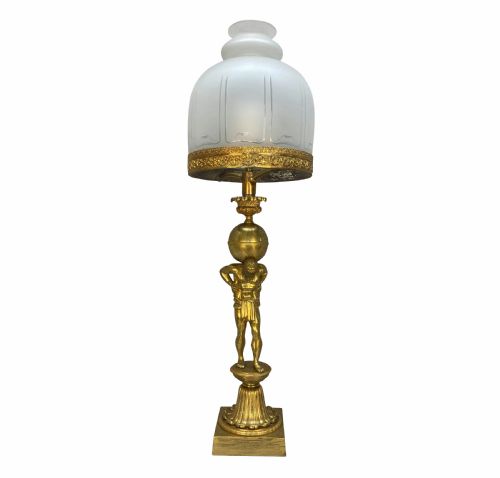


Ormolu Glass Lamps
Ormolu glass lamps combine cast gilt metal with crystal or blown glass to bring warmth and formal presence to a room.
Ormolu Glass Lamps
When you search for ormolu glass lamps, you enter a field defined by French and English lighting where metal mounts frame cut glass, crystal, or coloured bodies. These pieces range from monumental column table lamps and ewer lamps to fitted vases and wall lights.
The versions you meet most frequently on this page date from the nineteenth century through the early twentieth century, spanning styles such as French Empire, Regency, and Neo-Classical. Table lamps and wired oil lamps appear alongside sconces and ceiling fixtures that employ the same dual vocabulary of gilt metal and glass.
Distinctions in quality
The calibre of an ormolu glass lamp rests primarily in the crispness of the metal chasing and the depth of the glass cutting. Superior examples exhibit sharply defined acanthus leaves, beading, and figural mounts on the ormolu, alongside heavy lead glass or crystal that scatters light cleanly.
Proportion and weight also dictate standard; finer pieces utilise substantial bronze castings and thick-walled glass reservoirs or columns rather than lightweight brass stampings and thin pressed glass.
Listed forms include table lamps, wall lights, and hanging lanterns alongside fitted ewer and vase conversions from the nineteenth century.
The Ormolu Glass Lamps Glossary
- Ormolu
- A technique of applying finely ground high-carat gold amalgam to a bronze base, followed by firing to drive off the mercury. It creates a warm, durable golden surface on the metal mounts.
- Cut glass
- Glass decorated by grinding facets or patterns into the surface using wheels. It enhances the brilliance and light-refraction properties of the lamp.
- Ewer
- A large jug with a wide spout and handled body, frequently adapted into a lamp base during the nineteenth century. These vessels are typically formed from blue or clear glass.
- Colum
- A vertical architectural support used as the main shaft in table lamps. In this inventory, columns often feature Corinthian or classical capitals in ormolu.
- Plaffonier
- A ceiling-mounted bowl light or flush fixture. These items use ormolu frames to secure cut glass or frosted glass shades close to the ceiling.
Ormolu Glass Lamps: Frequently Asked Questions
How do I clean ormolu glass lamps?
Dust the metal and glass components regularly with a soft, dry brush to prevent grime accumulation. Avoid harsh chemical cleaners or abrasive cloths on the ormolu, as these can strip the gilt surface.
For the glass sections, use a mild glass cleaner applied to a cloth rather than sprayed directly onto the piece. This protects the adjacent metal mounts from unwanted moisture damage.
Are these lamps wired for modern use?
Many antique lamps arrive with modern electrical wiring installed by previous owners or specialist restorers. Buyers should inspect the flex and plug to ensure compliance with current safety standards.
Where rewiring is necessary, a qualified electrician can update the internal cord through the central channel without altering the historic metal or glass structure.
What is the difference between ormolu and gilt brass?
Ormolu specifically denotes mercury-gilded bronze, which yields a deep, soft golden lustre characteristic of fine French and English decorative arts. Gilt brass uses a different base alloy and often employs alternative plating methods.
Brass items generally feel lighter in weight and can display a brighter, more brassy tone compared to the rich warmth of genuine ormolu.
How do I date an antique lamp?
Dating relies on stylistic clues from the metal mounts, such as Regency classical motifs or Belle Epoque flourishes, combined with the manufacturing techniques of the glass. Tool marks on the bronze and the method used to join components offer further chronological markers.
Comparative study of period catalogues and related pieces in archives helps narrow the production window to a specific decade or movement.