
Ormolu French Chest
An ormolu french chest brings the disciplined warmth of gilt bronze mounts and figured timber into a room.
Ormolu French Chest
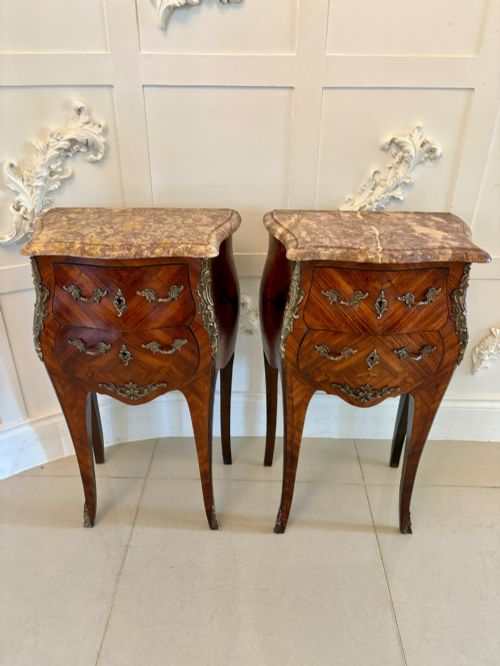
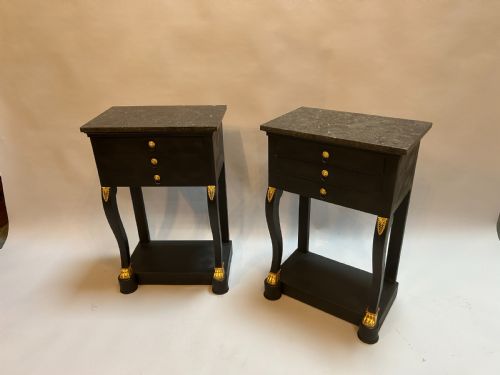
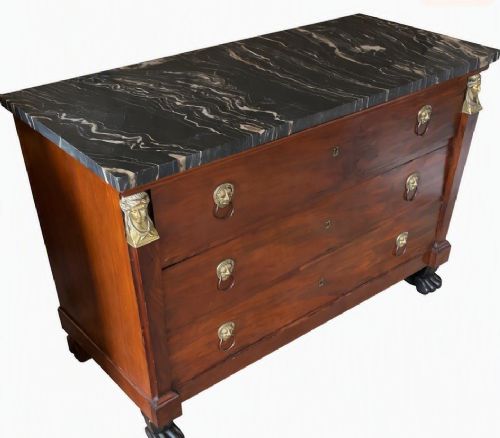
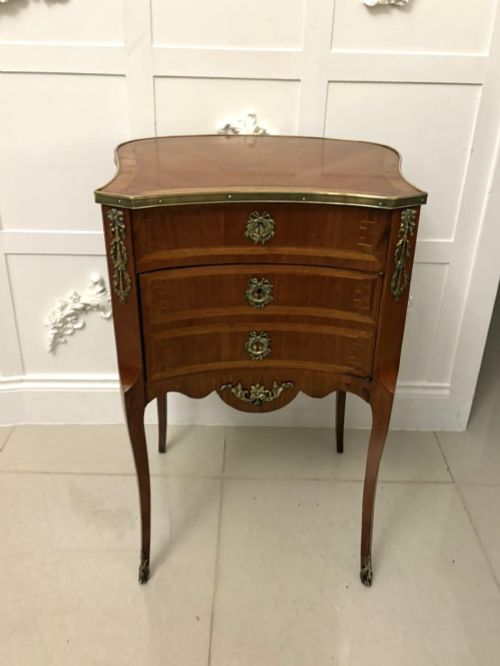
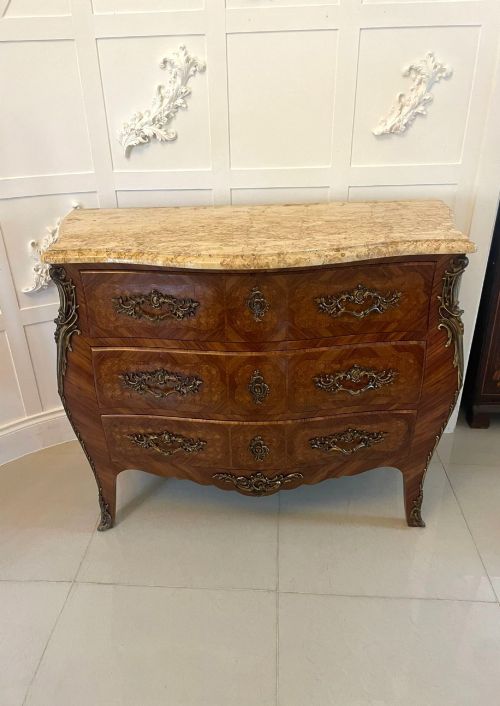
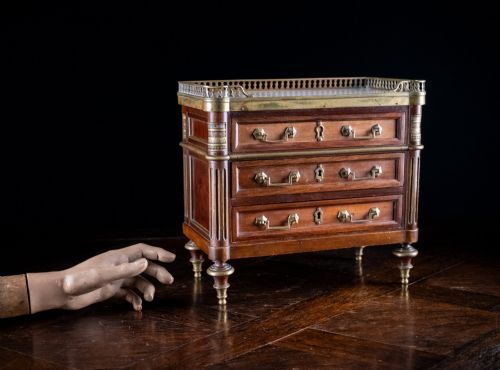
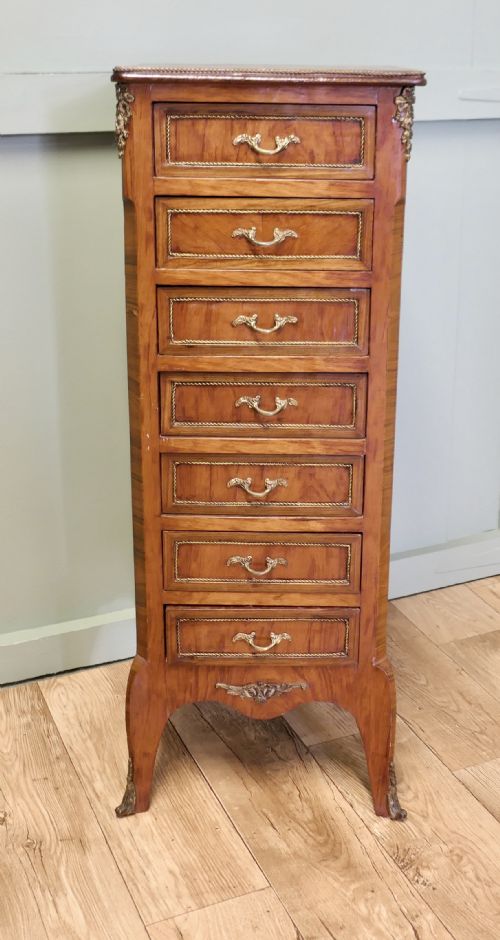
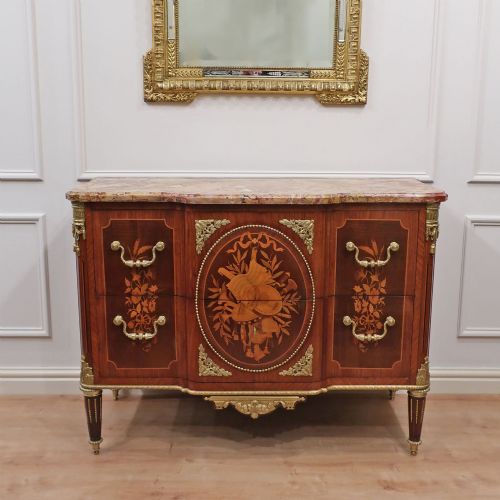
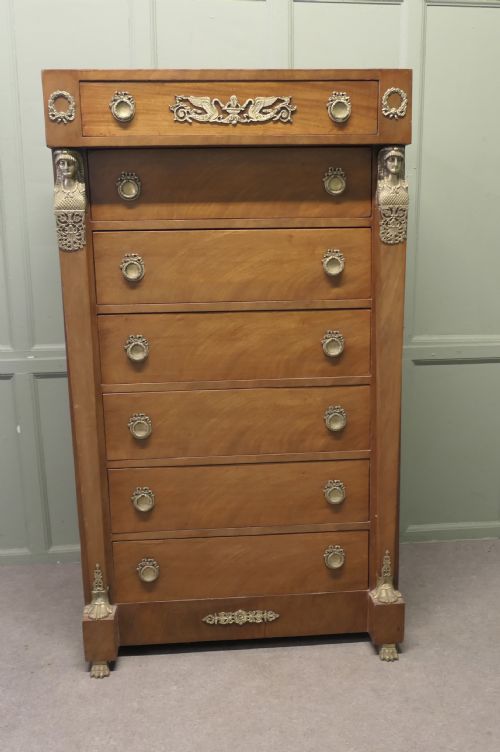
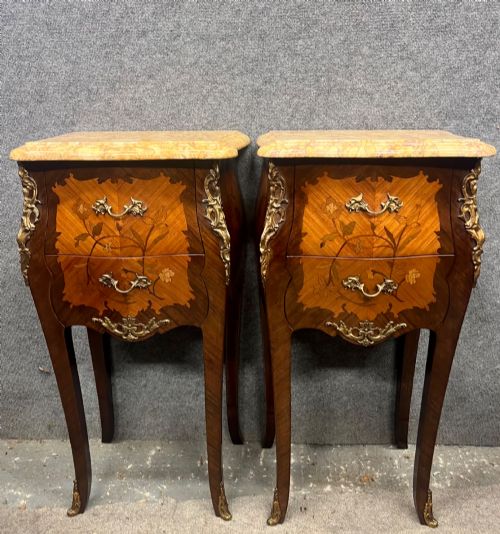
When someone searches for an ormolu french chest, they are looking at case furniture defined by gilded bronze mountings, predominantly commodes and bedside cabinets originating from various periods between the eighteenth and early twentieth centuries.
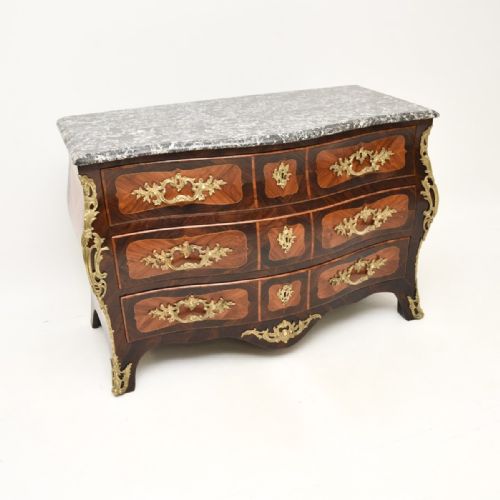
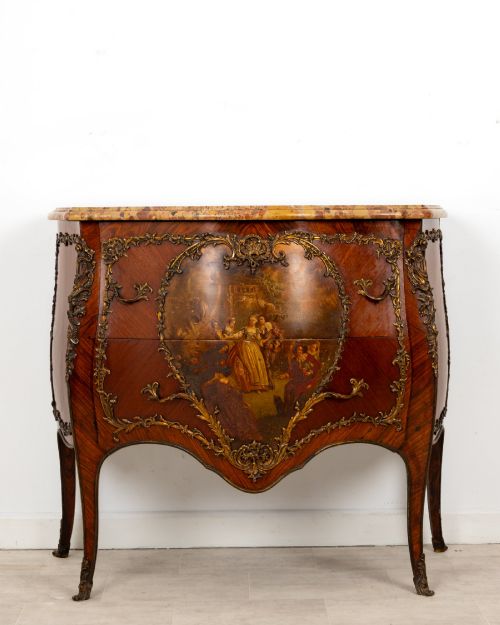
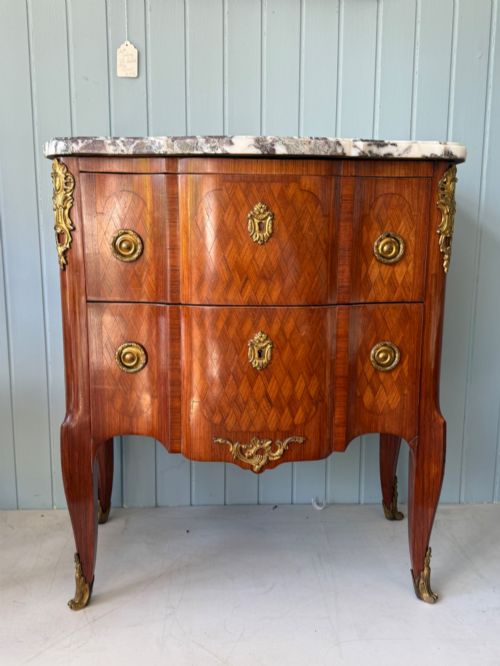
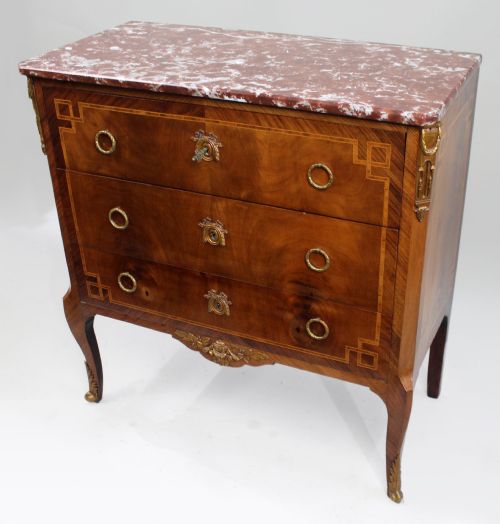
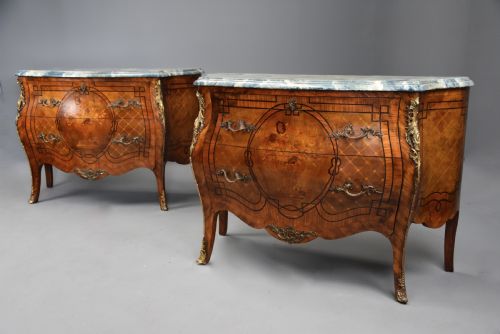
The most common versions met on this page are marble-topped commodes and bedside chests executed in the Louis XV and Louis XVI revival styles, frequently featuring serpentine or bombé profiles.
Makers and cabinet-makers working in Paris during the nineteenth century reproduced these earlier court aesthetics using exotic timbers, incorporating marble surfaces and cast metal decorations.
Materials and construction
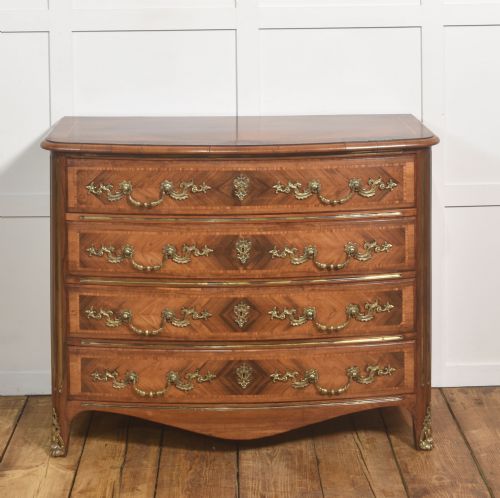
Makers constructed carcases from native and exotic woods such as walnut, mahogany, kingwood, rosewood, and burr maple, often applying complex parquetry and floral marquetry patterns across the drawer fronts and sides.
Heavy marble slabs, selected in shades of white, grey, or rouge, were shaped to fit the upper profile of the commodes and cabinets as a functional and decorative surface.
Gilt bronze or ormolu mounts were cast, chased, and secured to the corners, feet, and apron to frame the timber work and accentuate the structural lines.
Listings feature pieces spanning the eighteenth to the twentieth centuries, utilising kingwood, walnut, mahogany, and marble.
Distinctions in execution
The sharpness and depth of the chasing on the ormolu mounts separate standard production pieces from those executed by prominent workshops and master cabinet-makers.
Precision in the timber veneers, particularly the alignment of complex marquetry and parquetry patterns around curved surfaces, indicates the level of craftsmanship invested in the carcase.
The integration of original marble tops that match the exact contours of the chest without excess overhang reveals the initial thought given to proportion and design harmony.
Jacques Bircklé·Maison Krieger·Henry Dasson·Gillows·E. Kahn·Thomas Hache·Sormani·Louis Majorelle
The Ormolu French Chest Glossary
- Ormolu
- Gilded bronze used for decorative mounts on furniture and decorative objects. The technique involves applying a gold amalgam to a bronze base and heating it.
- Commode
- A low chest of drawers, typically featuring two or more drawers and standing on relatively tall legs. They frequently feature marble tops and decorative mounts.
- Bombe
- A swelling, convex outward curve seen on the sides and fronts of furniture carcases. This profile is particularly characteristic of Louis XV designs.
- Marquetry
- Inlaid wood veneers arranged in pictorial or decorative patterns across a surface. Craftsmen utilise different timber species to create tonal variation.
- Parquetry
- Geometric patterns formed by fitting veneer blocks together on a surface. Squares, triangles, and lozenges are typical motifs found on these chests.
- Vernis Martin
- A type of simulated Japanese lacquer developed in France during the eighteenth century. It involves layered varnish finishes applied to panels.
Ormolu French Chest: Frequently Asked Questions
What is an ormolu french chest?
An ormolu french chest is a piece of storage furniture, usually a commode or bedside cabinet, decorated with cast and gilded bronze mounts. These pieces draw on French design traditions from the eighteenth and nineteenth centuries.
They combine timber carcases with stone tops and metal mounts, serving as functional storage while providing a decorative focal point in a room.
How do I identify Louis XV and Louis XVI styles?
Louis XV style furniture relies on curved lines, serpentine fronts, and asymmetrical rococo ormolu mounts. The forms feel organic and sweeping.
Louis XVI style shifts toward straight lines, symmetrical geometry, and neoclassical details like fluted columns and ribbon-tied mounts.
Are the marble tops original?
Original marble tops fit the exact contours of the wooden carcase beneath without awkward gaps or overhangs. The edges often feature specific bevelling or moulding appropriate to the period.
Examining the underside can reveal weathering and mounting marks consistent with the age of the timber base.
How do I care for ormolu mounts?
Ormolu mounts require gentle dusting with a soft, dry cloth to prevent the accumulation of dirt in the chased recesses. Avoid abrasive cleaners and chemical polishes that can strip the historic gilding.
Keeping the furniture away from direct sunlight and excessive humidity preserves both the timber veneers and the metal finish.