





Ormolu Candelabra Garniture
When you search for ormolu candelabra garniture, you are looking at matched sets of decorative metalwork designed to anchor a mantelpiece with grandeur.
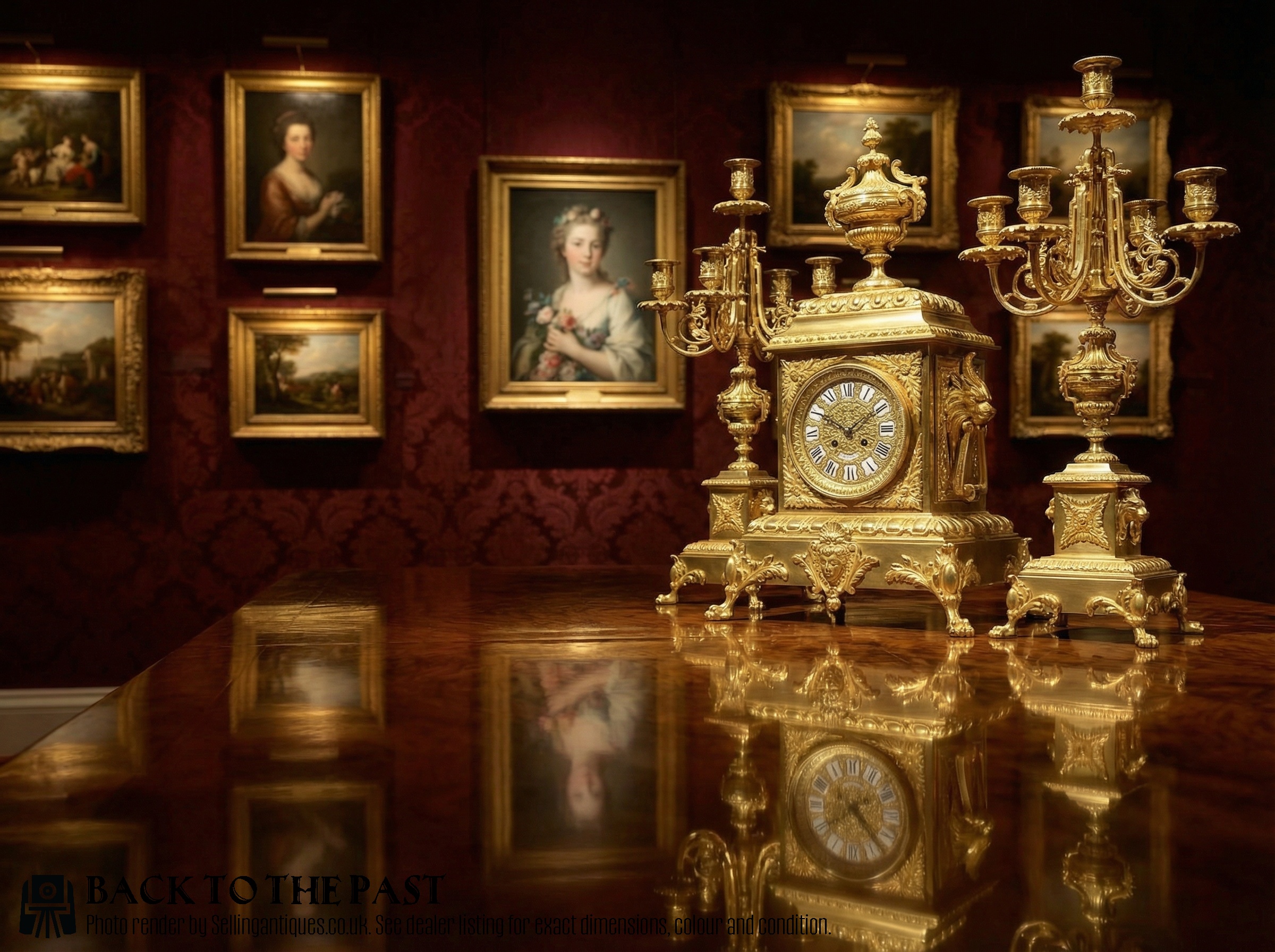
Ormolu Candelabra Garniture
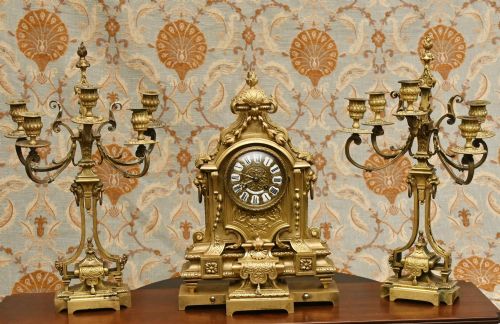
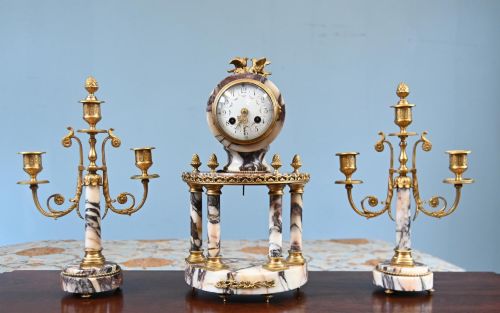
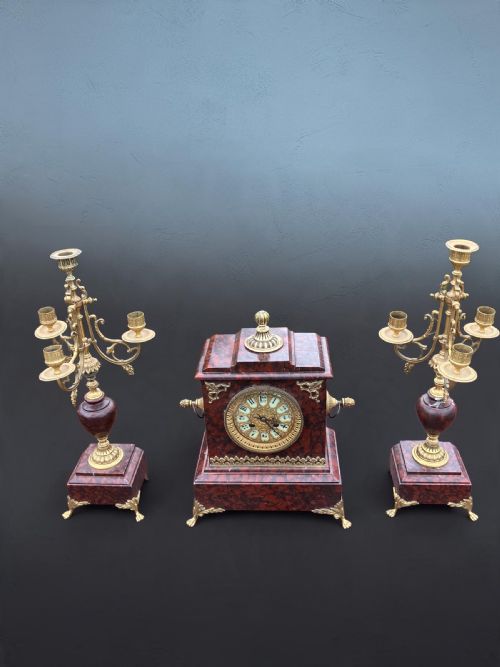
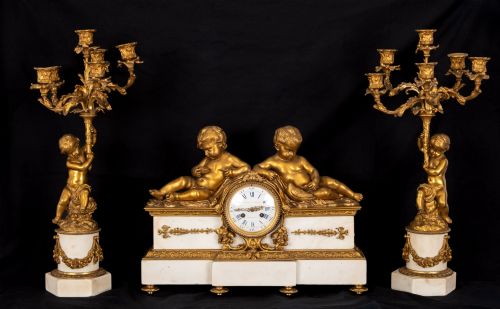
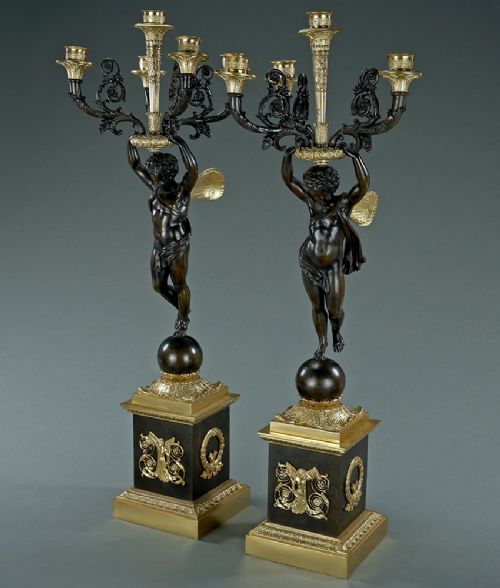
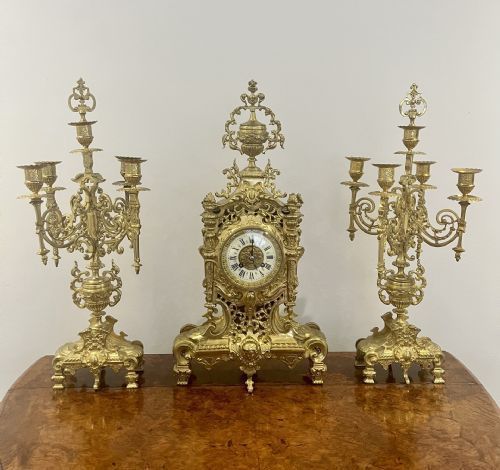
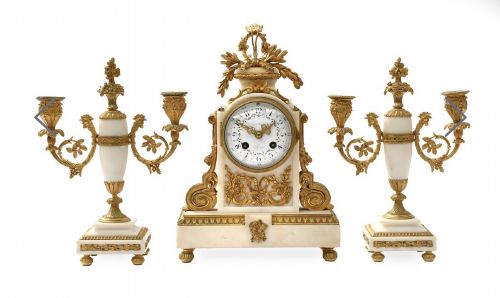
An ormolu candelabra garniture brings together a central mantel clock flanked by matching candelabra or candlesticks, forming a unified display for the room. These sets emerged in varied stylistic iterations such as French Rococo Revival, Louis XVI, and French Empire, often dating from the nineteenth century. The typical arrangement combines gleaming gilt metal with contrasting media to create a formal centrepiece.
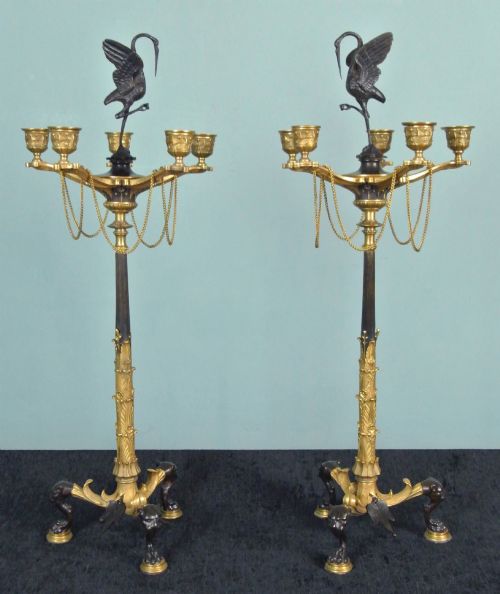
The objects on this page span complete three-piece clock sets alongside paired candelabras and matching candleholders. Most examples originate from nineteenth-century France, reflecting periods like the Victorian era and the Second Empire. Buyers encounter everything from compact mantel garnitures to large, multi-light candelabra sets.
Makers and workshops across Paris produced these elaborate bronze and marble assemblies for wealthy domestic interiors. The survival of complete sets remains a primary draw for collectors who value symmetry and period authenticity. Each grouping demonstrates how nineteenth-century rooms relied on matched metalwork for architectural balance.
How they were made
Artisans built these garnitures using fire-gilded bronze, commonly known as ormolu, alongside patinated bronze and brass. Metal components were cast in sections, chased by hand to sharpen details, and then treated with mercury gilding or electroplating. This surface treatment gives the metal its characteristic warm, golden lustre.
Stonework provides a heavy foundation for many sets, utilising white marble, black marble, or onyx to anchor the metallic mounts. Porcelain elements, including Sevres style panels and Bleu de Roi ceramic bodies, frequently appear incorporated into the clock cases and candelabra shafts. Skilled lapidaries shaped and polished these mineral components to contrast against the bright gilt bronze.
Ormolu Candelabra Garniture Retail Price Guide 2026
Typical asking prices for ormolu candelabra garniture among the pieces listed under this phrase on Sellingantiques today, from the lower quarter to the upper quarter. They describe what is for sale here now, not the wider market.
Cherubs and cupids frequently perch on these bronze mounts, reminding viewers that nineteenth-century timekeeping was a remarkably romantic affair.
What varies in quality
The crispness of the bronze chasing dictates the visual success of the piece, separating sharp, hand-tooled leafwork and figures from softer, cast-only surfaces. Finer garnitures exhibit deep undercutting in the foliage and sculptural figures of cherubs or putti, whereas lesser examples rely on flat casting. The weight and thickness of the cast bronze also indicate the original investment in manufacture.
The integration of materials determines the overall harmony of the set, particularly where marble and porcelain meet the gilt mounts. Superior sets feature precisely fitted bezels, tightly joined stone bases, and matched gilding that ages evenly across all three pieces. Discrepancies in the tone of the gilding or loose structural joints point to mismatched components assembled later.
Barbedienne·Henry Dasson·H Luppens Paris·Raingo Fres
The Ormolu Candelabra Garniture Glossary
- Ormolu
- Gilt bronze created by applying a mixture of gold and mercury to a bronze base and heating it to drive off the mercury. This historical technique yields a durable, rich golden surface found on fine nineteenth-century French metalwork.
- Garniture
- A set of matched ornamental objects designed to be displayed together, typically comprising a clock and a pair of candelabras or vases. Such suites provided visual symmetry on nineteenth-century mantelpieces.
- Candelabra
- A branched candlestick holding multiple lights, often designed in matched pairs to accompany a central mantel clock. These objects combine functional illumination with sculptural display.
- Chasing
- The manual finishing of a cast metal surface using hammers and small punches to refine details and textures. High-quality chasing distinguishes master bronziers from routine foundry production.
- Patinated bronze
- Bronze that has been treated chemically or naturally to produce a dark, earthy surface tone. This darker finish frequently contrasts with bright ormolu mounts in Empire and Victorian designs.
Ormolu Candelabra Garniture: Frequently Asked Questions
How were garniture sets displayed?
Garniture sets were placed centrally on mantelpieces above fireplaces, with the clock in the middle and the candelabra positioned symmetrically on either side. This arrangement reflected formal interior design preferences of the Victorian and Second Empire periods.
Beyond mantelpieces, owners sometimes placed these sets on pier tables or large sideboards where the reflective gilt bronze caught the light of day or evening lamps.
How do I identify nineteenth-century French sets?
Nineteenth-century French sets are identified by their characteristic styles, such as Louis XVI Revival, Rococo Revival, and Empire design, alongside foundry marks or signatures on the bronze and clock movements. The use of fire-gilding, specific marble types, and hand-chased figural work like cherubs or putti point directly to this era.
Examining the internal clock mechanism often reveals maker stamps or serial numbers that help anchor the date of production within the 1800s.
Can these clocks still keep time?
Many nineteenth-century mantel clocks housed within these garnitures remain fully functional eight-day striking movements that can keep accurate time when properly maintained. Professional servicing is often recommended to clean the brass gears and ensure the pendulum and striking train operate smoothly.
Even when used primarily for decoration, the mechanical movement adds an authentic historical dimension to the ensemble.