


Original Staithes Group Painting
An original staithes group painting brings the atmospheric Yorkshire coast and dales into focus through the lens of early twentieth-century British impressionism.
Original Staithes Group Painting
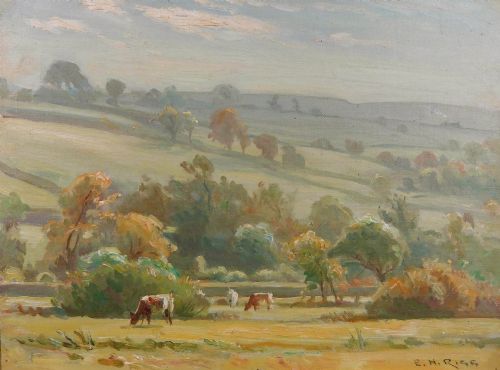
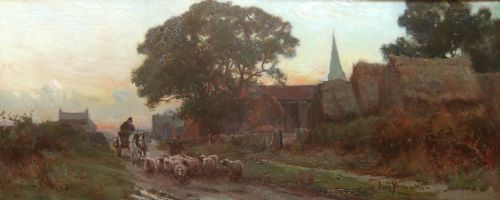
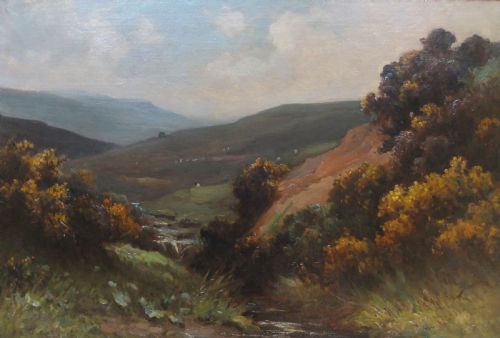
An original staithes group painting captures rural life, coastal villages, and Yorkshire landscapes through the distinct techniques of northern artists active in the early decades of the twentieth century. Collectors search for this phrase to acquire works by members of the Staithes Art Club who adopted plein air methods influenced by French impressionism.
The most common examples on this page are oil paintings on canvas and watercolours on paper dated around 1910 and 1920. These pieces frequently depict local scenes such as cottage gardens, moorland streams, and village marketplaces.
Subject matter ranges from still life compositions of garden roses to expansive rural views with farmyards and grazing sheep. Works often extend geographically beyond the immediate fishing village to encompass Wharfedale, Swaledale, and Whitby.
How they were made
Artists worked primarily in oil paint and watercolour pigment, applying media directly to canvas, prepared wood panels, or paper support structures. Oil on canvas pieces demonstrate visible, confident brushwork used to capture changing coastal light.
Watercolour paintings rely on fluid washes and deliberate mark-making to record atmospheric conditions across Yorkshire landscapes. Many compositions emerged from direct outdoor observation in the tradition of plein air painting.
Artists frequently lugged heavy easels up steep Yorkshire cliffs just to capture the exact moment a sheep decided to interrupt.
What varies in quality
Quality rests upon the strength of the composition and the confidence of the handling, particularly in how light and atmosphere are rendered across the canvas or paper. Stronger examples display a purposeful command of colour and tone that defines the impressionist approach.
Condition of the physical support and pigment layer also influences the standing of a piece, with well-preserved surfaces maintaining their original vibrancy. Works executed with dynamic brushwork and clear topographical resonance hold greater visual presence.
Ernest Higgins Rigg·Owen Bowen·Arthur Tucker·Florence Hess·James Watson·Rowland Henry Hill·Frederick Mayor·Frederick William Jackson·James William Booth·Joseph Alfred Terry
The Original Staithes Group Painting Glossary
- British Impressionism
- A style characterised by visible brushstrokes and an interest in natural light, adopted by northern artists working outdoors at the turn of the twentieth century.
- Plein air
- Painting in the open air directly from nature, allowing artists to capture transient effects of light and weather.
- Watercolour pigment
- A colour medium suspended in a water-soluble vehicle, applied to paper to achieve translucent washes and fine linear details.
- Oil on canvas
- A painting technique where pigmented oil is applied to a stretched woven fabric surface, offering durability and rich texture.
Original Staithes Group Painting: Frequently Asked Questions
Where were these artists active?
Painters associated with this northern movement based themselves primarily in the fishing village of Staithes on the North Yorkshire coast. They frequently travelled throughout the surrounding dales and moorlands to record rural scenes.
Their subjects extend across Yorkshire locations including Wharfedale, Swaledale, and Whitby, alongside occasional continental views.
What periods do these works cover?
The pieces span from the late Victorian era through the Edwardian period and into the nineteen-forties. The highest concentration of available works dates from the nineteen-tens and nineteen-twenties.
Early twentieth-century British impressionism forms the core aesthetic of this productive era.
How do I care for a watercolour painting?
Watercolour works on paper require protection from direct sunlight to prevent fading of the pigment. Framing behind conservation glass helps shield the paper support from environmental humidity.
Displaying pieces away from direct heat sources ensures the longevity of both the paper and the pigments.
What subjects are most common?
Coastal scenes, moorland streams, and village street views dominate the output of these artists. Floral still lifes and agricultural subjects like harvesting and farmyards also appear frequently.
Depictions of daily rural life provide a clear record of northern communities during the early decades of the twentieth century.