




Original River Landscape Art
Original river landscape art captures flowing water and open banks across centuries of oil and watercolour painting.
Original River Landscape Art
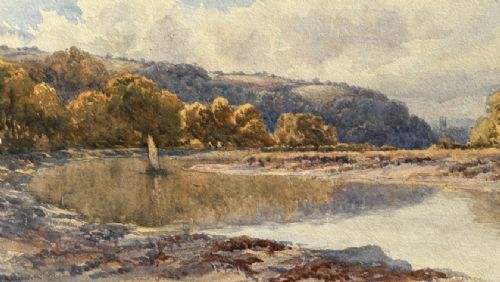
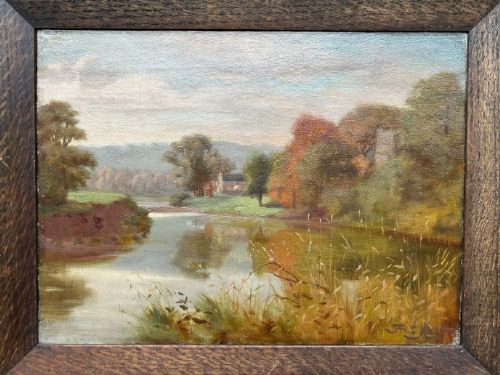
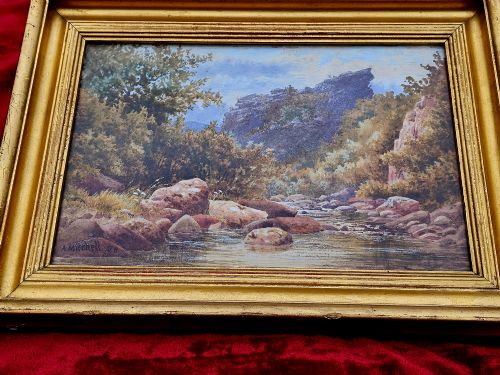
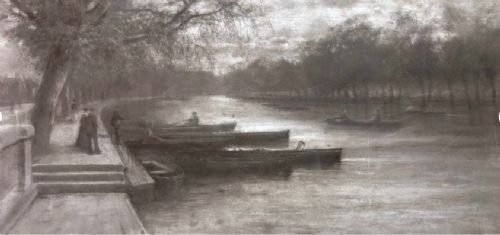
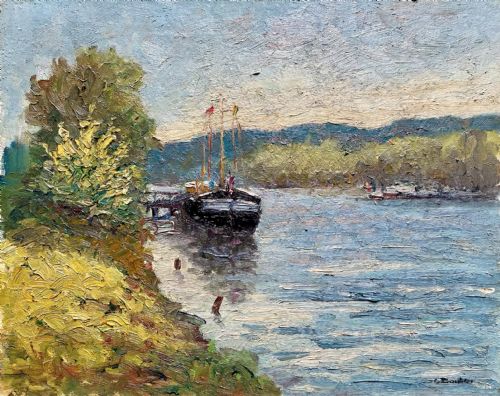
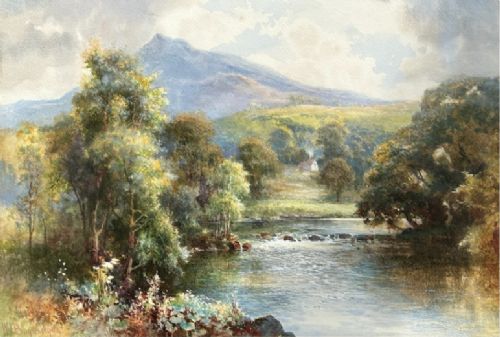
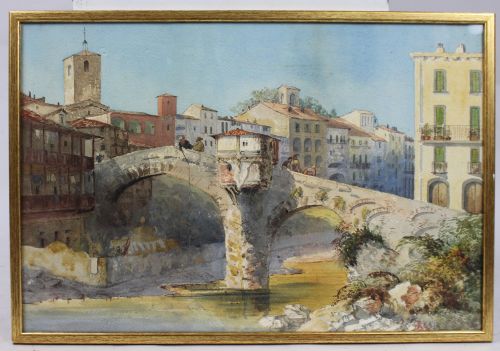
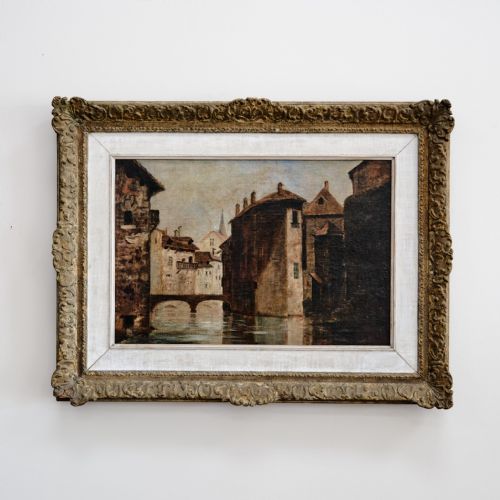
Original river landscape art encompasses painted and drawn depictions of waterways, bridges, and riverbanks produced in Britain, France, and wider Europe. These works range from intimate watercolours of pastoral streams to expansive oil paintings on canvas or wood panel capturing tidal rivers and architectural bridges.
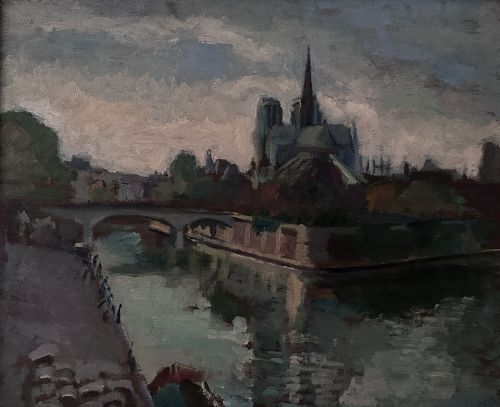
Buyers encountering this selection will frequently find 19th-century and early 20th-century examples, spanning the Victorian period through to Edwardian and mid-20th-century modernism. The prevailing styles draw upon British and French Impressionism, Post-Impressionism, and the Barbizon School, recording shifting light upon water.
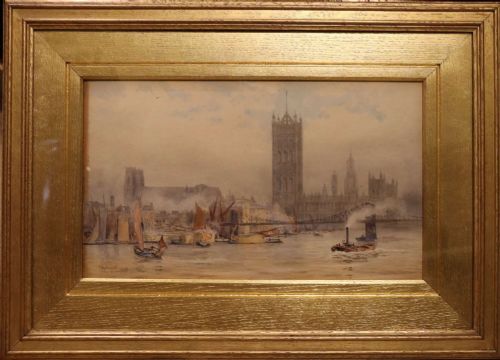
Subjects frequently record specific regional waterways, including the Thames, Tees, and Seine, alongside Welsh valleys and Scottish rivers. Whether rendered in delicate charcoal or heavily brushed oil paint, these scenes document historical topography and nineteenth-century rural life.
Materials and Techniques
Artists relied primarily upon oil paint applied to canvas, wood panel, or board, building rich textures to describe the movement and reflection of water. Watercolours on paper offered a lighter medium for capturing atmospheric effects, sometimes combined with charcoal or ink for definition.
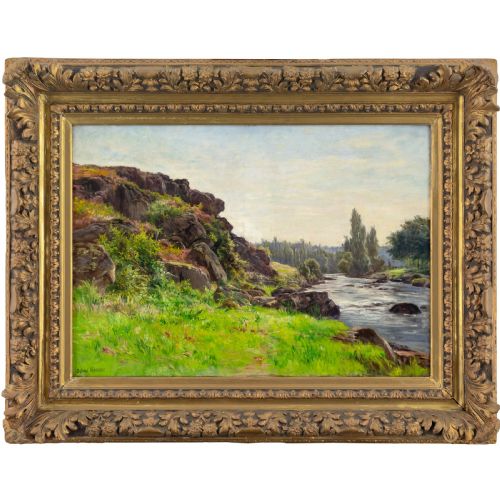
Support materials varied according to period and location, with heavier wooden panels utilised for robust nineteenth-century European works and stretched canvas favoured for larger compositions. Frames frequently incorporate original plaster and gilt surrounds that complement the palette of the painting.
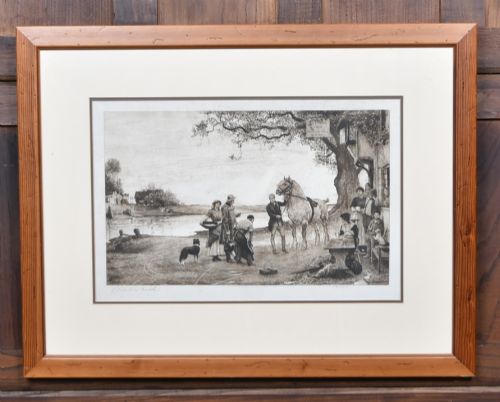
Artists frequently paused by muddy riverbanks to capture livestock drinking, unsuspecting fishermen, and wayfarers crossing old stone bridges.
Factors Defining Quality
Quality rests upon the artist's handling of light, atmospheric perspective, and the fluid movement of the water itself. Superior works demonstrate a confident command of tone and colour harmony, successfully conveying the specific weather and time of day.
The relationship between the medium and the chosen support dictates the longevity and visual impact of the piece. Strong compositions integrate the riverbanks and surrounding landscape into a balanced whole, avoiding static arrangements and demonstrating skilled brushwork or pigment control.
Kenneth Cozens·George Graham·Alfred Young Nutt·Frederick Marriott·Robert W Macbeth·Henri Ottmann·George Oyston·Sir Alfred East·Albert Rieger·Herbert Royle·Paul Desire Trouillebert·Henry H Parker·John Ferneley Senior·James Walsham Baldock·Joseph Newington Carter·James Lawson Stewart·Julius Hare
The Original River Landscape Art Glossary
- Barbizon School
- A nineteenth-century French movement focused on plein-air painting and direct observation of nature. Practitioners rejected academic convention in favour of realistic landscape depictions.
- Gilt
- A thin layer of gold leaf applied to picture frames or wooden surfaces. It provides a reflective border that enhances the tones within oil paintings and watercolours.
- Impressionism
- An art movement characterised by relatively small, thin yet visible brush strokes and an open composition. Emphasis rests on accurate depiction of light and its changing qualities.
- Panel
- A rigid wooden board utilised as a support for oil paintings prior to and alongside stretched canvas. Artists often worked directly on prepared wood surfaces during the nineteenth century.
Original River Landscape Art: Frequently Asked Questions
What periods do these river paintings represent?
The selections span the nineteenth century, the Victorian era, and the mid-twentieth century. Works frequently originate from the peak of British and French landscape traditions.
Dates range from the 1830s through to the 1960s, encompassing Barbizon influences and post-impressionist developments.
How do oil and watercolour river scenes differ?
Oil paintings on canvas or wood provide heavier textures and deep, layered pigments suitable for dramatic lighting effects. Watercolours on paper offer transparent washes that capture delicate atmospheric moisture.
Both mediums were utilised extensively across the nineteenth and twentieth centuries to record flowing water.
Are these river landscapes topographical records?
Many works record identifiable waterways, bridges, and cathedrals, including the Thames, Seine, and Durham Cathedral. Artists documented actual locations with varying degrees of topographical precision.
Other compositions adopt a generalized pastoral or Flemish style focusing purely on the mood of the riverbank.
How should I frame and display these artworks?
Many pieces retain their original plaster and gilt frames, which should be preserved where structurally sound. Oil paintings on canvas require stable humidity, while watercolours need protection from direct sunlight to prevent fading.
Displaying works away from direct heat sources ensures the longevity of both canvas and paper supports.