


Original River Artwork
Original river artwork captures waterways through oil, watercolour and charcoal from the nineteenth and twentieth centuries.

Original River Artwork
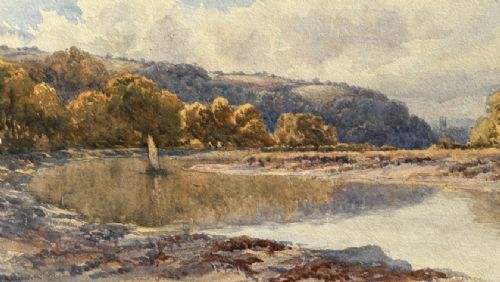
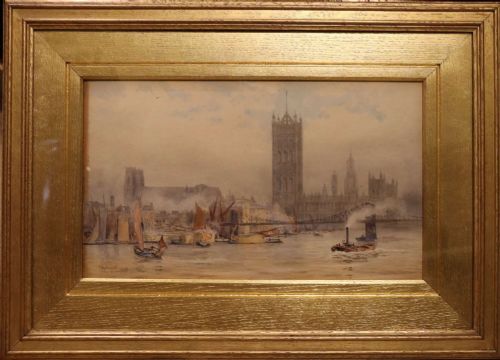
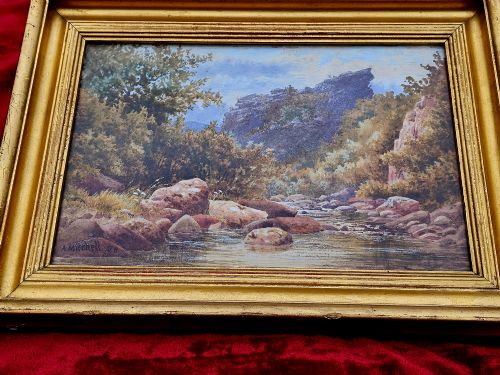
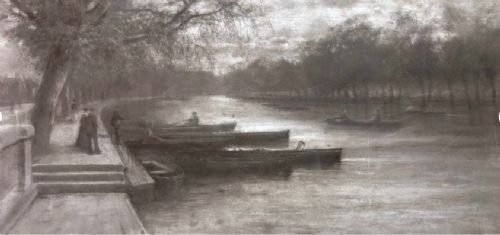
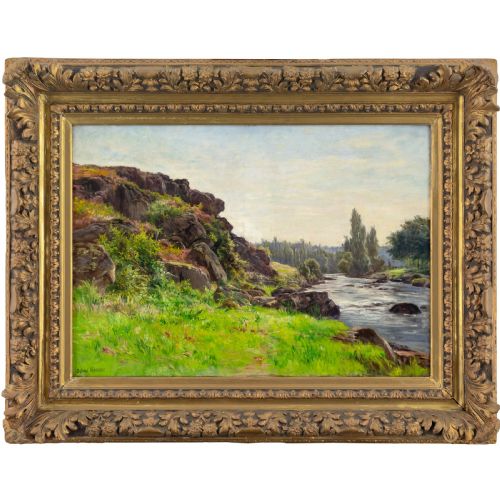
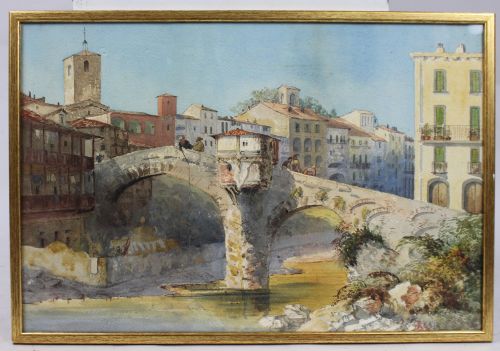
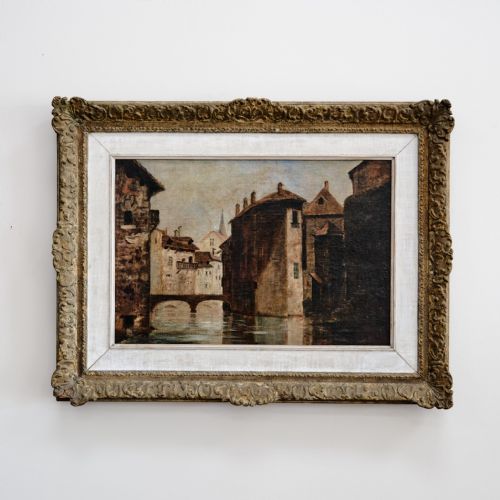
Buyers seeking original river artwork examine a selection spanning the nineteenth century up to the mid twentieth century. These pieces record rural waterways, urban bridges and coastal estuaries across Britain and Europe.
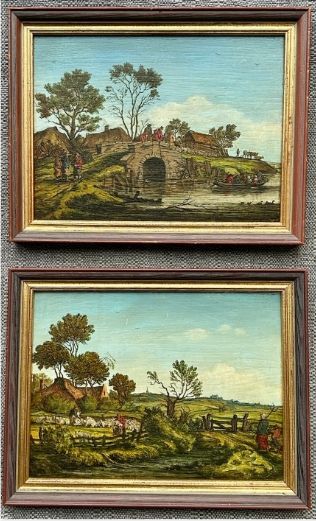
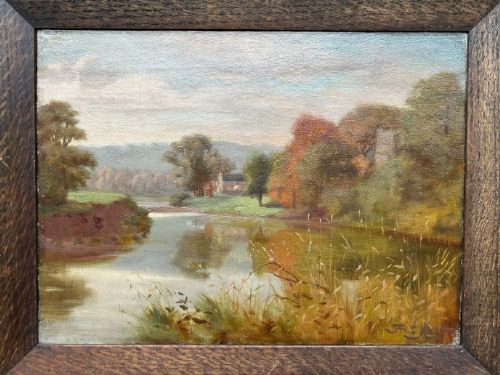
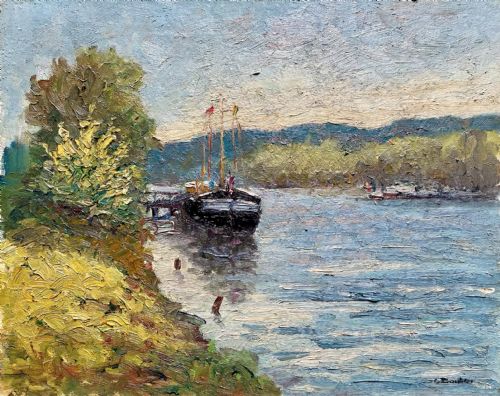
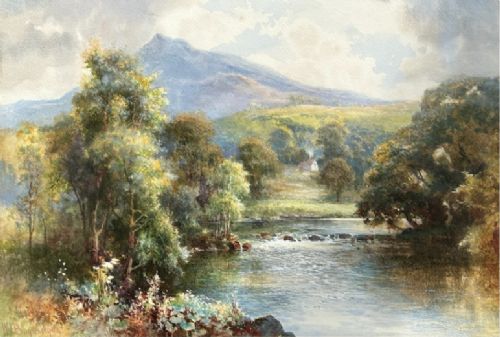
The most frequent examples on this page are oil paintings on canvas or wood panels, alongside watercolours on paper. Artists from the Victorian period onward rendered these aquatic scenes using impressionist, tonalist and romantic approaches.
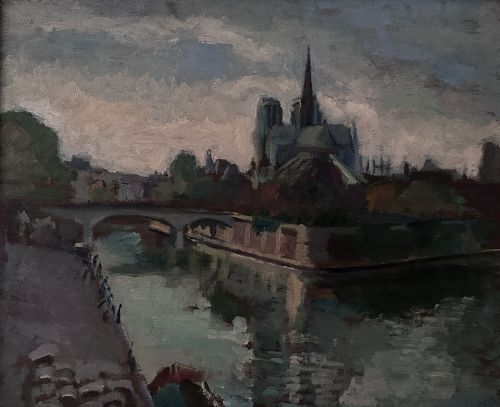
Subjects range from Welsh mountain streams and Yorkshire rivers to the Thames and the Seine. Each piece documents a specific topographical viewpoint through the hand of a named painter or regional school.
Materials and Construction
Makers laid oil paint onto stretched canvas, wooden panels and boards, building up rich impasto or thin glazes. Watercolours utilise pigment suspended in water applied to absorbent paper sheets, sometimes finished with charcoal or pencil underdrawing.
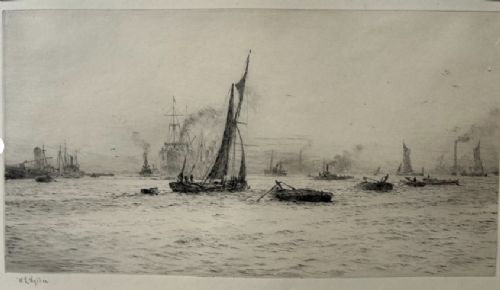
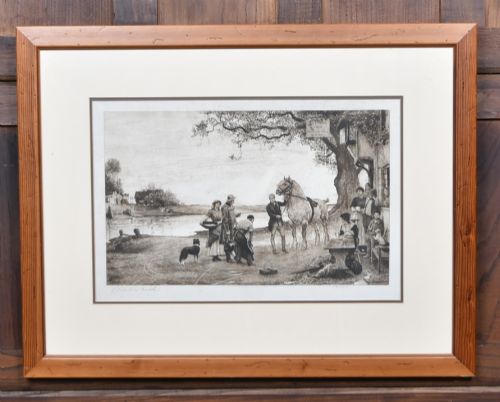
Support materials reflect the working methods of the period, from heavy linen canvases to fine wood panels. Etchings on paper demonstrate alternative graphic techniques using inked metal plates.
Frames and mounts vary, yet the primary physical objects consist of pigment bound in oil or water applied to traditional supports.
One lonely chestnut horse stands quietly in a river landscape, watching the centuries pass.
Distinctions in Quality
Quality rests upon the confidence of the brushwork and the handling of atmospheric light over water. Master hands capture reflections and movement with economy, whereas lesser works rely on stiff repetition.
The relationship between the subject and the framing edge reveals compositional skill. Superior paintings integrate the riverbanks and skies into a coherent spatial balance.
Condition of the pigment and support influences the visual impact. Intact surfaces without excessive overpaint preserve the original tonality intended by the painter.
Kenneth Cozens·Alfred Young Nutt·Frederick Marriott·William Joseph Boyes·Gabriel Mathieu·William Lionel Wyllie·Robert W Macbeth·Robert Thorne Waite·Cyril Walduck Edwards·Henri Ottmann·George Oyston·Sir Alfred East·Cecil Allan Mould·Albert Rieger·Herbert Royle·Florence Adelina Hess·Henry H Parker·Frederick Hines·John Horace Hooper·John Ferneley Senior·William George Tennick·Hubert Wellington·Honore Cavaroc
The Original River Artwork Glossary
- Oil Paint
- A slow-drying medium composed of pigments suspended in a drying oil such as linseed. This substance allows artists to blend tones smoothly and build textured surfaces.
- Watercolour
- A painting method where water-soluble pigments are diluted and applied to paper. It relies on the white of the paper showing through transparent washes.
- Impressionism
- A style focused on capturing light and fleeting moments through visible brushstrokes. This approach appears in French and British works from the late nineteenth century.
- Etching
- A printmaking process where acid bites lines into a metal plate to hold ink. The plate is then pressed onto paper to produce fine linear details.
- Board
- A rigid flat material used as a painting support instead of canvas. Artists frequently utilised wooden panels or heavy millboard during the Victorian and Edwardian eras.
Original River Artwork: Frequently Asked Questions
What periods do these river artworks cover?
The inventory spans the nineteenth century through to the mid twentieth century. Pieces include Victorian works alongside Edwardian and post-war creations.
Dates reflect the documented creation eras found within the specific titles recorded on the page.
Which materials were used for these paintings?
Makers utilised oil paint on canvas, wood panels and board supports. Watercolours and charcoal drawings on paper also feature prominently among the selections.
Etchings represent the printed works executed on paper supports.
Where do the landscape locations come from?
Scenes depict British rivers such as the Thames, Tees, and Tyne, alongside Welsh waters and Scottish glens. European locations include French rivers near Giverny and Prague.
Artists recorded specific geographical landmarks and bridges within their composition titles.
How should I care for antique watercolours?
Works on paper require protection from direct sunlight to prevent fading of the watercolour pigments. Framing behind conservation glass limits environmental damage.
Keep pieces away from damp atmospheres to preserve the paper support.