
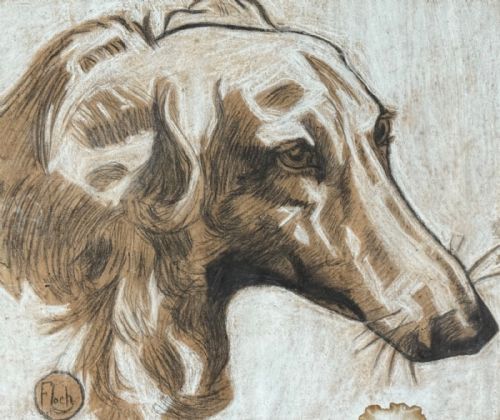
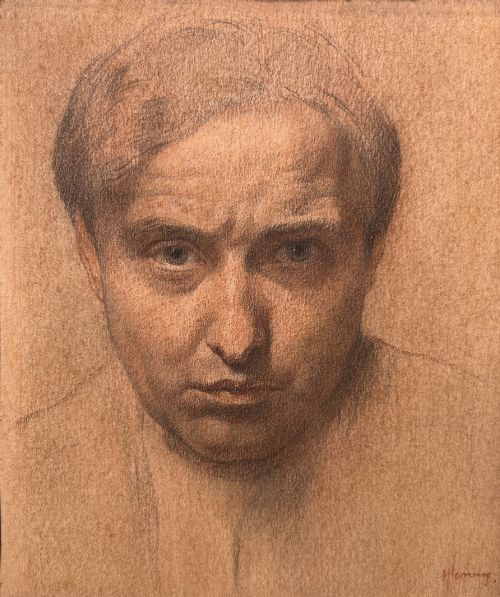
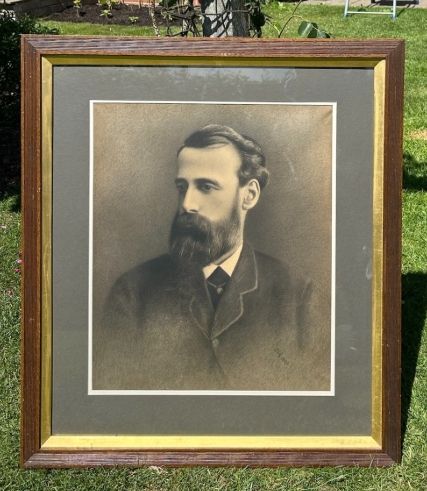


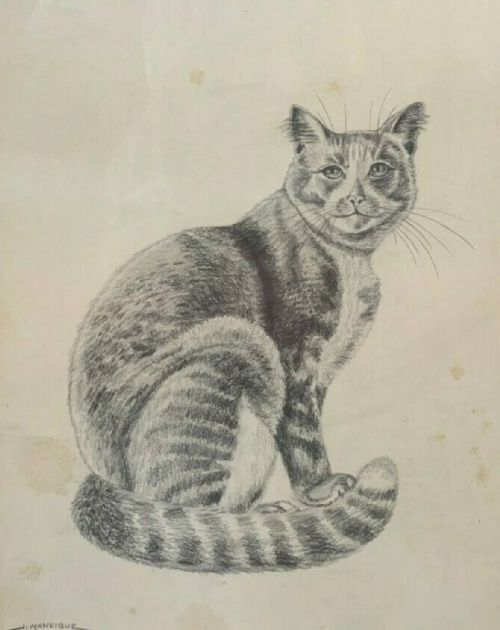
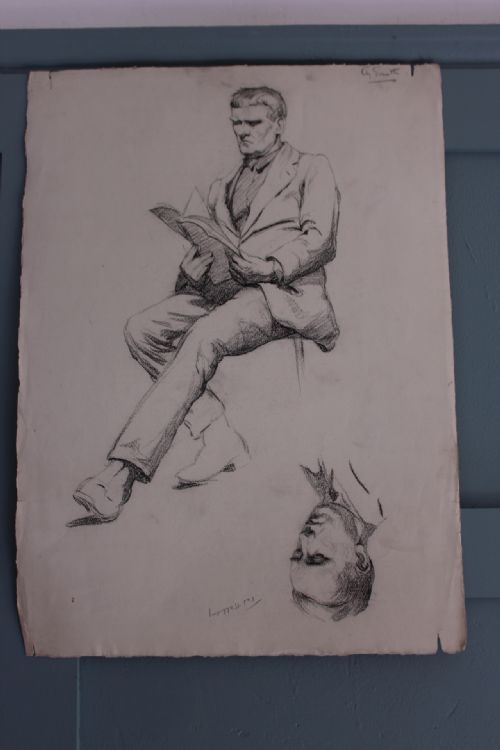


Original Pencil Portrait
An original pencil portrait captures the immediate touch of the artist's hand, offering an intimate likeness prized by collectors of works on paper.
Original Pencil Portrait
An original pencil portrait is a hand-drawn facial study executed on paper, capturing subjects ranging from Victorian gentlefolk and military figures to 20th-century artists and sitters. These works survive as finished academic studies, rapid studio sketches, and detailed profile drawings.
Buyers on this page will most frequently encounter works dating from the nineteenth and twentieth centuries, executed in graphite, charcoal, and occasionally accented with chalk or pastel. Many appear mounted and framed under glass, preserving delicate monochrome marks made over a century ago.
How They Were Made
Artists relied primarily on graphite pencil and charcoal applied to various grades of paper, sometimes utilising watermarked sheets or buff-coloured paper stocks. Highlights were occasionally added with white chalk or watercolour washes over the underlying pencil lines.
Draftsmanship relied on precise line work, shading, and smudging techniques to render depth, texture, and expression. Completed drawings were often preserved behind glass in period wooden frames to protect the friable charcoal and graphite surface.
Listings span periods from the eighteenth century through the mid-twentieth century, featuring paper, graphite, charcoal, and watercolour.
What Varies in Quality
The distinction between ordinary and exceptional works rests on the confidence of the hand and the psychological depth of the sitter. Master draftsmen capture expression and bone structure with economy, whereas lesser works rely on stiff, laboured hatching.
Condition also separates examples, as acid burn from old mounts, foxing on the paper, and heavy fading diminish a drawing's visual impact. Intact provenance, contemporary signatures, and well-preserved original frames elevate the historical significance of a portrait.
Augustus John·J D Fergusson·Raoul Millais·Dame Laura Knight·Sir Nathaniel Dance-Holland·Francis Dodd·Sir William Charles Ross
The Original Pencil Portrait Glossary
- Graphite
- A form of carbon used in pencils that produces grey or black marks ranging from hard, light lines to soft, dark strokes.
- Charcoal
- A dry drawing material made from burnt organic matter, prized by artists for deep blacks and expressive, smudged tones.
- Foxing
- Brown spots caused by chemical reactions in ageing paper, frequently found on nineteenth-century works.
- Watermark
- A recognisable design pressed into paper during manufacture, used by researchers to date and identify the mill of origin.
- Provenance
- The documented history of ownership of an artwork, establishing its authenticity and past exhibitions.
Original Pencil Portrait: Frequently Asked Questions
How should I frame an antique drawing?
Drawings require conservation-grade mounting materials to prevent acid damage from standard cardboards over time.
Keep framed works out of direct sunlight to protect vulnerable pencil and charcoal pigments from fading.
Are these drawings signed by the artist?
Many examples feature signatures, monograms, or studio stamps, while others remain attributed based on style and provenance.
Unsigned works often originate from artist sketchbooks or studio dispersal sales gathered after their deaths.
How do I identify the period of a portrait?
Clothing styles, hairstyles, and framing materials offer the most reliable clues for dating historical portraits.
Paper watermarks and inscribed dates on the reverse provide definitive chronological markers for older sheets.
Can I remove a portrait from its old frame?
Historic frames often contribute to the character and age of the piece, so keeping them intact is usually preferred.
If reframing is necessary to halt deterioration, retain any original framing labels and backing notes for future reference.