
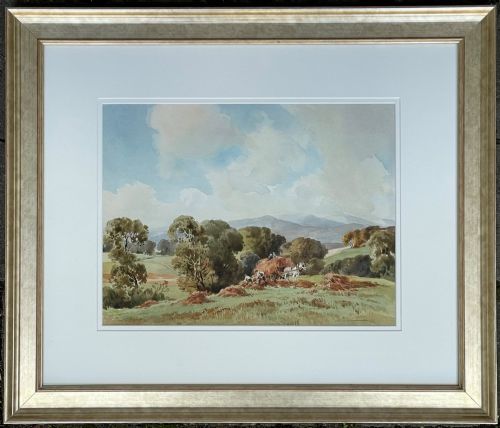
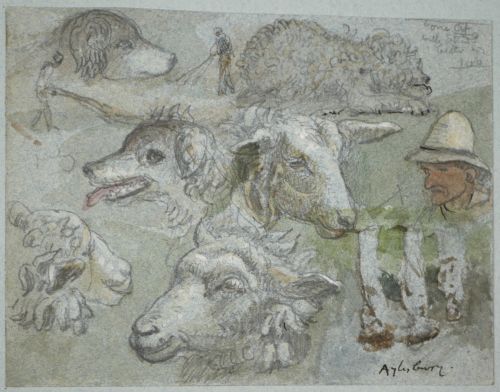
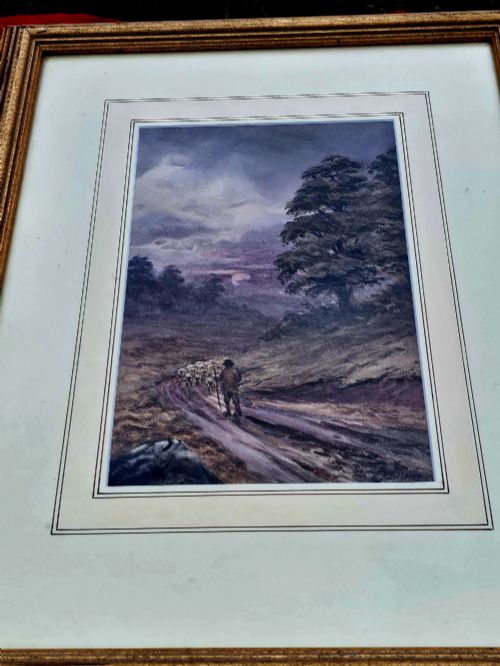
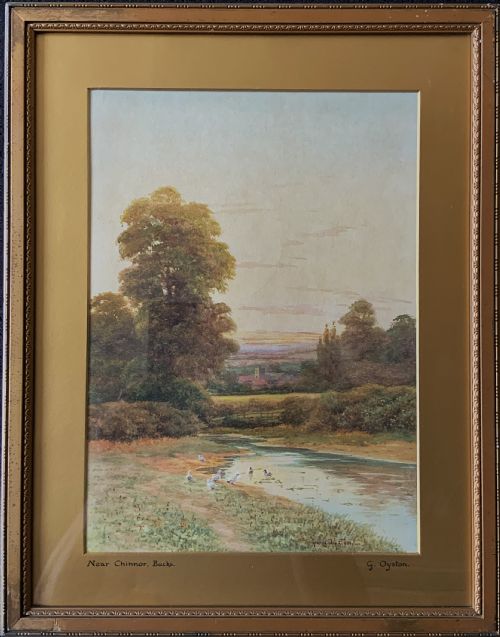
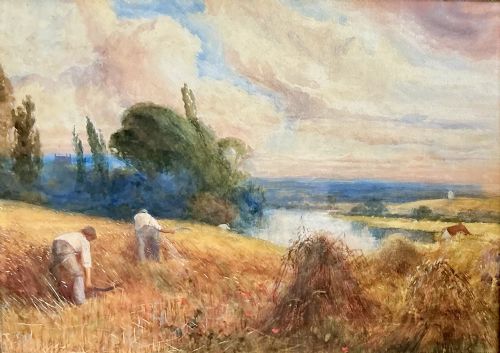


Original Pastoral Watercolour Artwork
Original pastoral watercolour artwork captures the quiet rhythm of traditional country life across Britain through delicate washes of pigment on paper.
Original Pastoral Watercolour Artwork
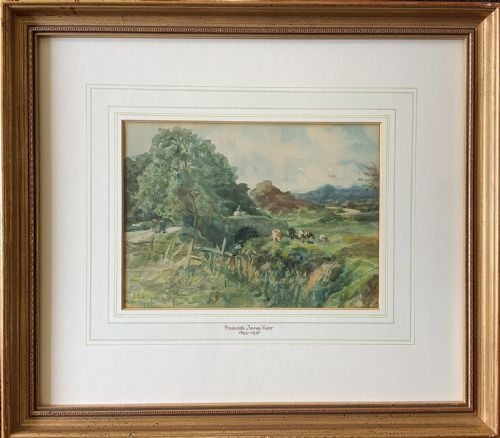
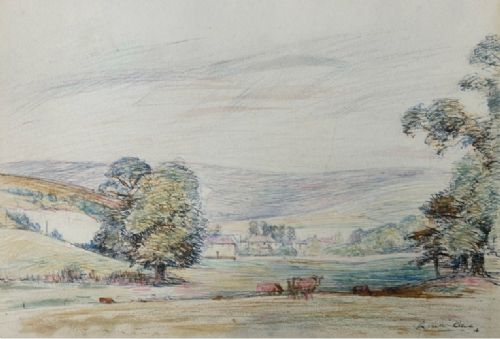
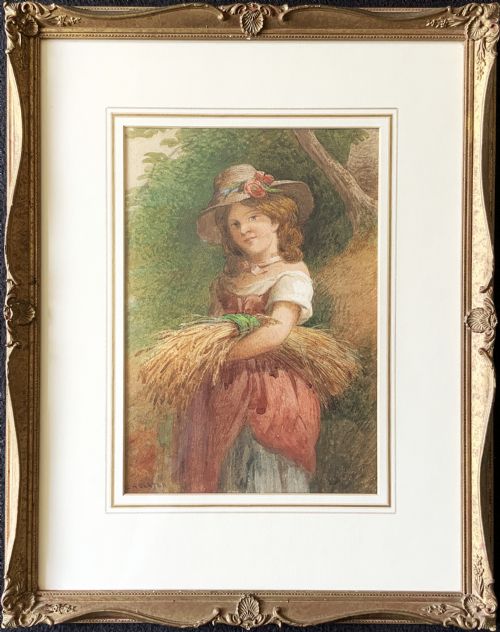
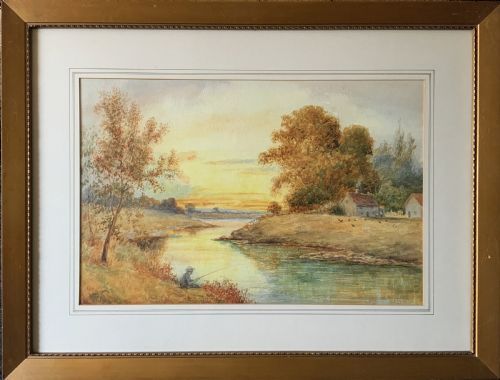
Original pastoral watercolour artwork depicts scenes of rural life, farming, and the British countryside created during the nineteenth and early twentieth centuries. These paintings typically feature farm animals, riverscapes, cottages, and agricultural labourers at work in various counties.
The selections available here stem largely from the Victorian and Edwardian periods, extending through the nineteen-twenties and thirties. Works range from intimate studies by regional artists to detailed exhibition pieces executed by recognised members of British art societies.
How they were made
Artists applied watercolour pigment suspended in water onto heavy paper sheets, often building depth through layered washes and fine brushwork. Many examples retain their period frames constructed from wood and finished with gold leaf or gilt.
The physical support relies primarily on paper combined with traditional framing materials like glass to protect the delicate water-soluble pigments from moisture and environmental damage over time.
Several paintings record cows stubbornly blocking country lanes long before motor cars ever arrived to disturb them.
What varies in quality
Quality rests upon the artist's ability to capture atmospheric light and natural movement within the rural landscape rather than mere technical neatness. Stronger pieces display confident brushwork and a balanced composition that brings depth to the pastoral scene.
The preservation of the paper and the vibrancy of the original pigment heavily influence the standing of an individual painting. Works retained within their period frames often demonstrate superior overall integrity and historical context.
Percy Lancaster·James Smetham·George Oyston·Frederick James Kerr·Russell Sidney Reeves·Charles Henry Slater·Frederick Hines·Philip Richard Morris·Oswald Garside·Cornelius Pearson·Henry Charles Fox·Henry John Kinnaird·Frederick Septimus Lewis·Ernest Pile Bucknall·Thomas Hunn·James Orrock·John Atkinson·Helena Maguire·George Soper·Harold Lawes·Bernard Walter Evans·Edmund George Warren·William Stephen Coleman·Harry Sylvester Stannard·Will Anderson
The Original Pastoral Watercolour Artwork Glossary
- Watercolour pigment
- Finely ground colour particles mixed with a binder that dissolves in water. This medium allows artists to achieve translucent washes of colour on paper.
- Edwardian period
- The era spanning from nineteen hundred to nineteen ten. Paintings from this time often reflect a romantic view of English rural traditions.
- Victorian era
- The period of British history lasting from eighteen thirty-seven to nineteen oh one. Pastoral art from this span frequently details agricultural labour and picturesque countryside views.
- Gilt wood
- Wood coated with a thin layer of gold leaf or metallic paint. This finish frequently borders antique frames to complement the warmth of the painting within.
Original Pastoral Watercolour Artwork: Frequently Asked Questions
How do I care for antique watercolours?
Keep the artwork away from direct sunlight to prevent the pigments from fading over time. Maintaining a stable indoor humidity protects both the paper support and the antique wooden frame.
Ensure the glazing remains intact to shield the delicate paint surface from dust and atmospheric moisture. Professional framing using acid-free materials helps preserve the longevity of the piece.
What defines the pastoral style?
Pastoral art focuses on idealized depictions of rural landscapes, agricultural labour, and country life. Common subjects include shepherds, cattle, rivers, and thatched cottages.
This genre gained immense popularity during the nineteenth century as a nostalgic response to increasing industrialisation. Artists sought to capture the quiet simplicity of the British countryside.
How can I date these paintings?
Examine the framing style, paper type, and any inscriptions left by the artist on the reverse. Victorian works often feature heavier gilt frames and distinct signature styles.
Biographical details of the artist frequently provide precise working dates for signed pieces. Period labels from early art dealers or exhibitions also assist in establishing a timeline.
Were these works meant for exhibition?
Many larger watercolours were created specifically for submission to annual exhibitions held by societies like the Royal Academy. Artists produced these finished pieces to showcase their technical skill to collectors.
Smaller sketches and studies served as preliminary work for larger studio compositions or as personal records for the artist. Both finished exhibition pieces and intimate studies survive within this category.