



Countryside Farm Scene Art
Countryside farm scene art captures rural life through oil and watercolour, bringing historic pastoral landscapes and agricultural scenes into a modern interior.
Countryside Farm Scene Art
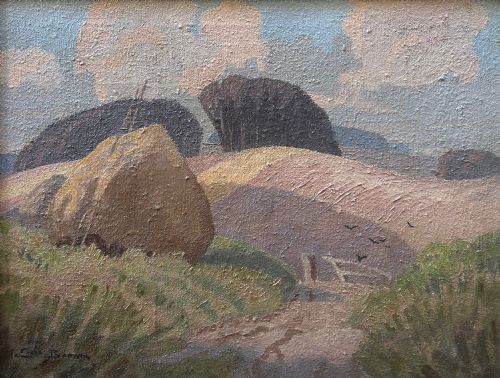
Countryside farm scene art comprises paintings depicting rural life, agricultural work, and pastoral landscapes. These works focus on farmsteads, harvesting, ploughing, and livestock within British and European settings.
The pieces available span from the nineteenth century through the mid-twentieth century. Works from the nineteen-tens and nineteen-twenties appear frequently, alongside Victorian pastoral interpretations and later mid-century compositions.
Subjects range from expansive valley landscapes with farm workers and heavy horses to intimate depictions of farmyards, cottages, and animal husbandry. Canals, streams, and rolling hills frequently frame the agricultural activity.
Materials and methods
Artists relied primarily on oil paint applied to canvas, wood panels, or board. These oil paintings often display rich textures and layered brushwork that build depth in foliage, fields, and skies.
Watercolour pigment on paper forms another significant group of works. These watercolours utilise fluid washes to capture the soft light of rural mornings and harvest times.
Substantial wooden frames, including ebonised mouldings, often house these artworks. The physical support structures reflect the period standards of nineteenth and twentieth-century framing.
Listings span from the early nineteenth century through the nineteen-sixties, uniting canvas, wood, and paper mediums under British impressionist and traditional country styles.
Judging the work
Quality rests upon the artist's ability to handle light, atmosphere, and naturalistic movement within the pastoral setting. Skilled brushwork distinguishes dynamic depictions of farm labourers and working horses from static compositions.
Compositional balance and the specificity of the location elevate certain works above generic rural views. Named farmsteads and identifiable regional landscapes demonstrate a deeper engagement with the subject matter.
Eric Brown·Herbert Royle·James William Booth·Charles Vickers·John Linnell·Florence Hess·John Frederic Greenwood·Claude Cardon·Rowland Henry Hill·Owen Bowen·John R. K. Duff·George Hamilton Constantine·T. B. Garvie·Hermanus van Brussel
The Countryside Farm Scene Art Glossary
- Oil on canvas
- Pigment suspended in drying oil applied to a stretched woven fabric support. This medium permits rich colour saturation and textured impasto application.
- Watercolour
- A paint consisting of water-soluble pigment that produces transparent washes on paper. Artists use this technique for luminous, atmospheric rural sketches.
- British Impressionism
- A painting style emerging in the late nineteenth and early twentieth centuries focusing on light and everyday subjects. These works capture transient effects outdoors in the countryside.
- Pastoral landscape
- An artistic genre depicting idealised or realistic rural life and agricultural scenery. Such pieces centre on fields, livestock, and agrarian labour.
- Panel painting
- An artwork executed on a flat piece of wood rather than canvas. This solid support provides a rigid surface often utilised for smaller nineteenth and early twentieth-century works.
Countryside Farm Scene Art: Frequently Asked Questions
What subjects appear in countryside farm scene art?
These artworks depict agricultural life, including haymaking, ploughing fields with shire horses, and milking cows. Farmsteads, cottages, and labourers at rest form central themes.
Animals feature prominently across the works, from cattle by streams to poultry in farmyards. Rolling hills and valleys provide the natural backdrop for these rural activities.
How do I date a farm scene painting?
Dating relies on stylistic clues, framing, and recorded artist timelines. Victorian works often show formal academic approaches, while nineteen-twenties pieces introduce looser impressionistic brushwork.
Canvas stamps, panel types, and signatures offer further chronological evidence. Mid-century examples from the nineteen-fifties and sixties display distinct modernist interpretations of traditional agrarian subjects.
Where should I hang these paintings?
These pastoral works suit dining rooms, living spaces, or studies where traditional or mid-century interior aesthetics prevail. Their earthy tones complement natural wood furniture and neutral walls.
Protect the canvas or paper from direct sunlight to preserve the oil pigments and watercolour washes. Proper placement ensures the atmospheric lighting of the landscape remains visible.
What is the difference between oil and watercolour farm art?
Oil paintings on canvas or panel offer textured brushwork and deep, saturated colours. They present a robust surface suited to substantial framed presentations.
Watercolours on paper provide a lighter, more transparent feel. These pieces require glass protection and highlight delicate atmospheric effects in rural skies.