
Original Oil Floral Artwork
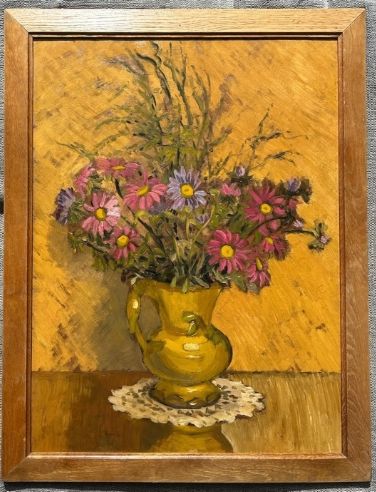
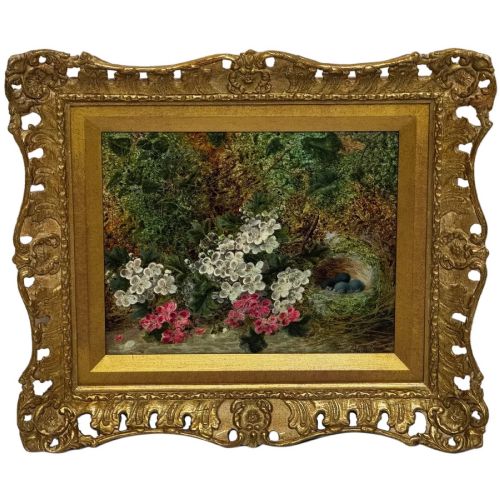
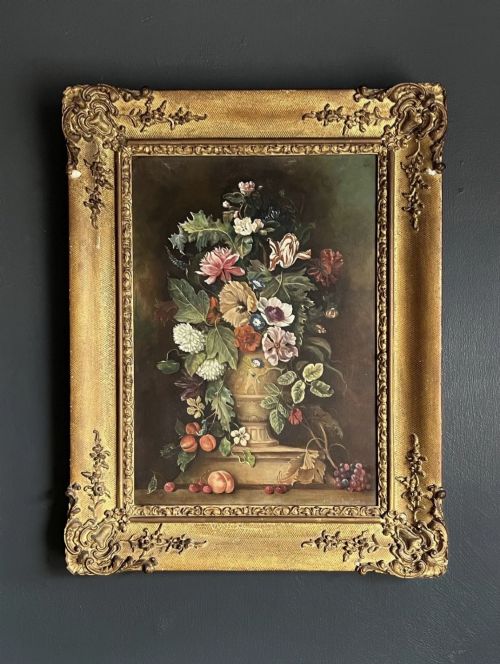
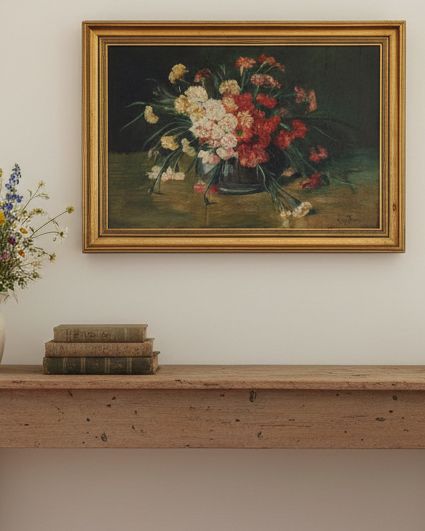
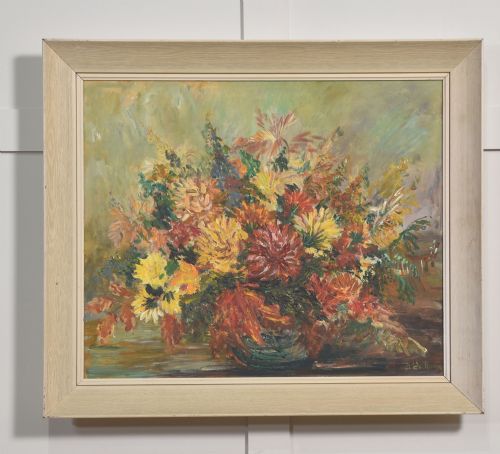
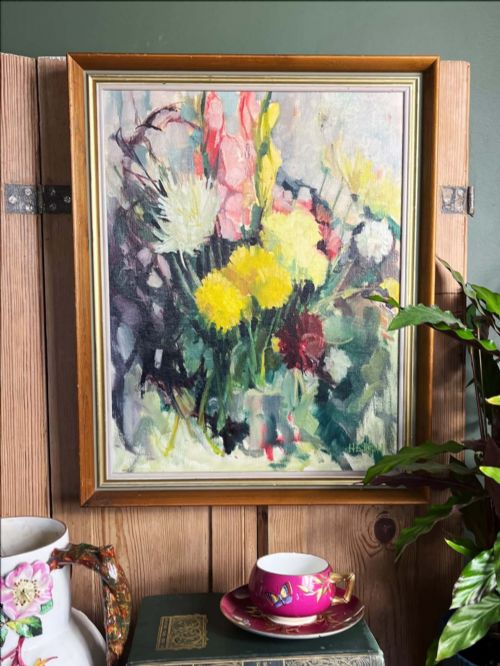
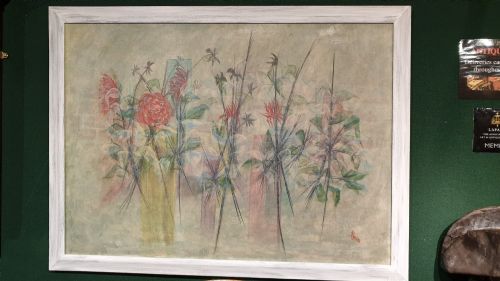
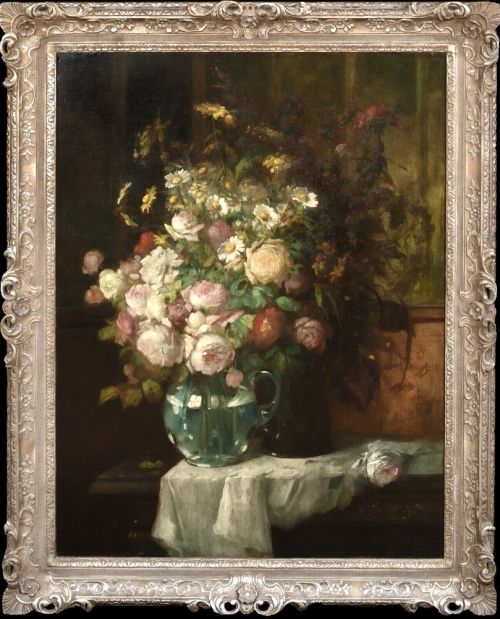
Original oil floral artwork brings vibrant botanical life into a room through painterly brushwork and rich textures.
Original Oil Floral Artwork
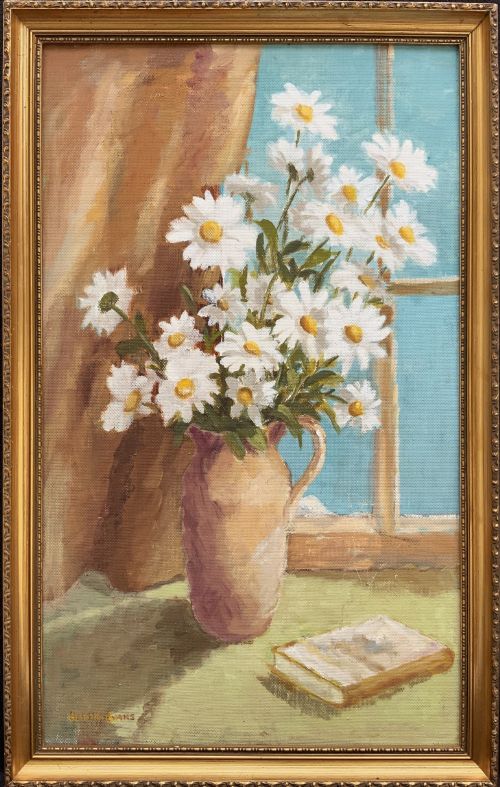
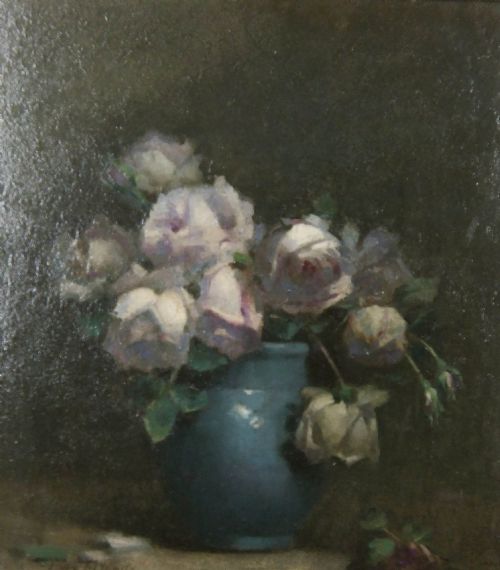
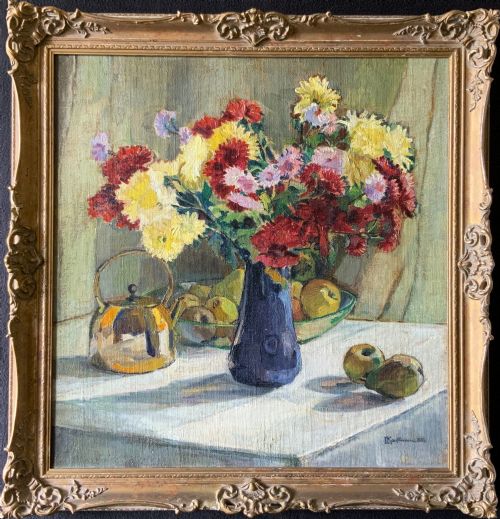
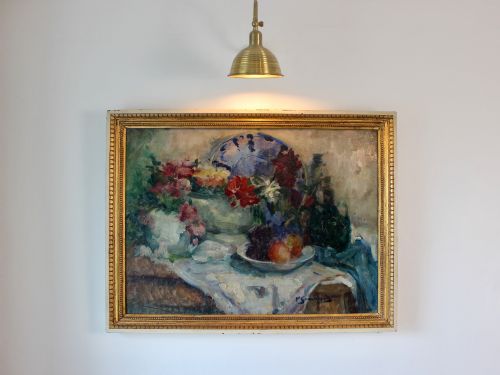
Original oil floral artwork spans from nineteenth-century academic studies to mid-century impressionistic canvases and modernist compositions. Buyers exploring these pieces encounter framed paintings depicting still life arrangements, garden scenes, and botanical studies.
The selections on this page lean heavily toward mid-century interpretations alongside works from the nineteenth century, nineteen-tens, and nineteen-thirties. Formats range from intimate tabletop studies on board to large decorative canvases suitable for prominent wall placement.
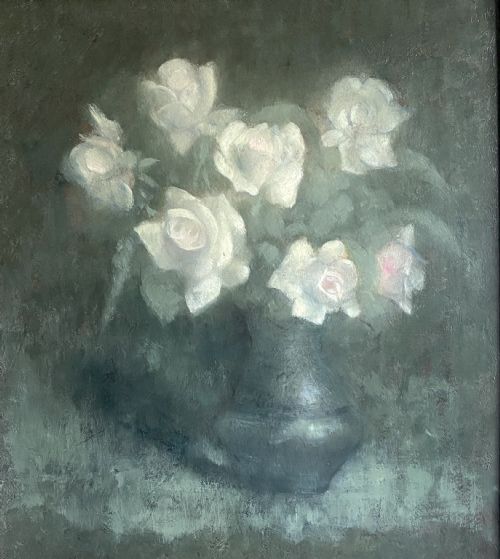
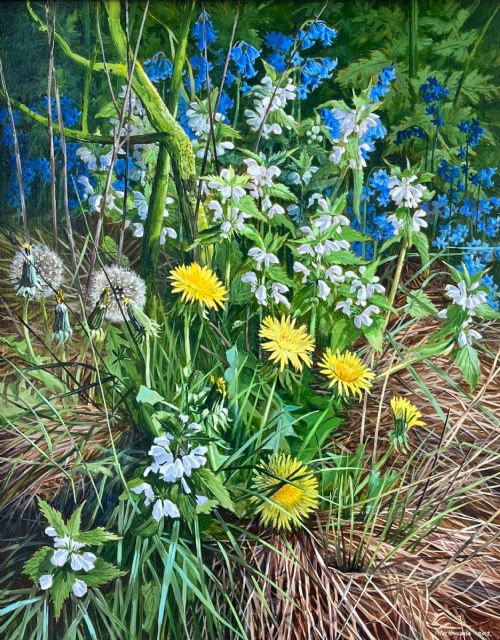
Subjects commonly focus on vases of summer flowers, roses, peonies, and wild hedgerows rendered by British and continental European artists. Each piece represents a unique hand-painted record rather than a mass-produced print.
How these paintings were constructed
Makers applied oil paint using traditional brushes or palette knives onto stretched canvas, wooden panels, or rigid board supports. Oil paint allowed artists to build up thick impasto textures and blend subtle tonal variations over extended drying periods.
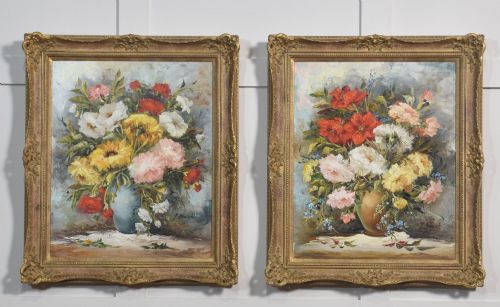
Many works are housed in their original timber frames, occasionally accented with gilt gesso moulding or decorative plasterwork. The combination of durable oil pigments and sturdy wooden supports ensured these botanical studies survived decades of domestic display.
Recorded support materials across the selection include stretched canvas, wooden board, and oil-prepared panel surfaces housed in various wooden and gilt frames.
What separates the finest examples
Quality rests in the confidence of the brushwork and the artist's command of light, colour harmony, and spatial depth within the floral arrangement. Superior pieces demonstrate purposeful composition and expressive handling of paint rather than rigid botanical illustration.
The integrity and period appropriateness of the surrounding frame also influence the overall character of the piece. Works that retain their original gilt or carved wooden frames preserve the intended dialogue between the artwork and its setting.
Kenneth Cozens·Oliver Clare·D L Williams·Mark Ingram·Konstantin Stoitzner·Peter Newcombe·Manuela Bonati·William Thomas Wood·Victor Simonin·Owen Bowen·Gertrude Hayes·Winifred Turner·Amile Coppieters·Florence Hess·A Nikolokov·J Milton·Ernest Higgins Rigg·Sir Matthew Smith·Robin MacKertich
The Original Oil Floral Artwork Glossary
- Impasto
- Paint applied thickly to a canvas or board, leaving prominent brush or knife marks that stand out from the surface.
- Gesso
- A plaster-like mixture applied to wood or canvas to prepare a smooth surface for painting or to build up decorative frame reliefs.
- Still life
- A painting featuring inanimate subject matter, such as cut flowers in vases, bowls of fruit, or household objects.
- Impressionism
- A style of painting emphasising light and its changing qualities, visible brushstrokes, and ordinary subject matter.
- Board
- A rigid flat panel, often wood or composite material, used as a sturdy support for oil paintings instead of woven fabric.
Original Oil Floral Artwork: Frequently Asked Questions
How do I care for an oil painting on canvas?
Keep the artwork away from direct sunlight, excessive humidity, and sudden temperature shifts to protect the canvas and paint layers. Dust the surface very gently with a soft, dry, clean brush without applying pressure.
Avoid using water, chemical cleaners, or damp cloths on the painted surface or the frame. Professional conservators should handle any deeper cleaning or structural repairs.
What is the difference between oil on canvas and oil on board?
Oil on canvas involves stretched woven fabric, usually linen or cotton, providing a slightly flexible support with subtle texture. Oil on board uses a rigid wooden or composite panel, which offers a completely firm surface for the paint.
Both materials were widely used across different periods, though boards are frequently found in smaller studies and plein-air works.
Are these paintings supplied with frames?
Many listings include period frames, such as gilt gesso or timber mouldings, which complement the age and style of the artwork. The specific framing details are noted in individual descriptions.
Buyers should examine the provided imagery to confirm whether a particular painting includes its historic frame.
How can I tell the period of a floral oil painting?
Dating relies on a combination of stylistic markers, framing materials, artist signatures, and backing construction. Mid-century works often display looser impressionistic brushwork, while nineteenth-century examples tend towards traditional academic detail.
Signatures, exhibition labels, and inscriptions on the reverse of the canvas or board offer further chronological clues.