





Original Nude Artwork
Original nude artwork captures the human form through centuries of painting and drawing traditions, offering buyers direct access to intimate life studies and modernist interpretations.
Original Nude Artwork
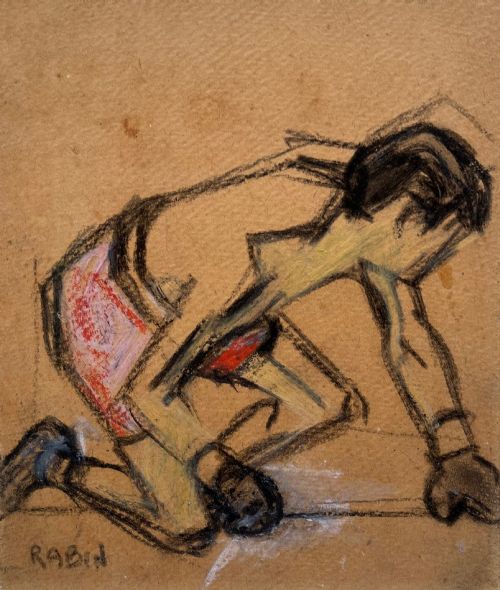
Original nude artwork encompasses academic life studies, impressionist outdoor scenes, and cubist compositions rendered across multiple centuries. Buyers searching this phrase meet works ranging from strict Georgian pencil drawings to mid-century oil paintings.
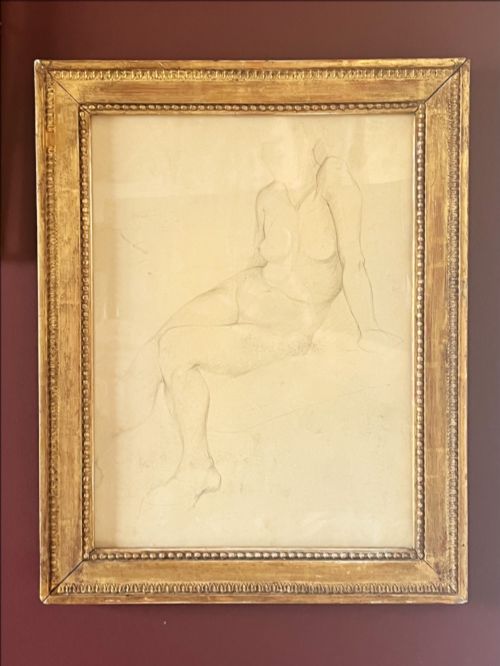
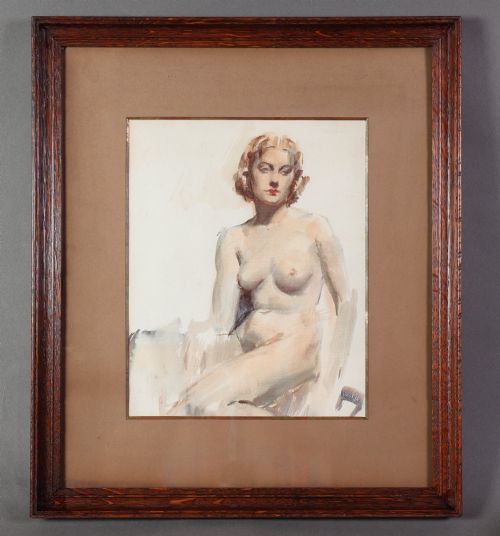
The pieces frequently take the form of framed charcoal drawings, oil paintings on canvas or board, and watercolours. Life studies executed in pencil or chalk appear alongside finished studio works and modernist interpretations.
Origins span British and European schools, with significant representation from French post-impressionist and Art Deco periods. The selection balances formal academic technique with the expressive freedom of the twentieth century.
Materials and techniques
Artists relied on traditional supports including paper, canvas, wood, and glass, applying media such as oil paint, charcoal, graphite, and watercolour. Oil on canvas and oil on board provide rich surface textures, while paper supports preserve delicate pencil and chalk lines.
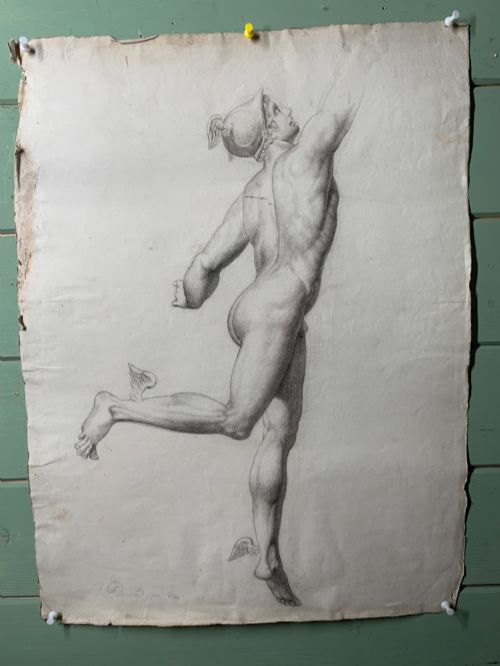
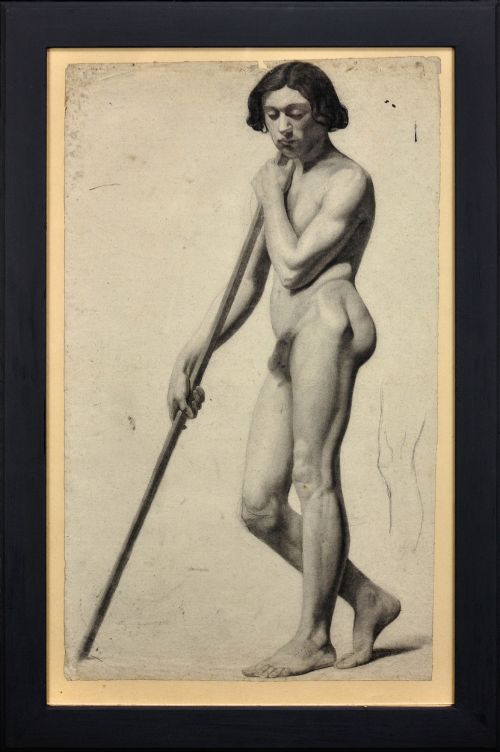
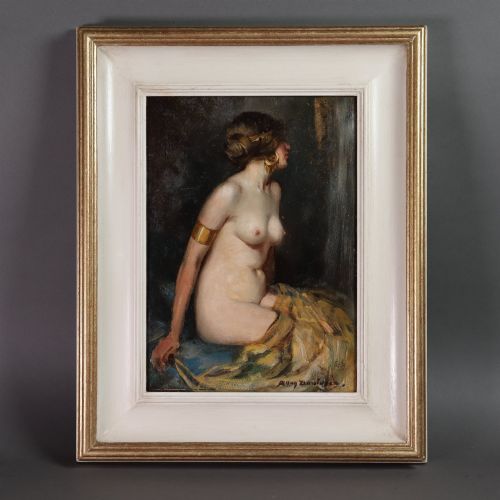
Draftsmanship underpins the collection, demonstrated through academic life studies utilising precise graphite or charcoal shading to define musculature and form. Painters built up layers of oil pigment to capture light across the skin, sometimes employing impasto or fluid washes.
The listings span periods from the seventeenth century through to the mid-twentieth century, employing canvas, paper, wood, and glass supports.
Assessing the pieces
Quality rests upon the sureness of the line and the artist's command of anatomical proportion and light. Stronger works convey volume and presence with economy of mark, whereas weaker examples struggle with underlying structure.
The handling of the medium distinguishes student exercises from master works. Confident brushwork in oil or precise tonal gradations in charcoal elevate a study into a compelling portrait of the human figure.
Samuel Rabin·Augustus John·Henry Arthur Roberts·Raymond Moritz·Henri Vincent-Anglade·Lucien Gibert·Allan Douglas Davidson·Cornelis Van Poelenburgh·Demetrios Galanis·William Edward Frost·Sir William Russell Flint·Fernand Jean Barbier·Peter Jackson·Jean Hippolyte Marchand·Pinchus Krémègne·Winifred Eugene Ballard·Mariette Lydis·Raymond Arthur Roadnight·Frank Dobson·Kees van Dongen
The Original Nude Artwork Glossary
- Academic life study
- A drawing or painting of a live model, executed following strict conventions of proportion and anatomy taught in art academies. These works record the rigorous training of the artist.
- Chiaroscuro
- The treatment of light and shade in a drawing or painting, creating a strong contrast that gives figures a three-dimensional volume. It defines form through the interplay of bright illumination and deep shadow.
- Impasto
- Paint applied thickly to a canvas, leaving visible brush or palette knife marks that stand proud of the surface. This technique adds tactile texture and catches ambient light.
- Provenance
- The chronology of the ownership of a work of art, used as a guide to authenticity and history. Documented lineage adds considerable weight to a piece.
- Gouache
- An opaque method of watercolour painting where white pigment is added to produce a heavier, denser finish. It results in flat, matte areas of vibrant colour.
Original Nude Artwork: Frequently Asked Questions
What defines an academic life study?
Academic life studies are rigorous drawings or paintings created from live models within a structured teaching environment. They focus heavily on accurate anatomical proportion, tonal values, and mastering the human form.
These pieces served as foundational training for artists before producing finished gallery works. Today, they offer collectors a clear window into historical studio practices and fundamental drawing techniques.
How should I frame antique works on paper?
Works executed on paper, such as charcoal drawings or watercolours, require conservation-grade mounting to prevent acid degradation over time. Using acid-free mats and UV-protective glass safeguards the delicate pigments and graphite from fading.
Keeping the paper separated from the glass by a spacer prevents humidity damage and sticking. Antique frames can be used if they are properly fitted with modern conservation backings.
What is the difference between oil on canvas and oil on board?
Oil on canvas involves stretching woven fabric over a wooden frame, providing a flexible surface with subtle give under the brush. This method has been favoured for centuries for its durability and responsiveness to layering.
Oil on board uses a rigid wooden or composite panel as the foundation, offering a completely firm support. Artists often chose board for rapid studies or plein-air painting due to its stability and portability.