


Original Nineteenth Century Watercolour
Original nineteenth century watercolour works bring hand-painted charm and period observation directly to your walls.
Original Nineteenth Century Watercolour
When you search for original nineteenth century watercolour, you encounter hand-painted works executed on paper or occasionally ivory, capturing landscapes, marine views, and genre scenes. These pieces reflect the artistic output of the Georgian, Victorian, and Edwardian eras, preserving the delicate pigments applied by artists of the period.
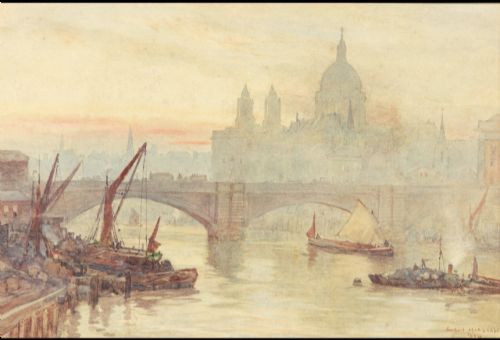
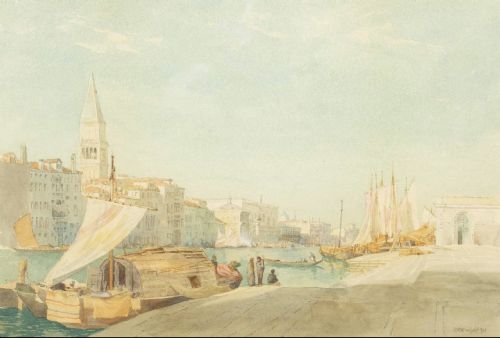
The most common examples on this page are landscape and marine paintings framed under glass, often recording British countryside, Venetian canals, and coastal inlets. Such works range from intimate miniature portraits to expansive framed river scenes signed by listed artists.
The aesthetic is defined by transparent washes of watercolour pigment that allow the texture of the paper to show through, creating luminous skies and subtle gradations of tone. These historical paintings offer a direct connection to the sketching traditions and academic training of past centuries.
Materials and Technique
The foundation of these works is handmade paper or fine card, upon which artists laid water-soluble pigment mixed with gum arabic. This binder allowed the colour to be thinned into transparent washes or applied more densely for focal points.
Protection was achieved through framing behind glass, frequently housed within wooden frames accented by gilt mouldings. The combination of paper support, pigment, and protective framing preserves the fugitive tones against light damage over the decades.
Listings feature paper supports, watercolour pigment, glass, and gilt wood across Victorian and Georgian periods.
Distinctions in Quality
Quality rests upon the confidence of the brushwork and the artist's ability to capture light and atmosphere with economy. Superior sheets display deliberate, assured washes and precise detail in figures or architecture, whereas lesser examples can appear overworked or muddy.
Condition plays a significant role in value, particularly the stability of the paper support and the preservation of original pigment vibrancy. Works that have avoided excessive fading retain the crisp contrast intended by the painter.
Sir James Dromgole Linton·Richard Henry Wright·Cornelius Pearson·John Augustus Atkinson·Thomas Bush Hardy·Robert Winchester Fraser·Harry Bright·Walter Follen Bishop·Frederick William Hattersley·Vittore Zanetti Zilla·George Kilburne·Alfred W Parsons·William Manners·Harold Swanwick·Henry John Kinnaird·William Lucas·Linnie Watt·John R Houston·Arthur Claude Strachan·Arthur Willett·Tom Dudley·Edmund George Warren·Belisario Gioja·Frank Saltfleet·Thomas Pritchard
The Original Nineteenth Century Watercolour Glossary
- Watercolour pigment
- Finely ground colour particles suspended in a water-soluble binder, usually gum arabic. This medium permits delicate layering and luminous effects.
- Gilt wood
- Timber framing coated with a thin layer of gold leaf or metallic powder. It provides a traditional decorative border for framed artworks.
- Marine art
- Paintings depicting ships, coastal views, and maritime scenes. This genre was particularly prominent during the Victorian period.
- Miniature painting
- A highly detailed, small-scale portrait or scene. Examples from the period are occasionally executed on thin slices of ivory.
Original Nineteenth Century Watercolour: Frequently Asked Questions
How should I hang a watercolour painting?
Watercolours are sensitive to strong sunlight and can fade if placed in direct exposure for extended periods. Hang them on interior walls away from direct windows and sources of excessive moisture.
Ensure the frame is properly sealed against dust and insects, and use conservation-grade glass where possible to filter harmful ultraviolet rays.
Are these paintings signed by the artist?
Many of the works carry the original signature or monogram of the painter, often placed discretely in a lower corner. Attribution is also supported by period inscriptions on the reverse of the paper or frame.
Unsigned examples are frequently attributed to a specific school or period based on style, technique, and subject matter recorded by contemporary dealers.
What subjects are most common?
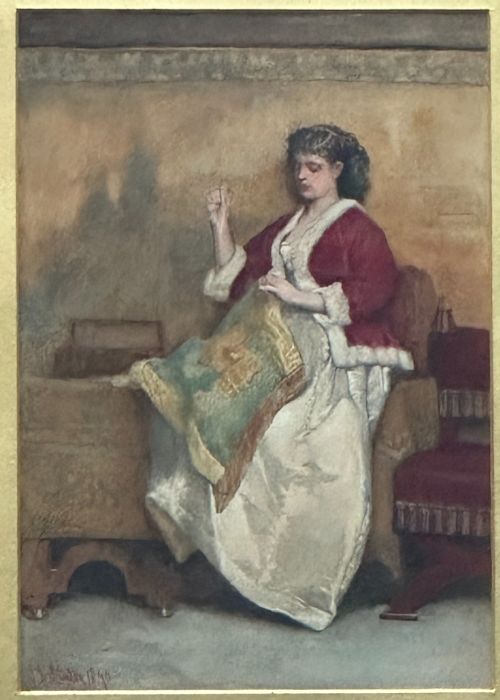
Landscapes and coastal scenes dominate the selection, reflecting the popularity of outdoor sketching tours during the nineteenth century. You will also encounter architectural studies, domestic genre scenes, and intimate portraits.
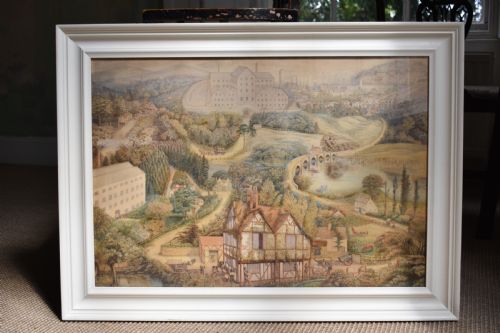
Regional views of the British countryside, Welsh rivers, and European travels such as Venice appear regularly across the inventory.
How can I tell the age of the paper?
Nineteenth-century paper often exhibits characteristic chain lines and watermarks when viewed under transmitted light. The texture tends to be heavier and more varied than modern machine-made sheets.
Slight natural toning or acidification around the edges of the mount can also indicate the age of the materials used during the period.