
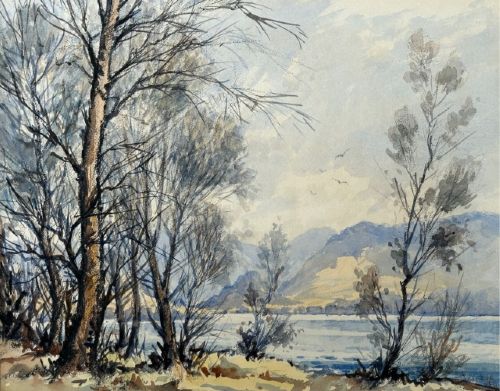


Blue Lake Watercolour Landscape
A blue lake watercolour landscape captures tranquil open water and distant shores with soft translucent washes.
Blue Lake Watercolour Landscape
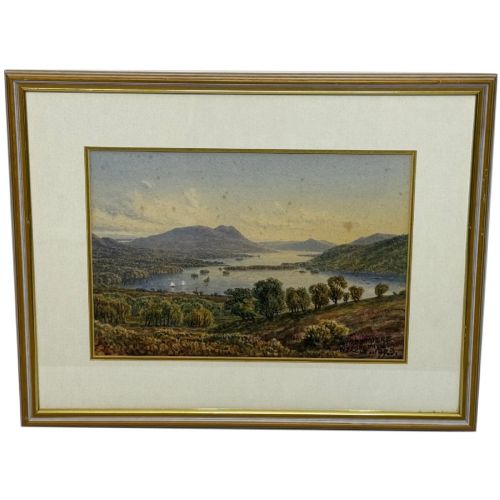
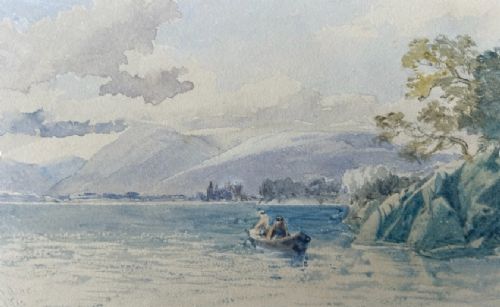
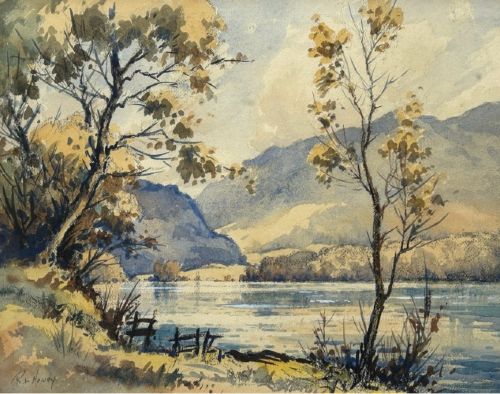
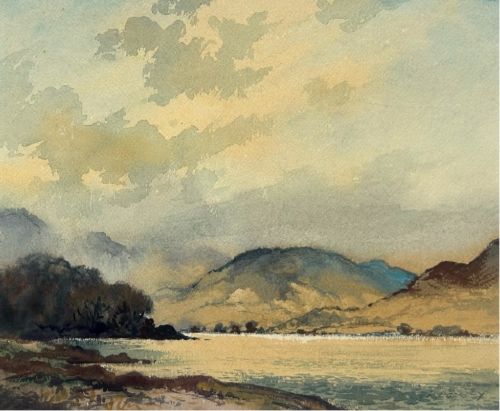
The versions most commonly met on this page range from nineteenth-century Scottish and English lake views to mid-century Cumbrian and Alpine scenes. Framed examples frequently incorporate glass and gilt wooden surrounds to protect the delicate paper supports.
Makers and artists represented include named painters such as Thomas Miles Richardson Jnr, Robert Leslie Howey and Claude Muncaster. Architectural prints and drawings also appear alongside traditional topographical watercolours.
Materials and technique
These works are executed in watercolour pigment, often combined with ink or gouache on paper. Pigments are applied in washes to exploit the natural transparency of water-based media on paper.
Framing materials include wood and gilded wood, often paired with glass to preserve the paper from atmospheric damage. Mounts and frames are selected to complement the tonal palette of the landscape.
Listings feature paper supports, watercolour pigment, ink, gouache, glass, wood and gilded wood.
Factors of quality
Quality rests upon the artist's handling of light, atmosphere and perspective across the water and surrounding terrain. Stronger works demonstrate confident brushwork and precise topographical observation rather than rigid mechanical drafting.
The integrity of the paper support and the preservation of pigment vibrancy also differentiate pieces. Superior examples retain their original tonal depth without heavy fading, housed within appropriate period frames.
Thomas Miles Richardson Jnr·Robert Leslie Howey·Claude Muncaster·Milton Drinkwater·Tom Dudley·William Taylor Longmire
The Blue Lake Watercolour Landscape Glossary
- Watercolour
- A painting method in which the pigments are suspended in a water-soluble vehicle. This technique relies on the white of the paper to provide luminosity through translucent washes.
- Gouache
- An opaque water-based paint method that creates heavier, solid colour passages. It is frequently used alongside watercolour to add highlights and dense details.
- Topographical landscape
- An artwork depicting a specific identifiable geographical location with accurate local detail. These scenes record actual lakes, buildings and terrain rather than imagined compositions.
- Gilt wood
- Timber frames finished with a thin layer of gold leaf or metallic gilding. This traditional finish enhances the visual weight of nineteenth and early twentieth-century presentation.
Blue Lake Watercolour Landscape: Frequently Asked Questions
How should I hang a watercolour painting?
Watercolours are sensitive to strong sunlight and excessive humidity. Hang them away from direct south-facing windows to prevent the pigments from fading over time.
Ensure the room maintains a stable temperature and humidity level. Using conservation-grade glass provides an extra layer of protection against ultraviolet light.
Are these paintings original works?
The selection includes original hand-painted watercolours alongside period prints and drawings. Each listing specifies the exact medium used by the artist.
Signatures, monograms and brushwork inspection help confirm the hand-painted nature of individual pieces. Archival records and stylistic markers also assist in verifying authenticity.
How do I identify the period of a landscape?
Stylistic clues such as the handling of perspective, colour palette and framing indicate the era of execution. Victorian and Edwardian works often feature romantic or detailed topographical approaches.
Mid-century pieces embrace impressionist or modernist interpretations of Cumbrian and European lakes. Frame styles and paper types further narrow down the date of creation.
What subjects feature in these landscapes?
These works primarily focus on lakes, tarns and water bodies across Britain and Europe. Locations range from Scottish lochs and the English Lake District to Italian and Swiss alpine lakes.
Some pieces incorporate architectural elements such as pavilions, bridges and halls set near the water. Winter scenes and quiet rural vistas appear alongside sunlit summer views.