



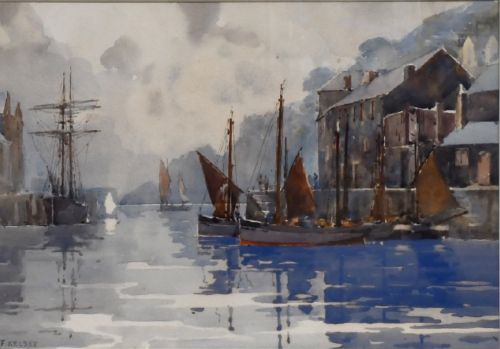
Original Maritime Watercolour Painting
An original maritime watercolour painting captures vessels, harbours, and coastal scenes upon paper through fluid pigments.
Original Maritime Watercolour Painting
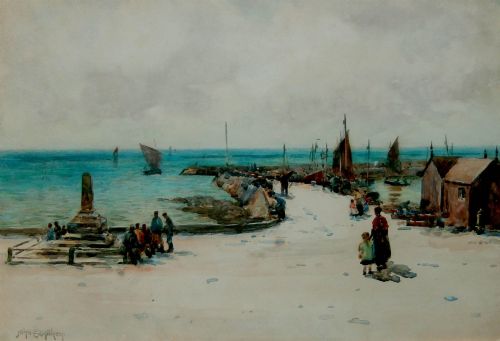
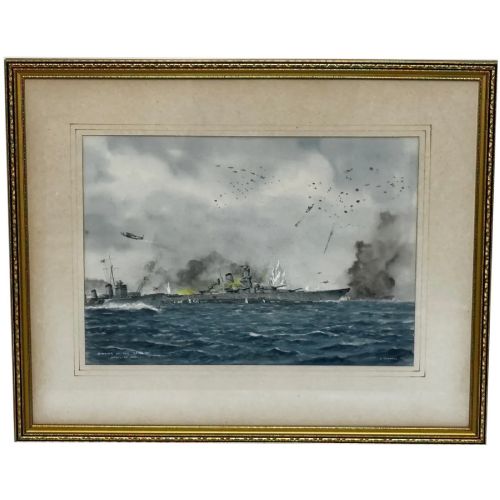
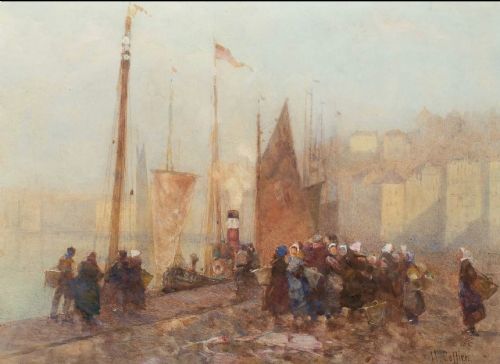
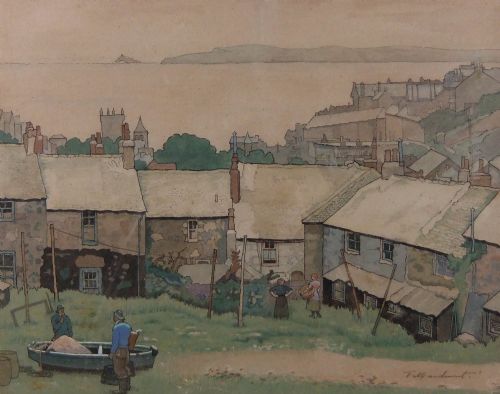
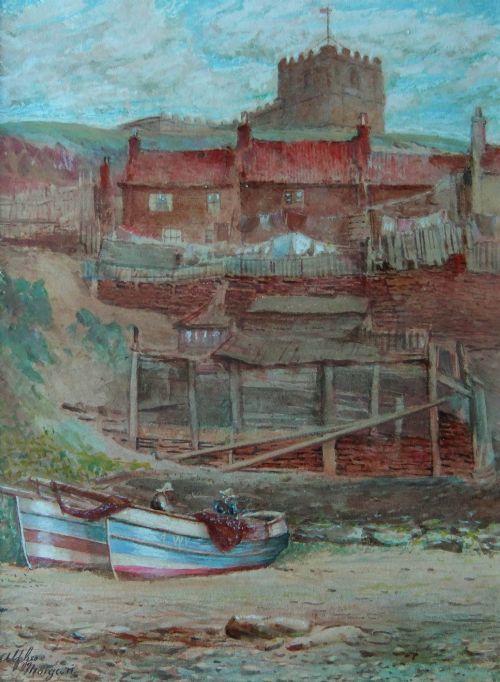
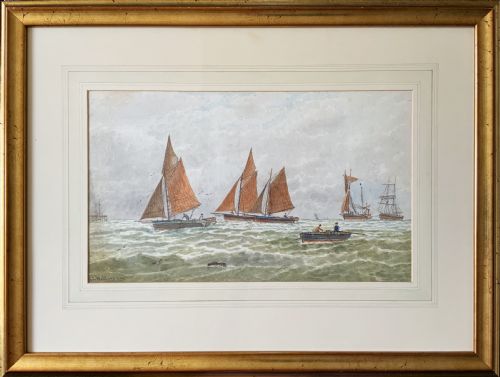
An original maritime watercolour painting portrays coastal views, shipping scenes, and seafaring vessels executed on paper support. These works range from late nineteenth-century Victorian depictions of Cornish fishing ports to mid-twentieth-century naval compositions.
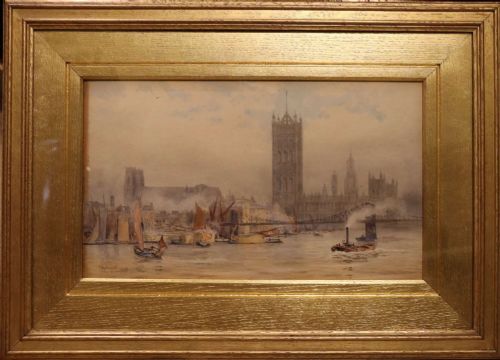
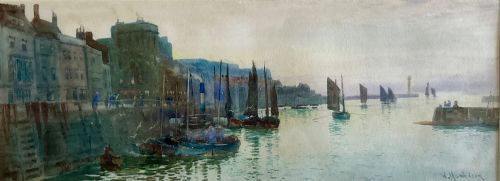
Collectors encounter framed examples presenting marine subjects such as Whitby, Scarborough, and the Thames. The selection spans traditional British Impressionist marine art and detailed topographical watercolours created by regional artists.
How they were made
Artists applied watercolour pigment and ink onto paper surfaces, frequently utilising washes to render atmospheric skies and moving water. Many surviving works incorporate protective glass and timber or gilt wood frames.
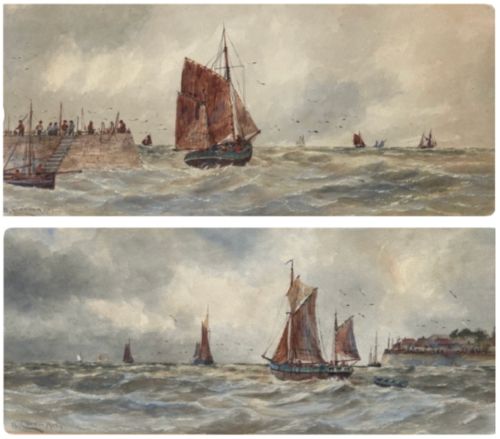
Techniques relied upon the transparency of water-based pigments combined with paper texture to capture light on the sea. Painters built compositions through layered washes, occasionally adding bodycolour for highlights on shipping.
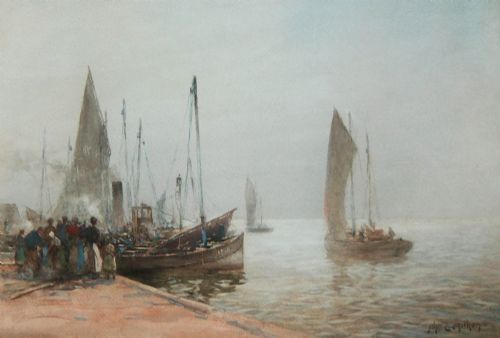
Several watercolours preserve the salt spray of nineteenth-century Yorkshire fishing ports and busy harbour docks.
What varies in quality
Quality rests upon the artist's ability to command perspective, movement, and the play of light across marine environments. Skilled handling of water and sky distinguishes superior compositions from formulaic harbour views.
Condition of the paper support and stability of the watercolour pigments dictate the visual integrity of each piece. Superior examples retain their original colour saturation without excessive fading from light exposure.
H. Medlycott·James Orrock·William Cannon·James Smetham·James E. Aitken·Charles Edward Dixon·John E. Aitken·Eric Tufnell·William Banks Fortescue·Thomas William Morley·Hector Caffieri·Thomas Maidment·Alfred G. Morgan·William Matthison·George Stanfield Walters·Frank Kelsey·Henry Barlow Carter·F A Roylance·George F Pennington·William Frederick Settle·Commander Eric Tufnell·Richard Harry Carter·William Lee Hankey·Thomas Bush Hardy·Edward Seago
The Original Maritime Watercolour Painting Glossary
- Watercolour
- A paint consisting of pigment suspended in a water-based solution, applied to paper support.
- Gilt wood
- Wood framing finished with a thin layer of gold leaf or metallic gilding.
- Seascape
- A work of art depicting the sea, coastal views, or marine shipping.
- Work on paper
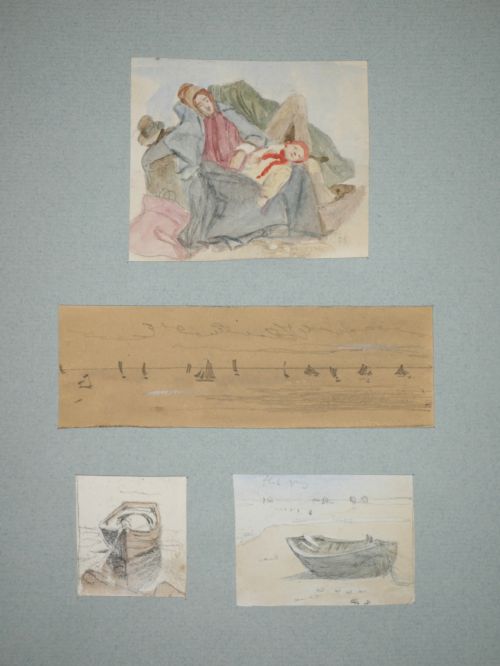
- Any artistic creation executed on a paper support, including watercolours, drawings, and sketches.
- Lugger
- A small traditional fishing boat carrying lug sails, frequently featured in nineteenth-century coastal scenes.
Original Maritime Watercolour Painting: Frequently Asked Questions
How should I hang maritime watercolours?
Keep watercolours away from direct sunlight to prevent the pigments from fading over time. Position them on interior walls where room temperature and humidity remain stable.
Ensure framing uses acid-free mounts to protect the paper support from chemical degradation.
What subjects appear in these paintings?
The works depict coastal harbours, fishing vessels, racing yachts, and deep-water shipping scenes. Locations range from Yorkshire fishing ports to naval deployments overseas.
Many compositions record everyday maritime life alongside historical vessels and coastal architecture.
How do I date an antique watercolour?
Examine the signature, inscriptions, and artist dates recorded on the mount or verso. Stylistic clues within the shipping vessels and clothing of figures also help narrow the period.
Framing materials and paper watermarks provide additional physical evidence for the date of creation.
Are these works unique pieces?
Every listed item is an original hand-painted work on paper rather than a reproduction or print. Artists created each composition individually using watercolour pigments and ink.
This uniqueness means brushwork and colour tones vary distinctly across every single painting.